

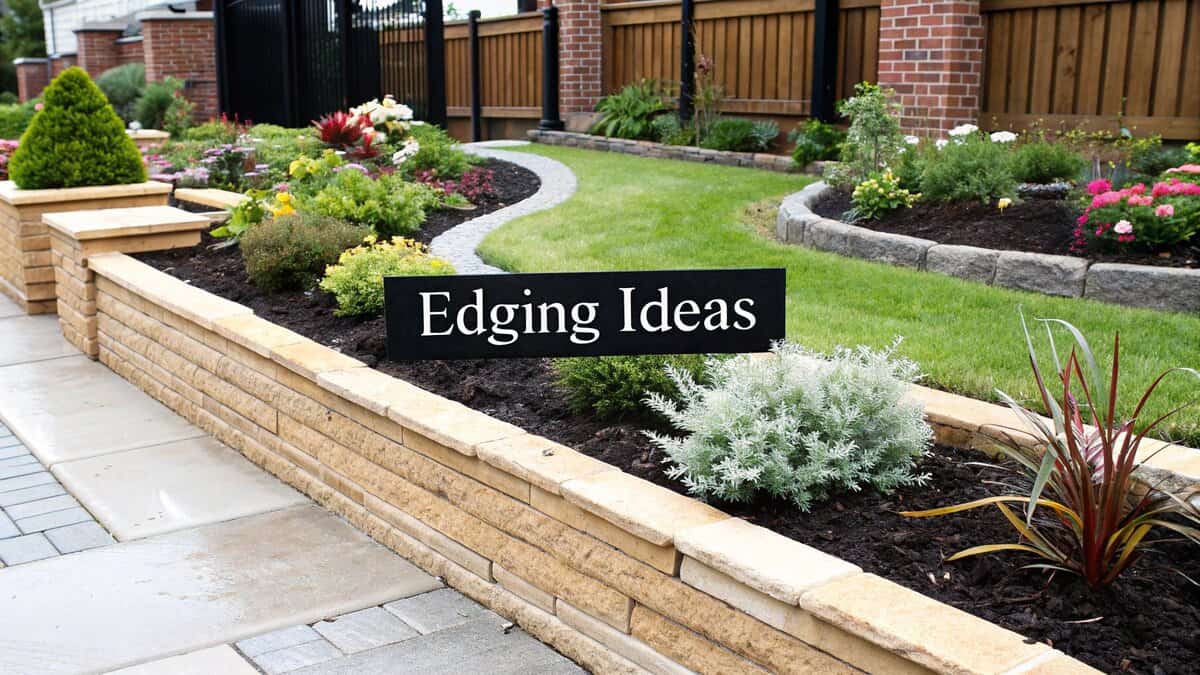
A well-defined edge is the secret to a professional-looking garden, transforming a simple flower bed into a stunning landscape feature. It’s the crisp finishing touch that separates your vibrant blooms from the lawn, creating a clean, intentional design that instantly boosts curb appeal. For gardeners here in Stoke-on-Trent, choosing the right border does more than just look good; it helps manage our local clay-heavy soils, contains mulch, and simplifies mowing and maintenance tasks.
This guide explores a variety of edging ideas for flower beds, offering practical advice on materials, styles, and installation tailored for gardens in the Potteries. Whether you’re aiming for a rustic cottage feel with natural stone or a sleek modern design using steel, the perfect border will elevate your garden’s beauty and make upkeep a breeze. We’ll break down the pros, cons, and specific tips for each option, from classic brick pavers to creative living plant borders. As Stoke’s local landscaping experts, Stoke Gardening Services provides the insights you need to frame your flora flawlessly. Let’s dig into the best options to define your outdoor space and make your garden the envy of the neighborhood.
For quotes and bookings, call or email us here.
1. Metal or Steel Edging
For a crisp, modern look that defines your garden beds with precision, metal edging is an outstanding choice. This type of edging uses thin strips of steel, aluminum, or corten steel to create a clean, almost invisible line between your lawn and flower beds. It’s favoured by professional landscape architects for its durability and minimalist aesthetic, which allows your plants to be the true stars of the show.
The installation process is straightforward yet effective. The metal strips, typically 1/8 inch thick, are secured into the ground using attached stakes. This creates a strong barrier that prevents grass from creeping into your beds and holds mulch or soil in place. Whether you’re aiming for a sleek contemporary design or the rustic, weathered look of corten steel, this is one of the most reliable edging ideas for flower beds in any Stoke-on-Trent garden.
Key Benefits and Installation Tips
Metal edging is incredibly versatile, allowing for both straight lines and graceful curves. For the best results, ensure the top of the edging sits just slightly above the soil level. This creates a neat mowing strip and a subtle visual divide.
Here are a few tips for a professional installation:
- Depth is Key: Bury at least two-thirds of the edging height into the ground to create a stable, long-lasting barrier.
- Protect the Finish: Use a rubber mallet and a block of wood when hammering stakes to avoid scratching or denting the metal.
- Create Smooth Curves: For curved beds, gently bend the edging strips to the desired shape before you begin installation.
This quick reference summarizes the typical specifications for professional-grade steel edging.

As the specs show, its slender profile belies its incredible strength and longevity, making it a fantastic long-term investment for your garden.
2. Brick Edging
For a classic, timeless look that brings warmth and tradition to your garden, brick edging is a superb choice. This method uses traditional clay bricks, laid in various patterns, to create a defined and durable border between your flower beds and lawn. It’s a versatile option that beautifully complements cottage gardens, formal landscapes, and the historic architecture found throughout Stoke-on-Trent and Staffordshire.
The installation process creates a robust, long-lasting barrier. Bricks can be laid flat, set upright for a “soldier course,” or even angled for a decorative sawtooth effect. This not only keeps mulch in and grass out but also adds significant visual interest. Whether you’re aiming for the charming look of a traditional English garden or a sturdy, rustic border, brick offers a classic and reliable solution.
Key Benefits and Installation Tips
Brick edging’s strength lies in its versatility and durability. You can create straight lines, gentle curves, or intricate patterns to match your home’s style. For the best finish, ensure the bricks are set on a stable base and are perfectly level.
Here are a few tips for a professional installation:
- Create a Solid Base: Dig a trench about 4 to 6 inches deep and lay a 2-inch base of compacted sand. This provides stability and aids drainage, which is crucial in our local clay soil.
- Keep it Straight: Use a string line stretched between stakes to ensure your brick course is perfectly straight and level.
- Secure the Bricks: Tap each brick firmly into the sand base with a rubber mallet to set it securely in place.
- Prevent Weeds: Once the bricks are laid, sweep polymeric sand into the joints. This hardens when wet, locking the bricks together and preventing weed growth.
This video demonstrates a common method for installing a simple, effective brick border.
As you can see, the result is a sturdy, attractive border that will enhance your garden for years to come, making it one of the most popular edging ideas for flower beds.
3. Natural Stone Edging
For a timeless, organic border that seamlessly blends with the natural landscape, natural stone edging is a superb choice. This method uses various types of stone, such as fieldstone, river rock, or flagstone, to create a substantial and rustic boundary for your flower beds. Its appeal lies in its versatility, ranging from an informal, stacked-stone look to a more precise, mortared border, allowing it to complement both traditional and contemporary garden styles.

The beauty of stone edging is its ability to create a permanent, durable barrier that feels like an integral part of the garden itself. It’s an excellent way to add texture, character, and a sense of permanence to your outdoor space. Whether you’re aiming for the rugged charm of a cottage garden or a more formal, elegant design, these natural edging ideas for flower beds provide a robust and visually stunning solution for any Stoke-on-Trent property. This approach can be a key part of your overall flower garden design.
Key Benefits and Installation Tips
Natural stone edging provides a solid, long-lasting border that effectively contains soil and mulch while preventing lawn encroachment. Its weight and substance make it one of the most durable options available.
Here are a few tips for a professional installation:
- Create a Stable Base: For a sturdy, long-lasting edge, dig a shallow trench and fill it with a compacted layer of gravel to improve drainage and prevent shifting.
- Bury for Stability: Set at least one-third of each stone’s height below ground level to ensure it remains securely in place.
- Fit Stones Tightly: Arrange the stones like puzzle pieces, fitting them closely together to minimise gaps. Use smaller stones to fill in any remaining spaces for a tight, professional finish.
- Consider Scale: Use larger, more substantial stones for bigger flower beds to maintain a sense of visual balance and proportion in your garden’s design.
4. Plastic or Composite Edging
For a budget-friendly and versatile solution, plastic or composite edging is a highly practical choice. These products, often made from recycled materials, come in flexible rolls or rigid strips, making them one of the most accessible edging ideas for flower beds. Modern composites have greatly improved in quality, offering durability and aesthetics that can convincingly mimic more expensive materials like wood or stone.
The installation is typically a simple DIY task. Most kits include the necessary stakes to secure the edging in place, creating an effective barrier that contains mulch and soil while preventing grass from invading your flower beds. Its flexibility is a major advantage, allowing it to easily conform to winding paths and curved garden designs, making it a go-to for many homeowners in Stoke-on-Trent looking for a quick and easy solution.
Key Benefits and Installation Tips
Plastic and composite edging is lightweight, easy to handle, and requires minimal tools, making it perfect for a quick weekend garden project. To ensure it looks great and lasts for years, proper installation is crucial.
Here are a few tips for a professional installation:
- Invest in Quality: Opt for commercial-grade or UV-stabilised products to prevent the material from becoming brittle and fading in the sun. Cheaper options may not withstand our local weather conditions for long.
- Stability is Key: Bury at least half of the edging’s height into the ground. For flexible rolls, place stakes every 3-4 feet, and closer together on tight curves to prevent warping.
- Natural Appearance: Choose earth-toned colours like black, brown, or dark green, which blend seamlessly into the garden landscape for a more natural look.
This ease of use and affordability make it a fantastic option for new gardeners or those undertaking large projects on a budget.
5. Wood and Timber Edging
For a natural, warm aesthetic that seamlessly blends with your garden, wood and timber edging is a classic and versatile choice. This method uses various timber products, from simple planks to substantial landscape timbers, to create a defined yet organic border for flower beds. It is particularly well-suited for rustic, cottage, or woodland-style gardens, bringing an element of natural beauty that complements the planting.
The installation can be as simple or as complex as you desire. Horizontal boards create clean lines for traditional beds, while vertical logs offer a more rustic, stockade-style look. Wood is fantastic for constructing raised beds, which are popular in Stoke-on-Trent for improving drainage over our clay soil, growing vegetables, or making gardening more accessible. The natural texture and colour of wood create a soft, inviting edge that enhances the overall garden design.
Key Benefits and Installation Tips
Wood’s main appeal is its natural look and adaptability. You can cut it to any length and use it to create sharp angles or gentle curves. For the best and most durable results, proper material choice and installation are crucial to prevent rot and ensure stability.
Here are a few tips for a professional installation:
- Choose the Right Wood: Opt for naturally rot-resistant woods like cedar or redwood for the longest lifespan without chemical treatments. If using treated lumber, ensure it’s rated for ground contact.
- Improve Drainage: Dig a shallow trench and lay a base of gravel before installing the timber. This improves drainage and significantly reduces the risk of ground-contact rot.
- Secure it Firmly: Drive stakes, such as rebar, into the ground on the inside of the bed every few feet and screw them to the timber to hold it securely in place.
- Seal and Protect: Apply a quality wood sealant every 2-3 years to protect the timber from moisture and extend its life, keeping your edging looking great for years to come.
6. Concrete Curbing and Pavers
For a durable, permanent, and highly customisable border, concrete curbing and pavers are a top-tier solution. This method involves either custom-poured concrete curbing that forms a continuous, solid edge, or modular concrete pavers and blocks laid to create a defined border. It’s one of the most versatile and long-lasting edging ideas for flower beds, popular in formal gardens, commercial properties, and high-end residential landscapes.
Poured concrete can be coloured, stamped, or textured to mimic natural stone, while pavers offer endless design possibilities from simple straight lines to intricate patterns. This approach provides a substantial barrier that effectively contains soil and mulch while preventing turfgrass from invading your flower beds. For a truly professional and robust finish in any Stoke-on-Trent garden that will stand the test of time, concrete is an unparalleled choice.
Key Benefits and Installation Tips
The main advantage of concrete is its strength and permanence, creating a maintenance-free border that also serves as a perfect mowing strip. Proper installation is crucial for preventing cracks and shifts over time.
Here are a few tips for a professional installation:
- Prepare a Solid Base: For pavers, excavate a trench and lay a 4-inch compacted gravel base followed by a 1-inch sand layer to ensure a level, stable foundation.
- Professional Poured Curbing: While pavers can be a DIY project, poured curbing requires specialised equipment and expertise. Hiring a professional service like ours is recommended for a flawless, long-lasting result.
- Seal for Protection: Apply a quality concrete sealer every 2-3 years. This protects the surface from weather damage and staining, keeping your edging looking new.
- Lock Pavers in Place: Use plastic or metal edge restraints to prevent pavers from spreading and sweep polymeric sand into the joints to lock them together securely.
7. Living Plant Edging
For a soft, natural border that evolves with the seasons, living plant edging is a timeless and elegant choice. This technique uses low-growing, compact plants to create a living boundary between your lawn and flower beds. It’s a classic approach, fundamental to formal European gardens, yet it adapts beautifully to the informal charm of a Stoke-on-Trent cottage garden, adding texture, colour, and even fragrance.
Living edges are not just beautiful; they are functional, helping to contain mulch and define garden spaces. From the tightly clipped boxwood hedges of formal parterres to the gentle sway of ornamental grasses in a modern design, this method integrates the edging seamlessly into the garden’s ecosystem. It is one of the most organic and visually cohesive edging ideas for flower beds, providing a border that feels completely intentional and alive.

Key Benefits and Installation Tips
The main benefit of a living edge is its unique ability to add another layer of planting to your garden’s design. Taller plants can also be used to create living walls, and you can learn more about privacy ideas for gardens here. To ensure your living border thrives, proper plant selection and installation are crucial.
Here are a few tips for a successful installation:
- Choose Wisely: Select plants suited to Stoke’s climate. Hardy options like Boxwood, Lavender, Catmint (Nepeta), or low-growing Geraniums (Cranesbill) are perfect choices that perform well locally.
- Plant for Fullness: Space young plants according to their mature spread to ensure they grow into a dense, continuous border without gaps.
- Prepare the Soil: Dig a trench and amend the soil with compost to give your new plants the best possible start, especially in heavy soil.
- Maintenance is Key: Formal hedges like boxwood will need shearing two or three times during the growing season to maintain their crisp shape. Mulch between plants to suppress weeds while they fill in.
8. Mulch and Trench Edging
For a classic, natural look that requires no additional materials, mulch and trench edging is a timeless and effective solution. Also known as a “Victorian” or “spade-cut” edge, this technique involves digging a shallow, V-shaped trench between your lawn and flower bed. The crisp, hand-cut line creates a beautiful, organic separation that allows the plants to remain the focal point.
This method is highly favoured in traditional English gardens and by organic gardening advocates for its simplicity and natural aesthetic. By combining the trench with a thick layer of mulch in the flower bed, you create a clear visual border through both a change in elevation and texture. While it demands regular maintenance to keep the lines sharp, its flexibility is unmatched, making it one of the most adaptable edging ideas for flower beds in any Stoke-on-Trent garden.
Key Benefits and Installation Tips
The main appeal of trench edging is its cost-effectiveness and the complete design freedom it offers for creating straight or curved borders. To maintain its effectiveness, the edge should be re-cut once or twice a year, a service we are happy to provide.
Here are a few tips for a professional installation:
- Use the Right Tool: A half-moon edger or a sharp, flat spade will give you the cleanest and straightest cuts.
- Moisture is Your Friend: Perform the cutting in spring or autumn when the soil is moderately moist, which makes the work easier.
- Define the Line: Use a string line for perfectly straight edges or a garden hose as a guide for creating smooth, flowing curves.
- Create Contrast: Keep the mulch in your gardening beds two to three inches higher than the lawn to enhance the visual separation and suppress weeds.
This approach is perfect for budget-conscious homeowners and those who prefer a more natural, less structured garden appearance.
Edging Ideas Comparison Matrix
| Edging Type | Implementation Complexity 🔄 | Resource Requirements ⚡ | Expected Outcomes 📊 | Ideal Use Cases 💡 | Key Advantages ⭐ |
|---|---|---|---|---|---|
| Metal or Steel Edging | Moderate | Moderate (tools + quality metal) | Clean, professional, durable border ⭐⭐ | Modern landscapes, permanent, clean lines | Sleek appearance, long-lasting, low maintenance |
| Brick Edging | Moderate to Difficult | High (bricks, mortar, labor) | Classic, elegant, very durable ⭐⭐⭐ | Traditional, colonial, formal gardens | Decorative patterns, high durability |
| Natural Stone Edging | Moderate to Difficult | High (stone sourcing, labor) | Organic, unique, permanent ⭐⭐⭐⭐ | Rustic, natural landscapes, xeriscaping | Timeless look, extremely durable |
| Plastic or Composite Edging | Easy | Low (affordable materials) | Functional, flexible, moderate lifespan ⭐ | Budget DIY, curves, temporary setups | Affordable, easy install, recycled materials |
| Wood and Timber Edging | Easy to Moderate | Moderate (wood and basic tools) | Warm, visible border, moderate lifespan ⭐ | Cottage, rustic, raised beds | Natural look, versatile, easy to work with |
| Concrete Curbing and Pavers | Difficult (poured) / Moderate (pavers) | High (materials, professional tools) | Very durable, permanent, formal ⭐⭐⭐⭐ | Formal gardens, high-end, commercial | Seamless curbing, weather resistant |
| Living Plant Edging | Easy | Low to Moderate (plants, maintenance) | Soft, living, ecological border ⭐⭐ | Formal, cottage, pollinator-friendly gardens | Adds habitat, organic appeal, improves over time |
| Mulch and Trench Edging | Very Easy | Very Low (tools only) | Natural, adjustable border ⭐ | Budget, natural, frequently redesigned spaces | Free, simple, adjustable |
Bring Your Garden Vision to Life in Stoke-on-Trent
We’ve explored a wide array of edging ideas for flower beds, from the sharp, modern lines of steel to the rustic charm of natural stone. Each material offers a unique personality, transforming a simple garden bed into a deliberate and polished feature of your landscape. Choosing the right border is more than just a practical decision to keep mulch in and grass out; it’s an artistic choice that frames your botanical masterpieces and ties your entire garden design together.
The options can feel overwhelming, but the key is to match the edging to your home’s architecture, your personal style, and the specific needs of your garden. A classic brick paver edge might perfectly complement a traditional Stoke-on-Trent home, while a minimalist steel border could provide the ideal clean finish for a more contemporary property. Remember, the best edging not only looks good but also functions effectively, reducing maintenance and creating a crisp, clean line that lasts for years.
Key Takeaways for Your Garden Project
As you consider the best path forward, keep these essential points in mind:
- Function First, Form Second: Your primary goal is to create a barrier. Ensure your chosen material is durable enough for our local climate and effective at containing your beds.
- Style Harmony: The edging should be a supporting actor, not the star. Select a style that enhances your plants and complements your home, creating a cohesive look.
- Installation Matters: The longevity and professional appearance of your edging depend heavily on proper installation. A poorly installed border, regardless of the material, can quickly become uneven, ineffective, and unsightly.
Pro Tip: Before committing to a material, lay out a sample in your garden. Observe how it looks at different times of day and how it interacts with your existing plants and hardscaping. This small step can prevent costly design mistakes.
While many of these projects can be tackled by a determined DIY enthusiast, achieving a flawless, long-lasting finish requires expertise, specialised tools, and a deep understanding of landscape dynamics. Leveling the ground, securing the materials, and ensuring proper drainage are critical steps that professionals have perfected. In Stoke-on-Trent, where our local soil and weather present unique challenges, professional installation guarantees your investment will stand the test of time, looking as good in five years as it does today.
Investing in professionally installed edging is an investment in your property’s value and your own free time. It frees you from the tedious upkeep of re-defining messy bed lines season after season, allowing you to focus on the joy of gardening itself.
Our Services
Ready to elevate your garden with perfectly defined flower beds? Let the experts at Stoke Gardening Services bring your vision to life with precision and care, leveraging years of professional experience right here in Stoke-on-Trent. Contact us online to schedule a consultation and see how our expertise in installing edging ideas for flower beds can transform your outdoor space.
For quotes and bookings, call or email us here.
Responses
[…] Define Your Tiers: Using distinct edging for each layer can enhance the tiered effect and keep the garden looking neat. You can discover more by reading our guide to edging ideas for flower beds. […]
[…] For a bit more inspiration, we’ve put together a guide packed with edging ideas for flower beds. […]