

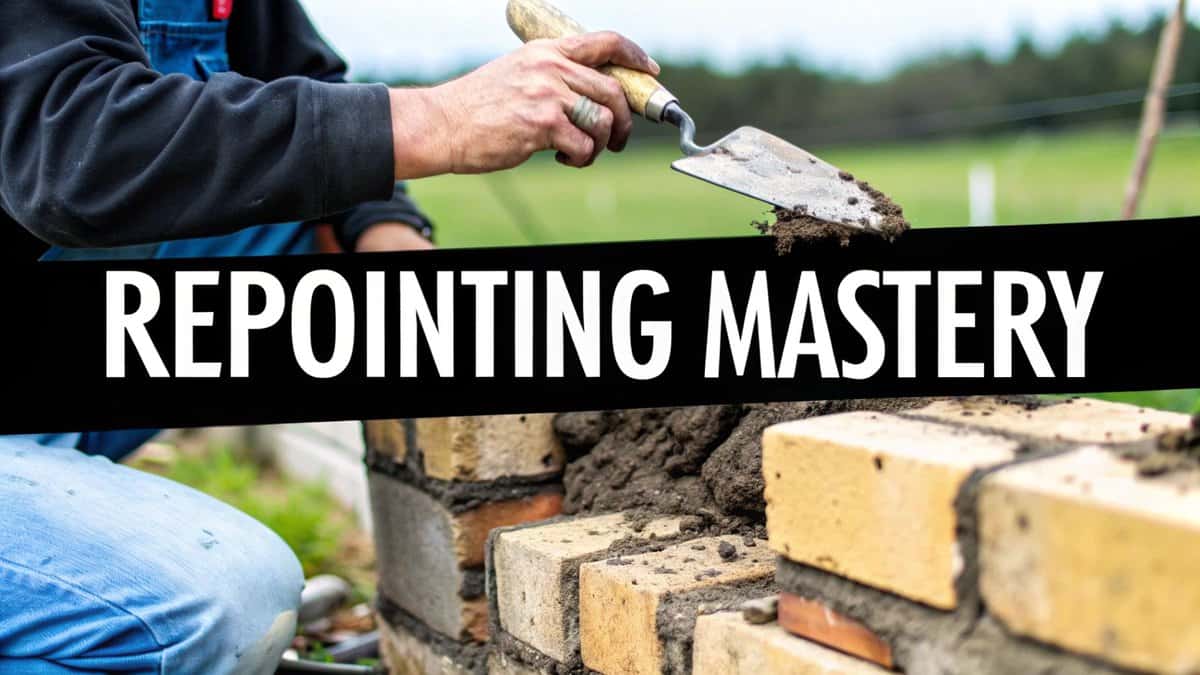
What is Stone Wall Repointing, Really?
At its heart, stone wall repointing is about renewing the very fabric of your stonework. First, we carefully rake out the old, crumbling mortar from between the stones. Then, we replace it with a fresh, durable mix. It’s more than just a cosmetic touch-up; consequently, it’s a vital procedure that safeguards your wall’s structural integrity and brings back its original visual charm.
Proper repointing stops water from getting in and causing all sorts of havoc down the line.
Why Ignoring Crumbling Mortar is a Costly Mistake
That bit of crumbling mortar you’ve been noticing might look harmless. However, it’s often the first warning sign of a much bigger issue brewing inside your wall. Think of those failing joints as open doors, inviting water to seep deep into the wall’s core.
Here in Stoke-on-Trent, with our notoriously damp weather, that moisture can lead to serious headaches.
Before long, you could be facing:
- Creeping Water Damage: Trapped moisture doesn’t stay put. For instance, it can travel through the wall, causing damp patches on your interior plaster.
- Structural Failure: In winter, the real damage begins. Specifically, water trapped in the joints freezes and expands. This freeze-thaw cycle can seriously compromise the entire wall’s stability.
- A Hit to Your Property Value: Let’s be honest, a deteriorating stone wall is an eyesore. Furthermore, it is a major red flag for any potential buyer, directly impacting your property’s curb appeal and value.
Your Property’s Health and Our Stone Wall Repointing
The mortar is the connective tissue that holds your stone wall together. When it fails, the wall can no longer manage moisture or “breathe” the way it was designed to.
That’s why professional stone wall repointing is less of a repair and more of a critical health check-up for your property. Additionally, it protects the stones themselves from damage by modern, hard cements.
A properly repointed wall doesn’t just look better—it functions as a cohesive system. As a result, it is built to stand strong against the elements for decades. This is especially vital for preserving the unique character of homes across Stoke-on-Trent.
Our Expert Stone Wall Repointing in Stoke-on-Trent
For homeowners in our local Stoke-on-Trent area, understanding this process is the key to protecting your investment. Consequently, we steer clear of quick fixes that will only fail again in a few years.
Our team focuses on using the right materials for the job, like traditional lime mortars. This ensures your wall can breathe naturally, which is the best defence against future damp.
Ultimately, our expert stone wall repointing service transforms a potential liability into a beautiful, enduring feature of your home. We’re committed to preserving both the structural health and the aesthetic charm of your property with craftsmanship you can trust.
Spotting the Signs: When to Repoint Your Stone Wall

So, how do you know when your stone wall is crying out for help? Knowing what to look for is the key to catching small problems before they balloon into massive repairs. Thankfully, you don’t need to be a seasoned mason to spot the classic warning signs that it’s time for stone wall repointing.
Some clues are glaringly obvious, while others are a bit more subtle. For example, the most direct signal is when you can see the mortar is visibly crumbling. This means your wall’s first line of defence against the elements has failed.
The Obvious Red Flags of Stone Wall Damage
Often, a quick visual inspection is all you need. Simply go up to the wall and run a key or your finger across a mortar joint. If it feels sandy and crumbles away with little effort, the original binder has lost its strength.
Also, keep an eye out for these dead giveaways:
- Visible Cracks: What starts as a hairline crack can quickly expand. Consequently, it creates a direct path for rainwater to seep deep inside the wall.
- Receding Joints: If the mortar looks like it’s shrinking away, that’s a classic sign of erosion.
- Unwanted Greenery: See moss or little plants sprouting from the joints? That’s a bad sign, signalling significant decay.
These problems are especially common here in Stoke-on-Trent, where our damp climate speeds up erosion. If you ignore them, water gets in and can cause serious damage, particularly during winter.
The Sneakier Clues for Stone Wall Repointing
Sometimes, the most telling signs aren’t on the outside of the wall at all. Instead, you have to play detective and look for indirect evidence of moisture problems.
A classic example is efflorescence. This is a white, powdery stain that appears on the surface of the stones. It’s basically salt deposits left behind as water travels through the wall and evaporates. Seeing this means water is getting in where it shouldn’t be. Similarly, you might also spot damp patches or find peeling paint on an interior wall.
Catching these subtle signs early is the absolute key. Specifically, it means we can tackle the repointing before moisture compromises the entire structure of the wall.
This kind of upkeep is a major part of property maintenance. The global market for natural stone was valued at a huge $40.4 billion in 2024. It’s projected to climb to $54.9 billion by 2033, a boom driven largely by restoration projects. If you’re interested, you can explore more about these market trends and see how they tie into property care.
Our Approach to Repointing a Stone Wall
Repointing a stone wall is a true craft, one that demands patience and a deep understanding of traditional building methods. It’s a meticulous job where preparation is just as important as the final finish.
First, we tackle the old, failing mortar. You simply can’t rush this. For instance, going in too aggressively with power tools can easily chip the stone, causing permanent damage. Therefore, it’s all about careful, methodical removal.
Getting the Wall Ready for a Lasting Fix
We start by raking out the old mortar from every joint to a depth of about 20mm to 30mm. This is non-negotiable. If you don’t go deep enough, the new mortar is just a thin layer that won’t form a proper bond. Consequently, it’s guaranteed to fail in just a few years.
Once the old stuff is out, the cleaning begins. In detail, this is a two-step dance:
- First, we get in there with stiff and wire brushes to scrub out every last bit of dust and debris.
- Then, we gently rinse the joints with a bit of water. This removes any fine particles and creates a pristine surface for the new mortar.
This quick visual breaks down our core prep work.

As you can see, getting the removal, cleaning, and moisture levels right is the bedrock of a job built to last.
Choosing the Right Mortar for Stone Wall Repointing
With a clean slate to work with, our attention turns to the mortar. This is where a lot of projects go wrong. It’s not a one-size-fits-all deal; therefore, using the wrong mix can actively harm your wall.
The most common blunder we see is a hard cement mortar slapped onto an old stone wall. That modern cement is far too rigid and doesn’t breathe. As a result, it ends up trapping moisture inside the wall, which is a recipe for disaster.
For the vast majority of properties in Stoke-on-Trent, a traditional lime-based mortar is the only way to go.
Why Lime Mortar?
It’s simple: lime mortar is softer and more “breathable” than the stone itself. This genius quality allows moisture to escape through the joints, not the stone. Ultimately, it protects the integrity of the stonework.
Choosing the right mortar is crucial for the health and longevity of your stone wall. Different materials have vastly different properties. What works for a modern brick house can be destructive to historic stonework.
Choosing the Right Mortar for Stone Wall Repointing
| Mortar Type | Key Properties | Best For | Why It Matters |
|---|---|---|---|
| Lime Mortar (NHL) | Flexible, breathable, self-healing. Varies in strength (NHL 2, 3.5, 5). | Historic buildings, softer stone like sandstone, exposed locations. | Allows moisture to evaporate, preventing frost damage and stone decay. Its flexibility accommodates natural building movement. |
| Hydraulic Lime Mortar | A mix of lime and cement. Stronger than pure lime but less breathable. | Walls needing extra strength but still requiring some breathability. | Offers a compromise between the hardness of cement and the softness of lime, but the balance must be right for the stone. |
| Cement Mortar | Hard, rigid, impermeable, fast-setting. | Modern brickwork and blockwork. Generally unsuitable for stone walls. | It’s too strong and traps moisture. It will almost always cause the surrounding stone to decay and spall over time. |
| Heritage Mortars | Bespoke mixes designed to replicate original historic mortars. | Listed buildings, conservation projects, specific regional stone types. | Ensures an authentic match in colour, texture, and performance, which is often a requirement for protected structures. |
Ultimately, we mix our mortar on-site. We carefully tailor it to your wall’s specific stone type, its age, and its exposure to the elements. This ensures the final result is not only strong but also looks right for your home.
The Art of Applying and Finishing the Mortar
Finally, it’s time to apply the new mortar. Before we begin, we lightly dampen the joints. This little step is critical because it stops the dry stone from sucking all the water out of the mortar too quickly.
Then, we press the mortar into the joints in layers, making sure to compact it firmly. This creates a dense, weather-tight finish that will hold up to our Stoke-on-Trent weather.
Once filled, we tool the joints to match the original style. The global natural stone market was valued at $33.8 billion in 2020 and is forecast to hit $57.6 billion by 2032. This growth is driven by restoration projects that depend on expert work. You can learn more about these natural stone industry trends to see just how vital this craft has become.
Why the Right Mortar Is Absolutely Crucial

Let’s get one thing straight: not all mortars are the same. Choosing the wrong one for your stone wall isn’t just a minor mistake—it can cause serious, irreversible damage. This is probably the single most important decision in the entire repointing process.
One of the most common and disastrous errors we see is people slapping modern cement mortar onto a traditional stone wall. It seems like a quick fix. However, this stuff is typically far harder and less breathable than the stone. What happens next? It effectively shrink-wraps your wall, trapping moisture deep inside.
The Damage Caused by Trapped Moisture
When water gets into a wall and can’t get out, it has to go somewhere. In winter, for example, that trapped moisture freezes. As it turns to ice, it expands, putting incredible pressure on the stone from the inside out.
This constant freeze-thaw cycle literally blows the face of the stone apart, causing it to crumble. We call this destructive process “spalling,” and once it starts, it’s very difficult to stop.
Instead of protecting the wall, the hard cement mortar ends up destroying it. Consequently, the moisture is forced to escape through the stone itself.
The whole point of repointing is to make the joints softer and more breathable than the stone. Therefore, the mortar should always be the sacrificial part of the wall, protecting the much more valuable stonework.
Why We Swear by Traditional Lime Mortars
For almost any older property in Stoke-on-Trent, traditional lime mortar is the only sensible choice for stone wall repointing. Unlike modern cement, lime-based mortars are wonderfully flexible and porous. This allows the entire wall to “breathe.”
This breathability is the secret to a healthy, dry wall.
- Lets Moisture Escape: Specifically, lime mortar allows water vapour to pass right through the joints and evaporate away.
- Moves with the Building: Old buildings settle and move slightly over time. Therefore, lime is flexible enough to handle this movement.
- Protects the Stone: Since it’s softer than the stone, it will never cause the kind of spalling you see with cement.
Using the right materials is also about proper building conservation. In fact, European regulations since July 2013 have required natural stone products to meet strict quality standards. This focus on heritage is why traditional stone wall repointing techniques are so vital. If you’re interested, you can read more about quality in the global stone market through these construction material insights.
Our Mortar Approach for Stoke-on-Trent Stone Wall Repointing
Here in Stoke-on-Trent, we are uncompromising when it comes to materials. We only use high-quality, appropriate mortars for our stone wall repointing jobs.
We don’t just grab a bag off the shelf. First, we take the time to analyse your wall—its age, the type of stone, and its exposure to the weather. Then, we formulate a mortar mix that’s perfectly suited to your property. This thoughtful approach separates a cheap patch-up from a professional restoration that will protect your home’s heritage.
Your Stoke-on-Trent Stone Wall Repointing Experts

When the time comes to restore your property’s stonework, you need a local team. Specifically, a team that truly gets the unique challenges of buildings here in Stoke-on-Trent. Picking the right specialist for your stone wall repointing project is a big decision. Ultimately, it’s about finding people who respect your property and are committed to a high-quality, lasting result.
We’ve built our reputation on a foundation of trust and local expertise. In addition, we blend an appreciation for our area’s architecture with the tried-and-true techniques that protect your investment.
Local Knowledge That Matters for Stone Wall Repointing
Every region has its architectural quirks, and Stoke-on-Trent is no different. We’re familiar with the specific types of local stone and historic building methods used here. This hands-on knowledge is priceless when it comes to stone wall repointing.
For instance, we know exactly how the local climate impacts different mortars. This insight helps us choose the perfect mix to stand up to our damp winters. As a result, your wall stays strong and weatherproof for years to come. The goal is always to deliver work that’s not just beautiful, but structurally solid.
Our Commitment to Stoke-on-Trent Homeowners
We get it—having work done on your home can feel like a major disruption. That’s why we make a simple, straightforward commitment to every client in the Stoke-on-Trent area. We promise clear communication, professionalism, and a solution that gives you complete peace of mind.
Our goal is simple: to provide a repointing solution that not only looks fantastic but also provides durable, long-term protection for your property. We treat your home with the same care and respect as if it were our own.
We handle every part of the project with care. This attention to detail starts with the first chat and doesn’t end until the final cleanup. Ultimately, this makes the whole experience smooth and hassle-free for you.
What to Expect When You Work With Us
Choosing us for your stone wall repointing means you’re getting a professional service from start to finish. We believe in being transparent and approachable every step of the way.
Here’s a quick look at how we work:
- A Clear Consultation: First, we’ll start with a detailed look at your wall to understand its condition.
- Respect for Your Property: Our team takes great care to protect your garden and surrounding areas. For example, we use dust control methods and keep the work site tidy.
- A Thorough Cleanup: Once the job is done, we make sure your property is left spotless. The only thing you should notice is your beautifully restored wall.
If your stone wall is starting to show its age, don’t wait for the problem to get worse. You can protect your property and bring back its original charm. Get in touch today for a straightforward consultation and a no-obligation quote right here in Stoke-on-Trent. Let’s get the job done right.
Common Questions About Stone Wall Repointing
Even with a good grasp of the process, it’s natural to have a few practical questions. Over the years, we’ve heard just about everything from our clients here in Stoke-on-Trent. So, we’ve put together answers to the questions we get asked the most.
One of the first things on everyone’s mind is longevity. How long will the new pointing actually last? It’s a fair question; after all, you’re making an investment in your home.
When stone wall repointing is done right, using the proper materials, you should expect it to last for decades. A professional job can easily last 50 years or more. That’s a world away from a quick-fix DIY job, which often fails in just a few years.
Scheduling and Site Management for Your Repointing Project
People also worry about the disruption—the timing, the mess, and how it will affect their daily life. We get it. Therefore, we plan everything to keep the inconvenience to a minimum.
Can repointing be done in any weather?
Not really. We have to work with the weather, not against it. For instance, frost is the enemy of fresh mortar, as is scorching heat. Both can ruin the curing process. We keep a close eye on the Stoke-on-Trent forecast and schedule our work for optimal conditions.
We know your home is your sanctuary. Our team is meticulous about protecting your property. For example, we lay down dust sheets and clean up thoroughly at the end of every single day. We leave your space as tidy as we found it.
Is stone wall repointing a messy job?
Let’s be honest, raking out old mortar creates dust. There’s no getting around that. However, we don’t just let it fly everywhere. We use modern dust extraction tools and take the time to protect your garden, paths, and windows. Our goal is to make the whole process as clean and undisruptive as possible.
Our Commitment to Quality Repointing in Stoke-on-Trent
At the end of the day, you need to feel confident in the work being done. We blend time-honoured craftsmanship with a real understanding of the stone and building styles here in Stoke-on-Trent. The result is a finish that’s not only beautiful but also structurally sound. Ultimately, it protects your home’s character for years to come.
Responses
[…] to protect your stone from moisture, stains, and dirt. For more advanced care, learning about expert stone wall repointing techniques can ensure your wall lasts a […]
[…] These final steps are as critical as the main build. Similarly, the detailed work of a professional stone wall repointing project is crucial for […]
[…] getting rid of can really shift the final price. For example, heavy, inert waste from jobs like stone wall repointing projects has different disposal costs compared to general household junk. It’s always best to double-check […]
[…] the maintenance process is key. You can find out more about the techniques involved in stone wall repointing to keep them in top […]