

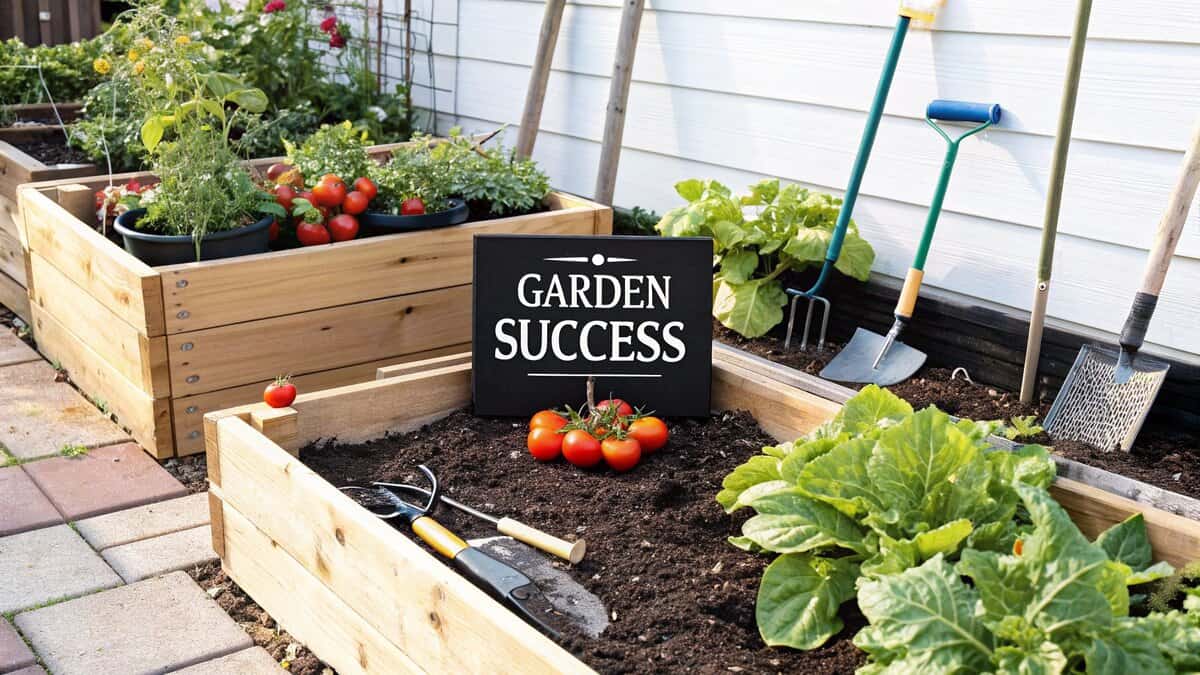
There’s something magical about growing your own vegetables. Indeed, it’s about more than just gardening; it’s about turning a patch of your space into a source of fresh, healthy, and delicious food. You get to follow the whole journey, from a tiny seed to a fantastic meal on your plate.
For quotes and bookings, call or email us here.
Unlocking the Joy of Vegetable Gardening
Starting a vegetable garden is not just a weekend project—it can be a whole new way of life. For instance, imagine walking out your back door to grab ingredients for dinner. This guide helps you, right here in Stoke-on-Trent, turn that idea into a reality.
Clearly, this isn’t just a passing fad. In fact, the love for home-grown food is stronger than ever. 55.9% of gardeners say they plan to make their vegetable patches even bigger. It’s a passion that just keeps growing. If you’re curious, you can find more current gardening statistics that show just how popular it is.
Why Start Your Own Vegetable Garden
Growing your own food brings a wonderful mix of practical perks. Additionally, it offers a genuine sense of accomplishment. It’s an activity that truly enriches both your dinner plate and your daily life. Here in Stoke-on-Trent, we at Stoke Gardening Services love helping people discover these benefits.
Unbeatable Taste and Nutrition: When you grow your own, you pick vegetables at the perfect moment of ripeness. Consequently, they are bursting with flavour and nutrients. You just can’t get that from produce shipped across the country.
A Boost for Your Wellbeing: Simply spending time in the garden, tending to your plants, is a proven way to reduce stress. It offers a quiet escape. Plus, you get the simple joy of watching something grow.
Gentle Physical Activity: Gardening gets you moving. Specifically, all that digging, planting, and weeding adds up. It is a great form of low-impact exercise that gets you out in the fresh air.
Starting a vegetable garden connects you to the seasons. Furthermore, it connects you to the food you eat in a profound way. It’s a journey that offers fresh produce and an even fresher perspective on life.
As local experts at Stoke Gardening Services, we are passionate about helping our neighbours succeed. We know the soil and climate here. Therefore, we can give you the right advice to make your vegetable gardening dreams a reality.
Choosing the Perfect Site for Your Vegetable Garden
Picking the right spot for your vegetable garden is the first big decision you’ll make. Honestly, it’s one of the most important. Think of it as real estate for your plants—location is everything. A little thought now will save you many headaches. It will also lead to a much bigger harvest later on.
Your number one priority? Find the sun. Most vegetables need a solid six to eight hours of direct sunlight every day. This includes sunbathers like tomatoes, cucumbers, and peppers. A south-facing spot is usually a safe bet. However, any patch that gets blasted by the sun for most of the day will do the trick.
Checking for Sun and Space
Before you turn over any soil, play detective for a day. Watch how the sun moves across your garden. Then, take notes on which areas get light and for how long. Keep in mind that the sun sits higher in the summer. So, a spot that seems perfect in April might get shaded in July.
Don’t have a huge garden? No problem at all. Even a small patio can become a productive little farm. Containers, hanging baskets, and vertical planters are your best friends. The golden rule is the same: make sure that little spot gets enough sun.
Next up is drainage. This is a big one, especially around Stoke-on-Trent with our heavy clay soil. Plants absolutely hate having “wet feet.” Their roots can rot if they sit in soggy soil. An easy test is to watch your garden after a heavy rain. If you see puddles still hanging around hours later, you’ve got a drainage issue.
A well-chosen site does more than just provide sunlight. Crucially, it creates an environment where plants can establish strong roots, resist diseases, and produce the delicious food you’re looking forward to.
The good news is that poor drainage is fixable. Working lots of compost into the soil helps break up heavy clay. An even better solution is to build raised beds. They give you total control over the soil. They are also a fantastic workaround for our local conditions. If you’re scratching your head, an expert opinion can really help. You can easily find a professional gardener near you for advice tailored to your Stoke-on-Trent garden.
Thinking About Water and Access
Finally, let’s talk about convenience. It might seem like a small detail. But you want your garden to be somewhere you can get to easily. A plot tucked away at the far end of the garden is easy to forget. You’ll be watering and weeding regularly, so make it easy on yourself.
And that brings me to water. Is there a tap nearby? Trust me, lugging heavy watering cans back and forth gets old fast. Having a water source within a hose’s reach will make your life much simpler. Also, it ensures your thirsty plants get what they need.
This desire to grow our own food is bigger than just a hobby. In fact, the residential gardening world accounts for over 45% of a global market. This market is worth around USD 120 billion. It just goes to show how many of us are getting back to our roots. You can read more about this trend and market growth on marknteladvisors.com.
Ultimately, finding the perfect site is a balancing act. You need the right mix of sun, good drainage, and easy access. Get these three things right, and you’ve built the foundation for a successful and rewarding vegetable garden.
Preparing Soil for a Thriving Vegetable Garden

Think of your garden soil as the foundation of a house. If it’s weak or unstable, everything you build on top will struggle. The real secret to a garden overflowing with vegetables starts with your soil. Specifically, it starts with creating rich, healthy soil.
Here in Stoke-on-Trent, we often deal with heavy clay. It’s actually packed with nutrients. However, its dense, sticky structure can be a real headache. In wet weather, it turns into a bog. During a dry spell, it can bake as hard as concrete. Neither is great for delicate new roots.
The goal is to turn that stubborn clay into a crumbly home for your plants. Moreover, it should be well-draining and full of life. And the good news? It’s completely doable. Putting effort into your soil now is the best investment for your future harvests.
Understanding Your Garden Soil
Before you improve your soil, you need to get to know it a little better. The soil’s texture dictates how well it holds water and nutrients. The easiest way to figure this out is with a simple “squeeze test.”
Go out and grab a handful of damp soil. Then, give it a firm squeeze in your palm. If it forms a slick, solid ball, you’ve got classic clay. If it feels gritty and completely falls apart, that’s sandy soil. The sweet spot is a loamy soil, which will hold together but crumble easily.
Knowing your soil type tells you what it needs. For our local clay, the priority is breaking up that dense structure. Once you fix that, you can focus on packing it with the good stuff.
The most effective way to improve almost any soil type is by consistently adding organic matter. This is especially true for the heavy clay common in Stoke-on-Trent. This single action improves drainage, aeration, and nutrient availability all at once.
The Power of Organic Matter
Organic matter is the key that unlocks your soil’s potential. For instance, it works like a sponge, helping heavy clay drain better. It also holds just enough moisture to get plants through dry patches. On top of that, it acts as a slow-release fertiliser, feeding your plants over time.
Here are a few excellent sources of organic matter to mix into your garden:
- Garden Compost: This is the gold standard. It’s packed with nutrients and beneficial microbes that bring your soil to life.
- Well-Rotted Manure: This is a brilliant source of nitrogen. Consequently, it is fantastic for getting leafy greens to take off. Just make sure it’s well-rotted—fresh manure is too strong.
- Leaf Mould: Decomposed leaves create a wonderfully light and crumbly conditioner. In addition, it dramatically improves soil structure.
And if you want to take the guesswork out of it, our team at Stoke Gardening Services offers professional soil analysis. This gives you a precise roadmap for your Stoke-on-Trent garden.
Exploring Low-Maintenance Vegetable Gardening Methods
Improving your soil doesn’t have to mean hours of back-breaking digging. In fact, some of the best methods involve disturbing the soil as little as possible. This helps protect the delicate ecosystem of worms and microbes living in it.
A really popular approach is the ‘no-dig’ method. It’s exactly what it sounds like. Instead of digging compost in, you simply spread a thick layer on top of your beds. The worms do the hard work for you. As a result, they pull the organic matter down into the soil, improving its structure. A huge bonus is that you don’t bring dormant weed seeds up to the surface.
Another fantastic option is to use raised beds. This is especially true if your garden has poor drainage. They offer a few key advantages:
- Total Soil Control: You can fill them with the perfect custom blend of topsoil and compost.
- Superior Drainage: Excess water drains away freely, which means no more waterlogged roots.
- Warmer Soil: The soil in raised beds warms up much faster in the spring. Subsequently, it gives you a head start on the growing season.
- Easier Access: They bring the garden up to you, reducing the need for bending and kneeling.
Planning Your Crops and Planting Schedule
A little bit of planning goes a long, long way in the garden. It turns a frantic harvest into a steady, continuous supply of fresh food. Think of yourself as the director of a play—each plant has its part. You decide when it makes its grand entrance.
This is where the real fun begins. First, you get to choose your crops. Then, you learn their personalities. Finally, you create a little ecosystem where everything works together. It’s less about following rigid rules. Instead, it’s about making smart choices for a thriving garden.
Smart Strategies for a Healthier Vegetable Garden
Two simple but powerful ideas will completely change your gardening game: companion planting and crop rotation.
Companion planting is just like matchmaking for your vegetables. Some plants just grow better together. For example, a classic example is planting basil near your tomatoes. Many old-timers swear it improves the tomato’s flavour while keeping pests away.
Crop rotation is the practice of moving your plant families around to different spots each year. Why? Because it’s a brilliant way to stop pests and diseases from setting up a permanent home. It also prevents one type of plant from completely stripping the same nutrients from one patch.
A well-planned garden is a resilient garden. By rotating crops and pairing beneficial plants, you create a natural defence system. This reduces the need for intervention and leads to healthier, more abundant harvests.
If that sounds like a lot to juggle, don’t worry. Our team at Stoke Gardening Services can help you design a productive vegetable patch. We make it a perfect fit for your space and what you want to grow.
Working With the Stoke-on-Trent Climate for Vegetable Gardening
Knowing what to plant is one thing, but knowing when to plant it is everything. Our local climate here in Stoke-on-Trent has its own rhythm. Getting in sync with it is the secret to a successful vegetable gardening season.
Some veggies, like peas, love a long, cool start to the season. Others, like courgettes, won’t do much until the summer heat really kicks in. Quick-growing crops like radishes can give you a satisfying harvest in just a month. Meanwhile, patient gardeners will be rewarded with delicious leeks and parsnips in the autumn.
This handy chart gives you an idea of how much room some popular vegetables need to really stretch out and grow well.

As you can see, a sprawling tomato plant needs a lot more elbow room than a neat row of carrots!
Your Local Planting Calendar
Timing is crucial, but it doesn’t have to be complicated. Here’s a quick look at how the gardening year typically unfolds in our area. Just remember, the weather can always throw a curveball. So, treat this as a guide, not a rulebook.
Stoke-on-Trent Seasonal Planting Calendar
To make things even clearer, here’s a simplified table. It shows the best times to sow some popular vegetables indoors. It also shows when it’s safe to plant them out in the garden.
| Vegetable | Sow Indoors | Plant Outdoors |
|---|---|---|
| Tomatoes | February – April | May – June |
| Lettuce | March – July | April – August |
| Courgettes | April – May | May – June |
| Peas | Not required | March – June |
| Carrots | Not required | April – July |
| Onions (from set) | Not required | March – April |
| Kale | May – June | June – July |
| Broad Beans | October – Nov | October – March |
This calendar helps you visualize your garden’s schedule. Thus, ensuring you have seedlings ready to go when the time is right.
Here’s a breakdown of what to do and when:
Early Spring (March-April): It’s time to sow the tough guys. Get your peas, broad beans, and early potatoes straight into the ground. Inside, start your tender crops like tomatoes and peppers on a sunny windowsill.
Late Spring (May-June): Once the soil warms up, it’s safe to plant out those tender seedlings. This is also the prime time for sowing carrots and beetroot directly. For a non-stop supply of salad, sow a new row every 2-3 weeks.
Summer (July-August): The growing season is far from over! You can still pop in fast-growing crops like more lettuce and radishes. Now is also the time to plant winter staples like kale.
Autumn (September-October): Get ahead for next year by planting your garlic and overwintering onions. They’ll happily settle into the soil over winter. Then, they will be ready for you to harvest next summer.
By planning your garden this way, you turn it from a one-shot project into a year-round source of fresh food. Consequently, there’s always something to look forward to.
Keeping Your Veggie Patch Happy: Care and Maintenance
Once your plants are settled in their new home, your job shifts to caretaker. Don’t worry, this is the fun part! Consistent care is what turns a few seedlings into a basket full of fresh produce.
Think of it as a simple rhythm: watering, weeding, and feeding. Get these three things right, and you’ll create a garden where your vegetables thrive. The reward? Healthy plants and delicious, homegrown food.
How to Water Your Vegetable Garden Like a Pro
Watering is more than just a quick spray with the hose. The real goal is to encourage deep, strong roots. These roots can find moisture on their own. As a result, your plants become tougher and more resilient, especially during a dry spell.
The trick is to water deeply but not as often. A light sprinkle every day just wets the surface. Instead, give your garden a really good soak once or twice a week. You want the water to sink way down into the soil.
A good rule of thumb is to provide about one inch of water per week. This counts both rainfall and your watering efforts. The best time to do this is early in the morning. Therefore, it cuts down on evaporation and lets leaves dry out before nightfall, which helps prevent fungal diseases.
Here in Stoke-on-Trent, our clay soil holds water differently. If you’re local, we can give you specific tips. Getting the watering right is a cornerstone of successful vegetable gardening.
Keeping Weeds and Pests in Check—The Organic Way
Weeds and pests are just a part of gardening. However, you don’t need to reach for harsh chemicals. Organic methods work beautifully. They are also safer for your family and much better for local wildlife.
The easiest way to deal with weeds is the old-fashioned way. Simply pull them by hand or use a hoe while they’re still small. Another fantastic trick is to use a thick layer of mulch. It blocks sunlight from reaching weed seeds and helps keep the soil moist.
When it comes to pests, it’s best to be proactive:
- Invite a Few Friends: Ladybugs and lacewings are your garden’s best security guards. For instance, they love to munch on aphids! Planting flowers like marigolds nearby is a great way to attract them.
- Put Up Barriers: A bit of fine netting can work wonders. It protects crops like carrots and cabbages from moths and other insects.
- Use a Simple Spray: A little bit of soap mixed with water is surprisingly effective. This simple spray works against soft-bodied pests.
The Stoke Gardening Services team knows all the common culprits in Stoke-on-Trent gardens. Therefore, we can help you find a natural pest management solution that keeps your garden healthy.
Feeding Your Plants for a Bumper Crop
Just like us, plants need good nutrition to grow strong. The compost you mixed into the soil provides a solid foundation. However, some crops are extra hungry. Think of tomatoes, courgettes, and sweetcorn—they’ll thank you for an extra meal.
A simple and effective way to feed them is with a liquid feed like compost tea. It’s just what it sounds like: a nutrient-packed brew made by steeping compost in water. This gives your plants a quick and easy-to-absorb dose of goodness. We cover this and more in our article about various compost designs.
Growing your own food is becoming more important than ever. In the United States, for example, vegetable availability recently dropped to 376 pounds per person—a modern low—as production has fallen. That shortage helped push vegetable prices up by 11%. It’s a stark reminder of just how valuable a productive home garden can be.
Harvesting and Enjoying Your Homegrown Produce

This is it—the moment you’ve been working toward. All that planting, watering, and weeding is about to pay off. Knowing when and how to harvest is the final step to getting the most flavourful produce.
Picking your veggies at their peak really does make all the difference. For instance, a tomato left to ripen on the vine develops a much richer, sweeter taste. On the flip side, grabbing a courgette when it’s still small and tender is a world away from letting it become an oversized marrow.
Knowing When Your Vegetables Are Ready for Harvest
Every vegetable gives you little clues when it’s ready to be picked. Learning to spot these signs is a skill that makes a good harvest truly great. Fortunately, you’ll quickly get the hang of it as you spend more time with your plants.
Here are a few pointers for some garden favourites:
- Tomatoes: Look for a deep, even colour. They should feel firm to the touch, but with a slight give. The best sign? They’ll come off the vine with just a gentle twist.
- Courgettes: The sweet spot is when they’re about 6-8 inches long. Any bigger and they start to lose their flavour and tender texture.
- Carrots: Check the “shoulders” peeking out of the soil. When they look about the right size for eating, they’re ready. You can always brush a little dirt away to get a better look.
- Lettuce: With loose-leaf varieties, you don’t have to pull the whole plant. Instead, just snip the outer leaves as you need them. The plant will keep growing from the centre. This is the “cut-and-come-again” method, and it’s brilliant.
A well-timed harvest doesn’t just give you better-tasting food. In fact, it actually signals to many plants that they should produce more. It’s a simple trick to keep your garden productive for longer.
Storing Your Harvest for Lasting Freshness
Once you’ve gathered your bounty, the next challenge is making it last. Storing your produce correctly keeps it fresh and tasty for as long as possible. Different vegetables have different needs. However, the methods are all pretty straightforward.
Leafy greens like kale and spinach do wonderfully when blanched and frozen. As a result, their nutrients and colour are locked in for months. Root vegetables, on the other hand, are happiest in a cool, dark, and slightly humid spot. This includes carrots and beetroot.
For onions and garlic, curing is the key to storing them through the winter. This just means letting them air dry in a warm, breezy place for a couple of weeks. Their outer skins will then feel dry and papery. Once cured, they’ll keep for ages in a cool, dry pantry.
Bringing your vegetable gardening journey full circle from a tiny seed to a delicious meal is one of life’s great satisfactions. If you’re gardening in Stoke-on-Trent and want a hand with your plot, our team is here to help. Get in touch today for a personalised gardening consultation.
Got Questions? We’ve Got Answers
Every gardener, from the first-timer to the seasoned pro, runs into questions. It’s just part of the process! Getting a straight answer quickly can make a big difference. We get a lot of the same questions from gardeners here in Stoke-on-Trent, so let’s tackle a few.
Think of this as advice from a neighbor who has been doing this for years. Because that’s exactly what it is. We want you to feel confident enough to handle whatever your garden throws your way.
What Are the Easiest Veggies for a Beginner’s Vegetable Garden?
If you’re just starting out, you want a few easy wins to build your confidence. Therefore, we always suggest starting with vegetables that are both tough and give you a quick reward.
Salad greens are a brilliant choice. Things like lettuce and rocket shoot up in no time. Radishes are another fantastic option. They are incredibly simple and can be ready to eat in just a few weeks. Bush beans, peas, and courgettes are also great picks for our climate. They tend to produce a lot without demanding too much fuss. Consequently, they are perfect for your first foray into vegetable gardening.
How Much Sun is Really Necessary?
This is a big one. Most common vegetables thrive in what we call ‘full sun’. This means at least six to eight hours of direct, unfiltered sunlight each day. If you’re dreaming of homegrown tomatoes or peppers, you absolutely need to find your sunniest spot.
But what if your garden is a bit shady? Don’t despair! You can still grow plenty. Leafy greens like spinach, chard, and kale do just fine with only four to six hours of sun. Many root vegetables are also quite tolerant of partial shade. The trick is to simply watch your garden for a day and see where the sun lands.
“Understanding the unique light conditions of your garden is the first step in matching the right plant to the right place. This simple observation prevents a lot of future frustration and leads to a much healthier garden.”
How Do I Deal With Stoke-on-Trent’s Heavy Clay Soil?
Ah, the infamous local clay. Improving it is probably the single most important thing you can do for a successful vegetable gardening season. The secret weapon is organic matter. You need to work lots of it into your soil.
Think garden compost, well-rotted manure, or leaf mould. Mixing this stuff in does wonders for the heavy, dense structure of clay. First, it breaks it up. Second, it improves drainage so roots don’t rot. Third, it lets air get in, which is crucial for healthy growth. The best time to do this is in the autumn, as the winter frosts will help do the work.
Another fantastic workaround is to build raised beds. This lets you sidestep the problem entirely. You can fill them with the perfect soil mix from day one.
Feeling inspired but not sure where to start? Let the local experts at Stoke Gardening Services help you create the vegetable garden you have always wanted. With our extensive experience, we offer everything from initial design and soil preparation to ongoing maintenance.
For quotes and bookings, call or email us here.
Responses
[…] For a deeper dive into this, you might be interested in our complete guide. You can learn more about vegetable gardening in our comprehensive article. […]
[…] If you live in a flat or have a small patio, the Bokashi system is ideal. It’s a quick, clean, and compact method. While it requires purchasing the Bokashi bran, the benefits are significant. For more ideas on using the finished product, explore our guide to vegetable gardening in Stoke-on-Trent. […]
[…] Just focus on clipping off any branches that got broken during transport. You can also trim back any competing main stems. This helps it develop a solid central leader. We’re not talking about major shaping here. It’s just about reducing the initial stress on your young tree. Proper aftercare is just as vital for a fruit tree as any other plant. Many of the same principles apply. For instance, good watering and mulching are also crucial when you’re starting a new patch. You can see this in our guide to vegetable gardening. […]
[…] We can handle the entire process. This runs from the first sketch to the full installation of your dream garden. If you love growing your own food, our designs can make your plot incredibly productive. You can find more tips on this in our guide to vegetable gardening. […]
[…] If you need help setting up your vegetable patch, our Stoke-on-Trent services can provide expert support. For more advice, explore our guide to vegetable gardening in Stoke. […]
[…] This method also helps you make the most of your space. You can interplant fast-growing crops like lettuce alongside slower ones like parsnips, ensuring you’re getting something out of every square foot of your Stoke-on-Trent allotment or garden. By maximising your growing area, you naturally increase your potential harvest. For more tips on setting up your plot, check out our complete guide to vegetable gardening. […]