
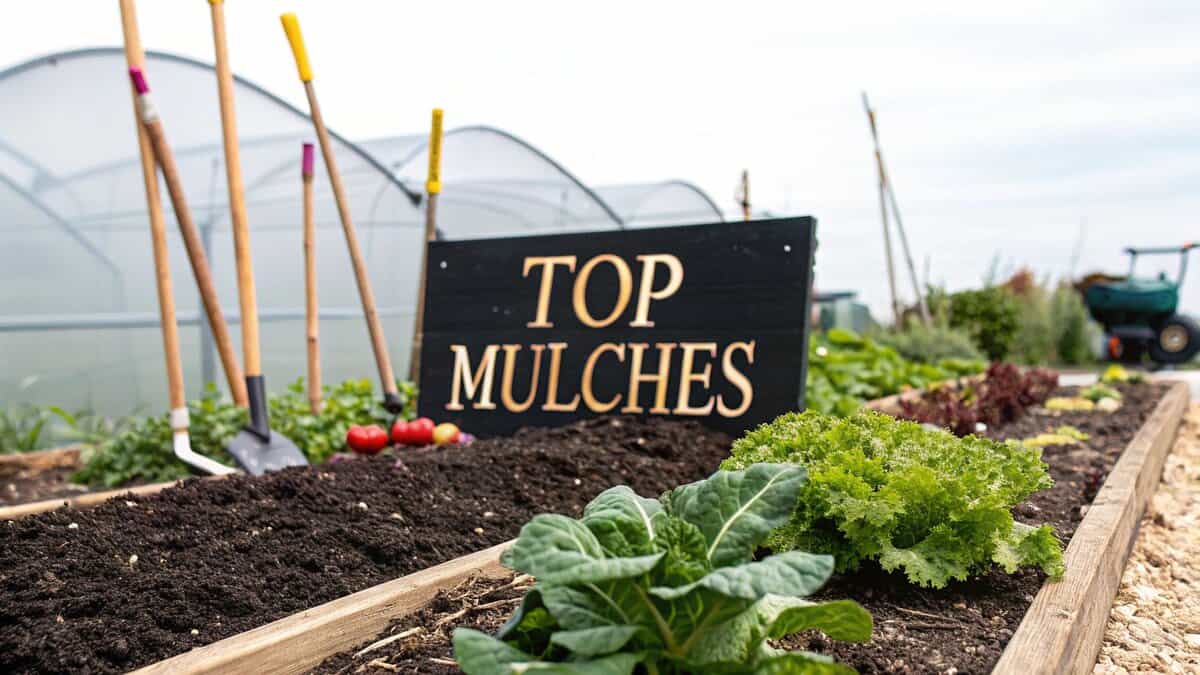
When it comes to the best mulch for your vegetable garden, it really boils down to what you want to achieve. Are you playing the long game, aiming to improve your soil’s fertility year after year? If so, you’ll want to look at organic mulches like compost or straw.
For most of us gardening here in the UK, a good quality organic mulch is hands-down the best all-around choice.
For quotes and bookings, call or email us here.
Why Mulch Is a Gardener’s Best Friend
If there’s one technique that creates a healthier, more productive, and lower-maintenance veggie patch, it’s mulching. It’s a simple step with massive payoffs. Especially here in Stoke-on-Trent, where our local weather can be so unpredictable, a layer of mulch is like a protective blanket for your soil.
At its core, mulching is just about covering bare soil. Nature hates a vacuum, which is why weeds are so quick to pop up in any exposed patch of dirt. By laying down mulch, you’re essentially getting there first, creating a physical barrier that smothers weeds before they even start. Think of all the time you’ll save on weeding!
Key Benefits of Mulching Your Vegetable Patch
But stopping weeds is just the beginning. Mulching creates a stable, nurturing environment where your plants can truly flourish.
Here are a few of the biggest wins:
- Keeps Moisture In: Mulch acts like a lid on a pot, dramatically slowing down how quickly water evaporates from the soil. This means less time spent with the hosepipe, which is a lifesaver during those surprise Staffordshire dry spells.
- Feeds Your Soil: This is the magic of organic mulches. As they break down, they slowly release vital nutrients and organic matter right where your plants need them. This process feeds the worms and microbes, improves soil structure, and builds fertility for years to come.
- Regulates Temperature: It acts as insulation for the soil, keeping it from getting scorching hot in the summer and protecting roots from frost in the colder months. This stability helps prevent stress on your plants.
For local gardeners, applying the right mulch is a genuine game-changer. At Stoke Gardening Services, we’ve seen it first-hand. We help our clients choose and apply the perfect mulch to protect their plants and enrich their soil, setting them up for a fantastic harvest.
These principles hold true whether you’re growing in traditional beds or in containers. In fact, mulching is even more crucial for pots and raised beds, as they tend to dry out much faster. For more specific advice, take a look at our complete guide to vegetable gardening in raised beds.
Now, let’s dig into the specifics of the most common types of mulch you’ll find.
Quick Guide to Common Mulch Types for UK Gardens
To help you get started, I’ve put together a quick-reference table summarizing the most popular mulch options we see in local Stoke-on-Trent gardens. It covers the main benefits and what they’re best used for.
| Mulch Type | Primary Benefit | Best For These Vegetables | Consideration |
|---|---|---|---|
| Compost | Soil enrichment & moisture retention | All vegetables, especially heavy feeders like tomatoes, courgettes, and brassicas. | Can contain weed seeds if not fully “cooked.” Best to use well-rotted compost. |
| Straw | Weed suppression & moisture retention | Potatoes, garlic, and strawberries. Keeps fruit clean and off the soil. | Can harbour slugs. May introduce grass or grain seeds if not sourced carefully. |
| Wood Chips | Long-lasting weed barrier & moisture retention | Around perennial vegetables like asparagus and rhubarb, or in pathways. | Can tie up nitrogen as it decomposes, so best not mixed into the soil. |
| Grass Clippings | Adds nitrogen & suppresses weeds | Leafy greens like lettuce and spinach, and nitrogen-hungry crops like corn. | Apply in thin layers to avoid a slimy, smelly mat. Use only untreated clippings. |
This table should give you a solid starting point for deciding what might work best in your own vegetable patch. Remember, the “best” mulch is the one that fits your garden’s needs and your long-term goals.
Getting Your Hands Dirty with Organic Mulches for Better Soil
If you want your vegetable patch to truly thrive, organic mulches are your best friend. Think of them as a protective blanket and a slow-cooked meal for your soil, all in one. As they decompose, these natural materials feed the earth, building up a rich, fertile foundation that will support healthy, robust plants for years to come.
This isn’t just about covering up bare ground. You’re actively creating incredible long-term soil health. You’ll improve its structure, boost its ability to hold water, and encourage a whole ecosystem of beneficial microbes and earthworms to move in.
Popular Organic Mulches and Where They Shine
Picking the right organic mulch really can make all the difference. Each one brings something unique to the garden.
Compost: This is the absolute gold standard for feeding your soil. A good layer of well-rotted compost around hungry plants like tomatoes, courgettes, and cabbages provides a steady trickle of nutrients all season long. If you’re serious about your garden, it’s worth taking the time to learn how to compost at home.
Straw: Don’t get this mixed up with hay! Straw is fantastic for keeping moisture in and weeds out. It’s perfect for crops where you want to keep the fruit off the damp ground, like strawberries and pumpkins.
Shredded Leaves: Autumn gives us this wonderful resource for free. Once you shred them, leaves break down over the winter and spring, adding valuable carbon that makes your soil light, airy, and easy to work.
Grass Clippings: Use these in thin layers. Fresh clippings from a lawn that hasn’t been treated with chemicals give a quick nitrogen kick, which is just what leafy greens like lettuce and spinach love.
And this isn’t just gardening folklore. Real-world experience shows that using the right mulch can significantly boost your vegetable harvest. While some mulches heat the soil, organic choices like straw can actually cool it down during a hot summer, which is a huge help for holding onto moisture and keeping weeds down in our unpredictable UK weather.
Here at Stoke Gardening Services, our go-to recommendation for local veggie plots is a thick layer of good compost. It’s hands-down the best way to tackle our heavy clay soils, making them less back-breaking to work and far more productive.
A Few Tips from Our Experience
Using organic mulch is pretty simple, but a couple of hard-learned lessons can save you some headaches. For starters, always get straw, not hay. Hay is loaded with seeds that will turn your pristine veg beds into a weedy mess.
Another big one is to be careful with woody materials. Aged wood chips are great for paths, but you never want to mix fresh wood chips into your soil. As they break down, they temporarily pull nitrogen from the soil, which can leave your vegetables starving for this crucial nutrient.
Finally, nothing beats making your own compost. It’s a fantastic, sustainable way to turn garden and kitchen scraps into black gold for your soil. If you’re just starting out, we’ve put together a straightforward guide on how to start a compost pile to walk you through it.
Applying Mulch The Right Way (And How to Avoid Harming Your Plants)
Spreading mulch seems like one of the easiest jobs on the gardening to-do list, right? But I’ve seen a few common mistakes turn a helpful task into a harmful one. To really get all those great benefits for your veg, you have to get the technique right.
First things first, prep your beds. Get in there and clear out any weeds, then give the soil a good watering. Mulching over dry, hard-packed ground is a big no-no, as it can actually prevent rain from ever reaching the roots. I always find it’s best to water well the day before you plan to mulch.
How Thick Should Your Mulch Be?
As a rule of thumb, you’re aiming for a layer that’s between 2 and 4 inches deep. That’s the sweet spot for smothering weeds and holding in moisture without suffocating your soil. Go too thin, and weeds will just laugh and poke right through. Pile it on too thick, and you might block oxygen and water from getting to the plant roots.
The ideal depth really depends on the material you’ve chosen.
- Light, fluffy mulches: For things like straw or shredded leaves, you can lean towards the 4-inch mark. They’re airy and will settle and compact down over time.
- Dense, fine mulches: With heavier materials like compost or fresh grass clippings, keep it on the thinner side—closer to 2 inches. If you lay these on too thick, they can become a slimy, water-repellent mat.
When you’re done, you shouldn’t be able to see any bare soil. That’s how you know you’ve created a solid barrier that will stop weed seeds from seeing the light of day.
The Single Most Important Mulching Tip
If you only remember one thing from this guide, make it this: always leave a little space around the stems of your plants. Never, ever pile mulch right up against the base of your vegetables.
This is sometimes called “volcano mulching,” and it’s a recipe for disaster. It traps moisture right against the stem, creating the perfect conditions for rot and fungal diseases to take hold. It also gives slugs and other pests a nice, damp, hidden place to hang out before they munch on your plants.
Just pull the mulch back to create a small, clear ring—about 1 to 2 inches wide—around every single plant. This tiny gap allows air to circulate, keeping the stem dry and healthy. It’s a simple detail that makes a world of difference for everything from tiny lettuce seedlings to big, sturdy tomato plants.
And remember, mulch is just one part of the puzzle. It performs best on healthy soil. If you’re not sure where your soil stands, it’s always a good idea to learn how to test soil pH in your garden before you get started. Here at Stoke Gardening Services, we’re all about helping local gardeners nail the basics to ensure a brilliant harvest.
A Year-Round Mulching Plan for Your Garden
A lot of gardeners think of mulch as just a summer job, but the real secret is to make it a year-round strategy. When you adopt a seasonal approach, your garden beds stay protected and are constantly improving, building healthier soil with each passing month.
This is especially true for those of us gardening in Stoke-on-Trent, where our local climate and soil can throw a few curveballs. A solid plan turns mulching from just another chore into the foundation of your garden’s success. It means your veg patch is always working for you, even when it looks like nothing is happening. The payoff? Richer soil, way fewer weeds, and bigger, better harvests.
Autumn and Winter: The Foundation Season
If there’s one time you absolutely shouldn’t skip mulching, it’s autumn. As soon as you’ve pulled the last of your summer crops, the best thing you can possibly do for your soil is tuck it in for the winter under a thick, cosy blanket of organic matter.
For this job, well-rotted compost is king. Spreading a generous layer of 3-4 inches across your empty beds is a game-changer.
- It shields the soil from winter rains. Those heavy downpours we get can hammer bare soil, compacting it into a dense, airless slab by the time spring rolls around. A good mulch layer acts like a sponge, absorbing the impact.
- It feeds the underground workforce. That thick layer becomes a slow-release feast for earthworms and microbes all winter long. They do all the hard work for you, breaking down the compost and pulling it deep into the soil, improving its structure while you’re inside with a cup of tea.
Honestly, this one simple autumn task is the best gift you can give your future garden. It sets the stage for a fantastic start next year.
Here at Stoke Gardening Services, we always tell our clients to “put their gardens to bed” with a thick layer of compost in the autumn. It’s the single most effective trick we know for improving our local heavy clay, making it more friable and fertile for the season ahead.
Spring and Summer: The Growing Season
Come spring, your mulching game needs to shift a bit. That dark, rich compost you laid down in the autumn has done its job protecting the soil, but now you need the sun to get in there and warm things up for planting.
Simply rake the mulch back from the specific rows or patches where you plan to sow seeds or pop in seedlings. This little bit of direct sun exposure helps the soil warm up much faster. Once your plants are up and established—say, a few inches tall—you can gently push the mulch back toward them, making sure to leave a little breathing room right around the stems.
As the weather gets warmer and the sun gets stronger, it’s time to top things up. A fresh layer of straw, grass clippings, or even more compost will be brilliant for locking in moisture during those inevitable dry spells. It also keeps the weeds at bay right through the busiest part of the growing season, ensuring your plants get all the water and nutrients they need.
Common Questions About Mulching Vegetables
Even the most seasoned gardeners have questions. When you’re standing there with a wheelbarrow full of mulch, things can get a little fuzzy. Let’s clear up some of the most common queries we hear from fellow gardeners right here in Stoke-on-Trent.
Can I Use Grass Clippings as Mulch?
You absolutely can, and you should! Grass clippings are a brilliant, nitrogen-rich mulch for vegetable gardens, but there’s a trick to using them correctly.
The golden rule is to apply them in thin layers—think no more than an inch at a time. Let that layer dry out before adding another. This prevents the clippings from turning into a slimy, compacted mess that suffocates your soil instead of helping it.
And this is the most important part: only use clippings from a lawn that hasn’t been treated with weed killer. Those chemicals will wreak havoc on your vegetable plants.
When Is the Best Time to Apply Mulch in the UK?
Timing is everything. In our climate, there are really two prime times to get your mulch down.
The first window is in mid-to-late spring. You want to wait until the soil has had a chance to warm up a bit and you’ve dealt with the first flush of weeds. Mulching then locks in all that wonderful spring moisture your plants will need to thrive.
Your second opportunity comes in the autumn. Once you’ve cleared out your spent summer crops, laying down a thick blanket of organic mulch (like compost) is a game-changer. It shields the soil from winter downpours, preventing it from becoming a compacted mess, and slowly breaks down to enrich it for next year’s planting.
Will Wood Chips Attract Slugs?
This is a big one, and I get it. The short answer is that wood chips aren’t a special slug magnet. Any damp, shady spot in the garden is fair game for them, regardless of the mulch type.
The best trick I’ve found to deter slugs is leaving a small, clear “collar” of a few inches around the base of each plant. This simple gap removes their favourite hiding spot right next to your plants.
If slugs are a major headache for you, it’s better to pair mulching with other control methods rather than skipping mulch entirely. The benefits are just too good to pass up.
Do I Need to Remove Old Mulch?
For organic mulches—things like compost, straw, or shredded leaves—the answer is a firm no, never remove the old layer. That old mulch is decomposing and is actively feeding the soil. Just add a fresh layer right on top to bring it back up to the ideal 2-4 inch depth.
The only time you’d remove mulch is if you’re using something inorganic, like plastic sheeting. That should always come off at the end of the season. This lets the soil breathe and stops pests from finding a cosy place to spend the winter.
Our Services
Feeling ready to boost your garden’s health but not sure where to begin? The team at Stoke Gardening Services can help you prep your beds, choose the perfect mulch, and apply it properly for a garden that truly thrives. Contact us today to see how our local services can help.
For quotes and bookings, call or email us here.