

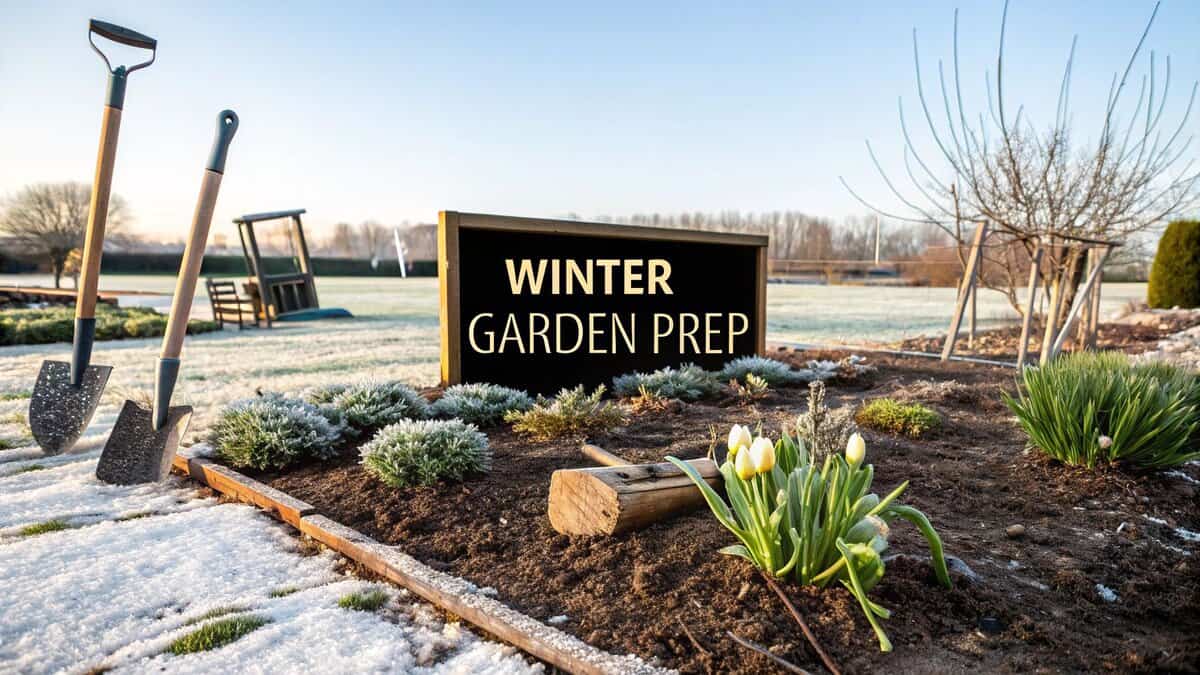
Getting your garden ready for winter boils down to a few essential jobs: tidying up the remnants of summer, protecting your plants from the coming frost, and giving your soil a good feed for next spring. Nailing these three things now builds a strong foundation, protecting your garden from the harsh Staffordshire weather and guaranteeing a stunning comeback next year.
For quotes and bookings, call or email us here.
Your Essential Winter Garden Action Plan
As the autumn leaves start to blanket Stoke-on-Trent, the focus in the garden shifts from enjoying the blooms to protecting your investment. A bit of smart planning now can save you a world of hassle—and the cost of replacing dead plants—come springtime. This isn’t about following some rigid, overwhelming list; it’s about doing the right jobs at the right time for our local climate.
The goals are pretty straightforward. First, you want to clear out any dead or diseased plants to stop pests and fungi from setting up camp over the damp winter. Second, protecting tender perennials and anything in a pot from the notorious freeze-thaw cycles we get in Staffordshire is absolutely vital for their survival. Finally, enriching your soil now gives all that good organic matter months to break down, creating a nutrient-packed bed for next year’s growth.
Core Winter Prep Priorities
Thinking ahead is the secret to a great garden. The whole process really just involves a few key steps that will keep your plants safe and dramatically improve your soil while everything is dormant.
- A Proper Tidy-Up: This means cutting back perennials that tend to get mushy and rot, getting fallen leaves off the lawn to prevent fungal diseases, and pulling out any annuals that have run their course.
- Protecting Plants and Soil: This is a big one. You need to insulate the roots of vulnerable plants with a thick layer of mulch. Our guide with tips on mulching explains exactly how to do it to shield the soil from cold and keep winter weeds down.
- Looking After Your Tools and Taps: Don’t neglect your equipment! Cleaning, sharpening, and oiling your tools prevents rust, and it’s crucial to drain hoses and outdoor taps to stop them from bursting in a hard frost.
If you’re facing bigger jobs, like cutting back a massive hedge or clearing out a seriously overgrown patch, our Stoke-on-Trent team can take care of the heavy lifting. That leaves you to handle the more enjoyable parts of getting the garden ready for its winter rest.
To help you visualise the process, this simple infographic breaks down the three main stages of winter prep.

Following this sequence—clear, protect, then feed—is the most logical and effective way to put your garden to bed for the winter.
Protecting Plants and Soil from Winter Weather
The damp, chilly winters we get here in Stoke-on-Trent can be brutal on your plants and soil. A bit of targeted protection now is what makes all the difference, ensuring everything bounces back strong in the spring. It’s not about guesswork; it’s about giving insulation where it’s needed most.
Of course, not every plant needs to be tucked in for the winter. Your hardy perennials and native shrubs are well-used to a Staffordshire winter. Instead, focus your attention on the more delicate plants in your garden. Things like agapanthus or tree ferns, especially those in exposed spots, will thank you for a layer of horticultural fleece or a thick blanket of mulch around their base. This simple step shields their vulnerable crowns and roots from the damaging freeze-thaw cycle that’s so common around here.
Insulating Pots and Containers
Keep in mind that plants in containers are far more exposed to the cold than those in the ground. The soil in a pot can freeze right through, which is a death sentence for the roots. To stop this from happening, you’ve got a few straightforward options:
- Huddle them up: Group your pots together in a sheltered area, like up against a house wall. This creates a warmer microclimate and cuts down on wind chill.
- Wrap the pots: Bubble wrap or even old blankets tied on with twine work wonders for insulating the container itself. It’s a simple barrier that can make a huge difference.
- Get them off the ground: Pop your containers up on “pot feet” or bricks. This lifts them off the frozen ground, which is crucial for drainage and preventing the base from turning into a block of ice.
If you have particularly tender plants like citrus or olive trees, the best bet is to bring them inside for the winter. A greenhouse, conservatory, or even a well-lit shed can be the difference between seeing them thrive next year or losing them completely.
Building Richer Soil for Spring
Winter isn’t just about battening down the hatches; it’s the perfect time to give your soil a boost. The heavy clay soil we often see in Stoke-on-Trent can get seriously compacted and waterlogged. Spreading a generous layer of well-rotted manure or garden compost over your beds now is one of the best things you can do.
Think of it as a protective, nourishing blanket. Spreading compost about 5-8cm (2-3 inches) deep in autumn is a tried-and-tested method used by gardeners everywhere. In fact, research from sources like Gardenstead.com shows it can improve spring planting yields by 10-20% by creating better soil structure and loading it with nutrients.
Throughout the winter, worms and microbes will do the hard work for you, pulling all that organic matter down into the ground. They’ll break up the heavy clay, improve drainage, and get it ready for spring. We dive deeper into this in our guide on how to improve soil quality naturally. If you’ve got a large garden or beds that need a serious overhaul, our soil conditioning services can give you that perfect foundation for a fantastic display next year.
Strategic Pruning and Tidying for Healthy Growth
An autumn tidy-up isn’t just a chore—it’s a smart move that paves the way for a healthier, more vibrant garden next spring. Knowing what to cut back and what to leave standing is the secret to getting your garden ready for winter, especially with the damp conditions we often see here in Stoke-on-Trent.

The main idea is to get rid of any old plant material that could give pests and diseases a place to hide over winter. This means cutting back perennials that tend to collapse into a slimy heap after the first frost, like hostas and delphiniums. Snipping them down to just above ground level helps air circulate and stops slugs from finding a cosy spot to lay their eggs.
But hold on—don’t go crazy and shear everything down. Many plants offer vital food and shelter for wildlife, and their seed heads and stems can look absolutely stunning against a frosty backdrop.
What to Prune and What to Leave
This is the big question everyone asks. Some plants really appreciate an autumn trim, while for others, it’s far better to wait until spring.
- Cut Back: It’s a good idea to cut back perennials prone to fungal problems like powdery mildew—think peonies and phlox. Getting rid of the infected leaves now stops the problem from coming back with a vengeance next year.
- Leave Standing: Anything with a sturdy seed head, like echinacea (coneflowers) and rudbeckia, is a winter lifeline for birds like goldfinches. Plus, their skeletal shapes look fantastic coated in frost.
- Tackle Roses: Give your climbing and rambling roses a light haircut to stop them from getting rocked about by winter winds, which can damage their roots. For bush roses, just deadhead the last of the flowers and clear away any diseased leaves.
Leaving some stems and seed heads not only supports local wildlife but also gives you something interesting to look at during the bleaker months. A garden doesn’t have to be completely bare to be well-prepared for winter.
Clearing Leaves and Handling Hedges
One of the most important tidying jobs is clearing fallen leaves, especially off your lawn and out of any ponds. A thick, wet blanket of leaves on the grass will block out light and air, creating the perfect breeding ground for lawn diseases. In a pond, decaying leaves will foul the water and can harm fish and other aquatic life.
While pruning most shrubs is pretty straightforward, the bigger jobs often need a bit more expertise. Overgrown hedges or small trees that need a serious reshaping or removal are best left to the professionals. If you try to tackle major pruning without the right know-how or tools, you could easily damage the plant—or worse, injure yourself.
At Stoke Gardening Services, we have the experience to handle those difficult hedge reductions and tricky pruning jobs. We make sure the work is done properly to encourage strong, healthy growth in the spring, taking all the risk and hassle off your hands. For anyone wanting to tackle their fruit trees, our guide on how to prune fruit trees is a great place to start for some specific tips.
Lawn Care and Planting for Spring Colour
Once you’ve got the main tidying and pruning out of the way, it’s time to shift your focus. Two jobs now will pay you back handsomely next spring: sorting out your lawn and getting your spring bulbs in the ground. Getting this right is a huge part of winter prep, setting your garden up to not just survive the cold, but to burst with life when the warmth returns.

That final mow of the season is a bigger deal than most people realise. If you go too short, you risk exposing the crown of the grass to frost damage. But leave it too long, and you’re inviting fungal diseases like snow mould to take hold, which is a real problem in our damp Staffordshire winters.
Aim for a height of around 4-5cm (about 2 inches). It’s the sweet spot that keeps things looking neat while giving the roots enough protection to see them through the cold.
Revitalising Your Lawn Before Winter
Autumn is the perfect time to give your lawn a bit of a reset, especially if you’re dealing with the heavy clay soil we get all over Stoke-on-Trent. All that summer use, from kids playing to just walking about, compacts the ground and can suffocate the grass roots. A couple of key jobs can fix this right up.
- Aeration: This is all about getting air back into the soil. For a small lawn, you can just go over it with a garden fork, pushing it in every few inches. For larger spaces, a mechanical aerator is the way to go. It breaks up that compaction and helps water drain away, which is crucial.
- Scarifying: Think of this as a really thorough, deep rake. You’re pulling out all the thatch—that dense layer of moss and dead grass—that builds up and chokes the lawn. Once it’s clear, air and nutrients can finally get down to the soil where they’re needed.
These two steps are fundamental for a healthy, green lawn come spring. For a deeper dive, we’ve put together a full guide with more winter lawn care tips. Of course, if you’d rather leave it to the pros, we at Stoke Gardening Services offer full aeration and scarification services to get your lawn in top shape.
Planting a Carpet of Spring Colour
And now for the fun bit—the part that really feels like an investment in the future. Planting bulbs now is one of the most satisfying jobs in the gardening calendar. It’s a promise to yourself of vibrant colour after a long, grey winter.
A simple rule of thumb for planting is to dig a hole that’s two to three times the height of the bulb itself. This keeps it safe from frost and gives it a solid foundation to push up from. Why not get creative and think about layering different bulbs for a longer-lasting display?
Here’s a brilliant little trick for containers, often called the “bulb lasagne” method. You plant in layers. Start with big, late-flowering bulbs like tulips at the very bottom. Cover them with compost, then add a layer of mid-season daffodils. Top it all off with some early bloomers like crocuses or snowdrops right near the surface. You’ll get wave after wave of colour from a single pot.
Winter-Proofing Your Garden Structures and Tools
Getting your garden ready for winter goes beyond just tending to plants and soil. All the other bits and bobs—the sheds, fences, and tools that help you get the job done—need a bit of looking after as well. If you ignore them now, you’re often greeted with rust, rot, and frustrating breakages right when you need everything to work in the spring.
Honestly, a few simple maintenance jobs now will protect your gear and save you from the headache of expensive repairs later on. Think of it as tucking your equipment in for a long winter’s nap so it’s ready to go when the garden wakes up.
Secure Your Structures and Plumbing
Those winter gales we get here in Staffordshire can really put sheds, greenhouses, and fences to the test. Pick a dry day to have a proper walk around your garden and give everything a once-over. Are there any wobbly fence panels? Cracked panes in the greenhouse? What about the shed roof—any spots that could let the damp creep in?
Catching these small issues now stops them from turning into big, expensive problems. Another critical job is checking your outdoor plumbing. You’ll want to get on top of tasks like addressing outdoor faucet leaks before the first hard frost to avoid burst pipes. We see it all the time at Stoke Gardening Services—a quick inspection flags a minor issue before it becomes a major disaster. If you spot serious damage, our garden fence installation and repair services can sort it out professionally.
Here’s a quick plumbing checklist to run through:
- Disconnect Hoses: Unhook every single one. Let them drain completely before coiling them up in the shed or garage.
- Turn Off Taps: If you have an internal stopcock for your outdoor taps, shut it off now.
- Insulate Pipes: Grab some foam pipe covers and wrap up any exposed outdoor pipework. It’s a cheap and easy way to prevent them from freezing.
A quick tip for pond owners: float a ball or a small log on the surface. This simple trick keeps a small area from freezing solid, which is crucial for allowing gases to escape and helping any fish or wildlife breathe.
Essential Tool Care for Longevity
Your tools are your best friends in the garden. Before you hang them up for the winter, a little TLC will stop rust and decay from setting in.
First things first, get all the mud and muck off them. A stiff brush usually does the trick. Once they’re clean and completely dry, it’s the perfect time to sharpen the blades on your shears, secateurs, and even your spade. The final step is to wipe down all the metal parts with an oily rag. This leaves a thin, protective film that keeps the damp air at bay. It doesn’t take long, but it makes a huge difference, ensuring your tools are in perfect nick for that first day of spring gardening.
Adapting to Milder and Wetter UK Winters
Gardening here in Staffordshire isn’t what it used to be. Our winters are often milder and definitely wetter than they were decades ago. This shift in the weather means we have to change how we tuck our gardens in for the winter.
It’s become just as important to protect plants from getting waterlogged as it is to shield them from the cold. When soil is saturated day after day, it can suffocate roots and become a breeding ground for rot and other fungal diseases that absolutely love damp, mild conditions.
Combating Damp and Disease
So, what’s the game plan? It really boils down to two things: drainage and air circulation. If you’re dealing with the heavy clay soil common in many Stoke-on-Trent gardens, improving its structure should be your number one job in the autumn.
Working in plenty of organic matter—think good compost or well-rotted manure—is a game-changer. It breaks up that dense, claggy clay, creating channels for excess water to drain away instead of pooling around your plant roots. For larger gardens, we often bring in our professional soil conditioning services at Stoke Gardening Services to get beds ready for whatever the winter weather decides to do.
Good air circulation is your best friend against fungal diseases. When you’re tidying up, don’t be afraid to thin out dense shrubs and avoid overcrowding your plants. This simple step helps the leaves dry out much faster after a downpour, making it tough for things like mildew and rust to get a foothold.
And this isn’t just a hunch; the climate data backs it up. The UK has seen winter rainfall increase significantly, which translates to a higher risk of our gardens becoming waterlogged. If you’re interested in the science behind it, the UK Climate Impacts Programme report is a fascinating read on how these shifts affect UK gardens.
By focusing on better drainage and airflow now, you’re not just prepping for one winter. You’re building a more resilient garden that can handle the changing climate for years to come.
Your Winter Garden Prep Questions, Answered
Every autumn, as we help gardeners across Stoke-on-Trent get their spaces ready for the cold, a few questions always come up. Here are some straightforward answers to the most common queries we hear, based on years of hands-on experience.
Is It Too Late to Start in November?
Absolutely not. It’s easy to think you’ve missed the boat, but November is still a great time to get plenty done. While starting earlier is ideal, you can still tackle the most important jobs right up until the first really hard Staffordshire frost.
If you’re short on time, focus on the essentials first. Get the last of the leaves off the lawn, wrap up your most delicate plants with fleece, and give your tools a good clean. The key is simply to protect anything vulnerable before the temperatures consistently drop below freezing.
Should I Cover All My Plants?
That’s a definite no. One of the most common mistakes is to over-protect everything. Most of your garden—hardy perennials, established shrubs, and native plants—is built to handle a typical UK winter without any fuss.
Instead, concentrate your efforts on the plants that genuinely need a helping hand.
- Tree ferns and palms: These really do benefit from a good wrapping of horticultural fleece.
- Agapanthus and certain salvias: The most important thing is protecting the crown, so a thick, generous layer of mulch around the base is crucial.
- Plants in pots: Container-grown plants are more exposed. The simple act of grouping them together in a sheltered spot can make a huge difference. For extra protection, you can wrap the pots themselves in bubble wrap or hessian to insulate the roots.
A bit of advice from our team: don’t be too tidy! It’s one of the biggest missteps we see people make. Leaving the seed heads on plants like echinacea or rudbeckia not only looks beautiful on a frosty morning but also provides a vital food source for birds over winter. It’s a win for you and a win for wildlife.
And one last thing we see all the time: people forgetting to drain their outdoor taps and hoses. It’s a five-minute job that can save you from the headache and expense of a burst pipe after a sudden freeze.
Can Stoke Gardening Services Help To Prepare My Garden For Winter?
Feeling like the to-do list is a bit much? If you’re overwhelmed or just short on time, the Stoke Gardening Services team is here to help. We can handle everything from a major autumn clear-up to expert pruning. Contact us today to see how we can get your garden ready for the winter chill.
For quotes and bookings, call or email us here.