
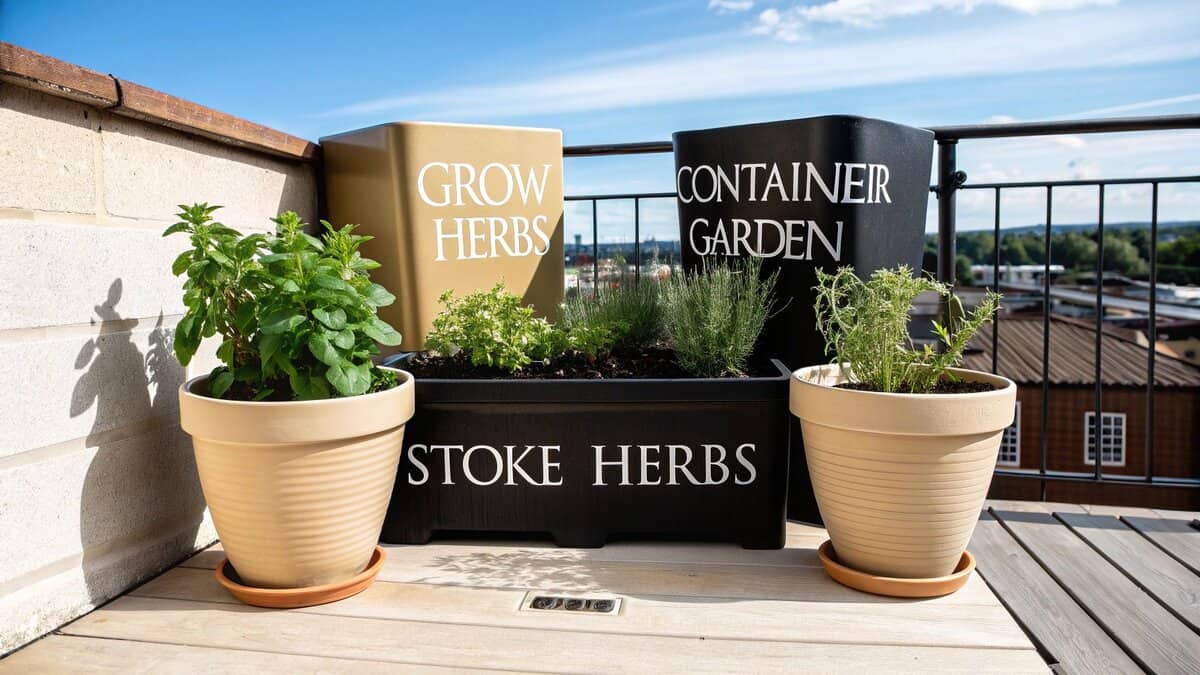
Growing herbs in containers is one of gardening’s simple pleasures. All you really need is a decent pot with drainage holes, the right soil, and a spot that gets a bit of sun. It’s that easy to have fresh basil, rosemary, and mint right on your doorstep. The real trick to success is picking herbs that will thrive in your space and giving them a little regular attention.
For quotes and bookings, call or email us here.
Starting Your Stoke-on-Trent Container Herb Garden

Ready to bring some fresh, homegrown flavour into your kitchen? Growing herbs in pots is a fantastic starting point for anyone in Stoke-on-Trent, whether you have a sunny balcony, a small patio, or just a bright windowsill. It’s one of the most rewarding ways to dip your toe into gardening. Honestly, there’s nothing quite like snipping your own fresh mint for a cuppa or grabbing a handful of basil for your pasta sauce.
Container gardening is a perfect match for our local Staffordshire climate. It puts you in the driver’s seat, giving you total control over the growing conditions—a real bonus with our often unpredictable weather! You can easily shift pots around to catch the sun or shelter them from a sudden downpour. If you get the bug and want to grow more of your own food, there are so many other brilliant edible gardening ideas that work beautifully in pots.
“Kathryn helped me set up the most beautiful herb planters on my patio. I never thought I had enough room, but she designed a perfect vertical setup. Now I have fresh herbs all summer long!” — Jane H., Stoke-on-Trent
Why Start With Containers
Opting for containers over a traditional garden bed has some real perks, especially if you’re just starting out or short on space. The main advantage is having a completely controlled environment.
- Easier Pest and Disease Control: It’s much simpler to spot and deal with pests before they become a problem on a single plant in a pot.
- Perfect Soil Every Time: You get to create the ideal soil mix for each herb, which is a huge help when dealing with the heavy, clay-based soil so common around here.
- Flexibility on the Go: You can move your herbs around to follow the sun, protect them from harsh weather, or even bring tender ones indoors when a cold snap hits.
Getting started is straightforward, but if you’d like a helping hand to get things just right, Stoke Gardening Services is always here to help. We can design a productive and beautiful container garden, find the best locally grown plants, and make sure everything is planted perfectly. For those who really want to get stuck in and learn the ropes of growing their own food, a course like the Certificate in Home Food Gardening can be a fantastic way to build your knowledge.
Your Container Herb Garden Checklist
To make things even simpler, here’s a quick checklist of everything you’ll need to get your container herb garden up and running successfully. Think of it as your recipe for success.
| Component | Our Recommendation | Why It’s Important |
|---|---|---|
| Containers | Terracotta or glazed ceramic pots, at least 20-30cm in diameter. | Ensures enough room for root growth and helps prevent waterlogging. |
| Soil Mix | A high-quality, peat-free potting mix with added perlite or grit. | Provides good drainage and aeration, which most herbs need to thrive. |
| Drainage | Pots must have drainage holes. Add a layer of broken pottery at the bottom. | Prevents roots from sitting in water, which leads to root rot. |
| Herbs | Start with hardy choices like rosemary, thyme, mint, and chives. | These are forgiving for beginners and well-suited to the UK climate. |
| Sunlight | A spot that receives at least 5-6 hours of direct sunlight per day. | Essential for photosynthesis and developing those strong, aromatic oils. |
| Water | A small watering can for gentle, targeted watering. | Gives you control to water the soil, not the leaves, reducing disease risk. |
Getting these basics right from the start sets the stage for a healthy, fragrant herb garden that will reward you with fresh flavours all season long.
Choosing the Right Pots and Soil for Success

The secret to a thriving container herb garden really boils down to the home you give your plants. Getting the pots and soil right from the start is more than just a setup step; it’s the single most important thing you can do for their success, especially here in Stoke-on-Trent where things can get a bit damp. Nail this, and you’re already halfway to a fragrant, productive garden.
To make sure your pots are a success story, remember this one critical rule: excellent drainage. Poor drainage is one of the most common reasons container plants fail, so never buy a pot without at least a few good-sized holes in the bottom.
“I thought my herbs were dying because I was a bad gardener, but Kathryn from Stoke Gardening Services showed me it was my pots. She helped me re-pot them into containers with better drainage, and the difference was incredible. They went from sad and yellow to lush and green in weeks!” — Sarah P., Hanley
Comparing Common Pot Materials
The material of your pot genuinely affects how you’ll care for your herbs. Each type has its own quirks, and knowing them helps you make the best choice.
- Terracotta: These classic clay pots are porous, which is a fancy way of saying they breathe. This is fantastic for preventing soggy soil in our climate because air can get to the roots. The trade-off? They dry out very quickly in a sunny spell and can crack in a harsh frost if left waterlogged.
- Glazed Ceramic & Plastic: These are great for holding onto moisture, meaning you won’t have to water quite as often. They also offer endless style and colour options. Just be extra sure they have plenty of drainage holes, as the pot walls won’t help the soil dry out.
Creating the Perfect Soil Mix
It’s so tempting to just scoop some soil from your garden bed, but please don’t! It’s one of the most common mistakes I see. Garden soil, especially our local heavy clay, compacts in a pot, suffocating roots and turning into a swampy mess. A proper potting mix is non-negotiable.
Herbs need a light, fluffy, and well-draining soil. You can buy a good pre-made potting compost, which is a great start, or you can whip up your own superior blend. For a fantastic all-purpose herb mix, I always recommend combining:
- Two parts high-quality potting compost to provide the main structure and food.
- One part perlite or coarse horticultural grit—this is the secret ingredient for creating air pockets and ensuring perfect drainage.
- One part well-rotted organic matter, like your own compost or leaf mould, for a gentle, slow-release nutrient boost.
Mixing these together gives your herbs the ideal balance of moisture and aeration they need to thrive.
If sourcing and mixing soils feels like a bit of a faff, Stoke Gardening Services is here to help. We can deliver and plant up your containers with the perfect soil blend for the herbs you want to grow, giving your garden the best possible start from the roots up.
Picking the Best Herbs for a Stoke-on-Trent Climate
Choosing the right herbs is a bit like picking a team for a local football match – you need players who can handle the conditions. Not every plant is suited to the often-cool, damp weather we get here in Stoke-on-Trent. The real secret to a bountiful, flavour-packed harvest is simply choosing herbs that are already happy in our climate. It makes your life so much easier.
I find it helps to split the best container herbs into two camps: the tough, woody perennials that soldier on year after year, and the softer, more delicate annuals that give their all in one season. Get your head around which is which, and you can plan a garden that keeps your kitchen stocked for months, with a bit of green to look at even in winter.
“I always struggled to keep herbs alive until I spoke to Kathryn at Stoke Gardening Services. She recommended a mix of hardy and tender herbs for my pots, and it’s been a game-changer. My rosemary and thyme are thriving, and I finally know how to care for my basil properly!” — David R., Burslem
Hardy Herbs That Love Our Climate
These hardy perennials are the absolute stalwarts of any UK container garden. Many come from Mediterranean regions, which makes them surprisingly resilient to cooler weather and less-than-ideal soil, provided you give them one thing: fantastic drainage.
- Rosemary: An evergreen beast that loves a sunny spot and absolutely hates having “wet feet.” For a lovely visual, try a trailing variety like ‘Prostratus’ to spill over the edge of your pot.
- Thyme: You’ve got to have thyme. Lemon thyme gives off a beautiful citrusy scent, while your classic common thyme is a kitchen workhorse. It’s incredibly drought-tolerant once it gets settled in.
- Sage: With its gorgeous, almost velvety leaves, sage looks as good as it tastes. It needs full sun to really develop those rich flavours and, just like rosemary, prefers the soil to dry out a bit between waterings.
- Mint: A quick word of warning from experience: always plant mint in its own pot! Its runners are proper thugs and will quickly strangle everything else in a shared container. It’s one of the few herbs that doesn’t mind a bit of shade and actually likes its soil to stay consistently moist.
Tender Herbs for Summer Flavour
Your tender herbs are the divas of the summer garden. They bring incredible flavour but need a bit more looking after. They can’t stand frost, so you’ll want to wait until all danger has passed before planting them out – usually around late May here.
- Basil: The absolute taste of summer. Basil craves sunshine and warmth to thrive. It needs watering regularly to stop it from drooping, but it will sulk if left sitting in a puddle. Keep pinching the tips out to encourage it to bush out nicely.
- Coriander: This one can be a bit tricky, as it has a habit of ‘bolting’ (running to flower) the moment the weather gets too hot. I’ve found that growing it in a slightly cooler spot with some partial shade helps keep it leafy for longer.
- Parsley: Both the curly and flat-leaf types are brilliant for pots. Parsley is technically a biennial, which means it’ll often survive a mild winter and give you a second year of leaves before it finally flowers. It does best with consistent moisture.
Picking plants that are naturally suited to our local area is the first big step towards success. If you’re after a few more ideas for easy wins, have a look at our guide on the easiest things to grow in your garden for more simple and satisfying projects.
Planting, Watering, and Feeding: The Essentials for a Thriving Herb Garden
Alright, you’ve got your pots, soil, and herbs ready to go—this is where the fun really starts. Getting your herbs properly planted is the first crucial step to helping them establish strong, healthy roots. After that, it’s all about a simple, consistent routine. Let’s walk through exactly how to plant, water, and feed your container herbs for a fantastic harvest.
This little infographic gives you a quick look at some of the best herbs for containers and what they need to flourish.

As you can see, matching the herb to the right conditions is everything. Sun-loving rosemary needs a different approach than thirsty basil, which just goes to show how important tailored care is.
Getting Your Herbs Planted
First, gently slide the herb plant out of its original nursery pot. Take a look at the roots—if they’re tightly packed and circling the bottom, you’ll want to carefully tease them apart with your fingers. This encourages them to spread out and explore their new home.
Pop the plant into its new container, making sure the top of its root ball is sitting about an inch below the rim of the pot. Backfill around the plant with your chosen potting mix, patting it down gently to get rid of any big air pockets. That one-inch gap at the top is important; it stops soil from washing over the side when you water.
“I used to just plonk my plants in and hope for the best. Kathryn showed me how to properly settle them in and explained the ‘why’ behind it. My herbs have never looked healthier, and the planting service saved me so much time.” — Michael B., Newcastle-under-Lyme
How to Get Watering Just Right
Watering is often where new gardeners trip up, but it’s easy once you know what you’re looking for. Believe it or not, over-watering is a far bigger killer than under-watering, especially with Stoke-on-Trent’s unpredictable weather. The best tool you have is your own finger.
Simply stick your index finger about an inch into the soil. If it feels dry, it’s time for a drink. If you feel any moisture, hold off for another day or so. This simple check is the best way to prevent root rot.
When it is time to water, give the pot a good, thorough soak until you see water flowing freely from the drainage holes. For a more detailed look, you can read our guide on how often to water new plants in your UK garden.
A Simple Feeding Routine
Because they’re in containers, your herbs are completely reliant on you for nutrients. A little bit of food at the right time makes a huge difference, encouraging lush leaves and much better flavour.
I always recommend a balanced, all-purpose liquid fertiliser—something like a seaweed feed is perfect. Plan to feed your herbs once every 2-3 weeks during the main growing season, which for us in Staffordshire is typically from late spring through to early autumn.
Always dilute the feed according to the instructions on the bottle. It’s tempting to add a bit extra for good luck, but over-feeding can burn the roots and cause more harm than good. A gentle, consistent approach is what gets the best results.
Harvesting and Pruning for Continuous Growth
Getting to snip off fresh herbs for your dinner is easily the best part of growing them in containers. But when you harvest regularly, you’re doing more than just gathering ingredients; you’re actually helping your plants thrive. Think of it as a strategic haircut that encourages them to produce even more.
This simple act of trimming stops your herbs from getting “leggy”—all tall and spindly with hardly any leaves. Cutting them back signals the plant to branch out, creating a much bushier, more compact plant that’s perfect for a pot. It’s a real win-win: you get a constant supply of herbs, and your plants look fantastic.
The Right Way to Harvest Your Herbs
How you snip your herbs really depends on what you’re growing. Getting this bit right makes a huge difference to the plant’s health and how much it’ll produce for you down the line.
- Leafy Herbs like Basil and Mint: With these, you just want to pinch off the top set of leaves, right above a leaf node (that little spot where two leaves grow out from the stem). This simple trick encourages the plant to sprout two new stems from that point, essentially doubling your harvest.
- Woody Herbs like Rosemary and Thyme: You can be a bit more robust with these. Just snip off the top two or three inches from each stem. This promotes fresh, tender growth and stops the plant from becoming too woody and tough.
“Kathryn taught me the ‘pinch and snip’ method for my basil, and it’s been a revelation. My plant is so bushy and full now, and I have more than enough for my pasta sauces all summer long. Her advice is always so practical for local Stoke-on-Trent gardeners.” — Emily T., Longton
The principle here is very similar to deadheading flowers. By removing spent parts, you’re telling the plant to focus its energy on new growth. You can learn more about this essential technique in our guide on what is deadheading flowers.
Overwintering Your Herbs in Stoke-on-Trent
As the weather turns colder, you’ll need a game plan for winter. Some of your herbs are tough enough to handle a Staffordshire winter, but others will need a bit of extra care to survive.
Hardy perennials like rosemary, thyme, sage, and mint can usually be left outside. I’d suggest moving their pots to a more sheltered spot, like up against the house, to shield them from the worst of the wind and frost. On the other hand, tender annuals like basil and coriander will complete their life cycle as the first frosts hit. You can, however, often bring a pot of parsley indoors onto a sunny windowsill to keep it going for a while longer.
Once you have a basket full of fresh herbs, it’s time to get cooking! Why not try them in some delicious herb roasted potatoes?
Regularly pruning and harvesting your herbs can really boost how bushy a plant gets, often letting you get four or five good harvests a year from a single plant.
Need a Hand with Your Herb Garden?
Growing your own herbs is one of life’s simple pleasures, but let’s be honest, sometimes life just gets in the way. Maybe you’re short on time, or perhaps you just want to make sure everything is set up perfectly from the get-go. That’s where we come in. Here at Stoke Gardening Services, we’re passionate about helping our neighbours create beautiful, thriving gardens, no matter how small the space.
We can jump in at any stage. Need some help figuring out a clever layout for a tricky balcony? Or maybe you want us to track down the healthiest local plants and the best-quality pots? We can handle all of that, right here in Stoke-on-Trent.
“Kathryn and her team set up a brilliant container herb garden on my small balcony. I never thought I’d have the space, but their clever design made it possible. Professional, friendly, and they knew exactly what would thrive. I couldn’t be happier!” — Mark S., Fenton
How We Can Help
Our professional planting and setup service is perfect for ensuring your herb garden gets off to the strongest possible start. We’ll get the soil mix just right and make sure the drainage is spot on, taking all the guesswork out of it for you.
And if you love the idea of fresh herbs but don’t have the time for the upkeep, our maintenance plans are a great solution. Our team can pop round to handle everything from watering and feeding to pruning and keeping an eye out for pests. This keeps your herbs looking lush and productive all season long. You can read more about our general care plans in our article about garden maintenance services near me.
At the end of the day, we just want to help you create the container garden you’ve been dreaming of. Whether you need us to manage the whole project or just want a bit of expert advice, we’re here to help.
Get In Touch For An Estimate
Ready to get your own container herb garden started in Stoke-on-Trent? Give Stoke Gardening Services a call for a friendly, no-obligation chat about how we can bring your ideas to life.
For quotes and bookings, call or email us here.