

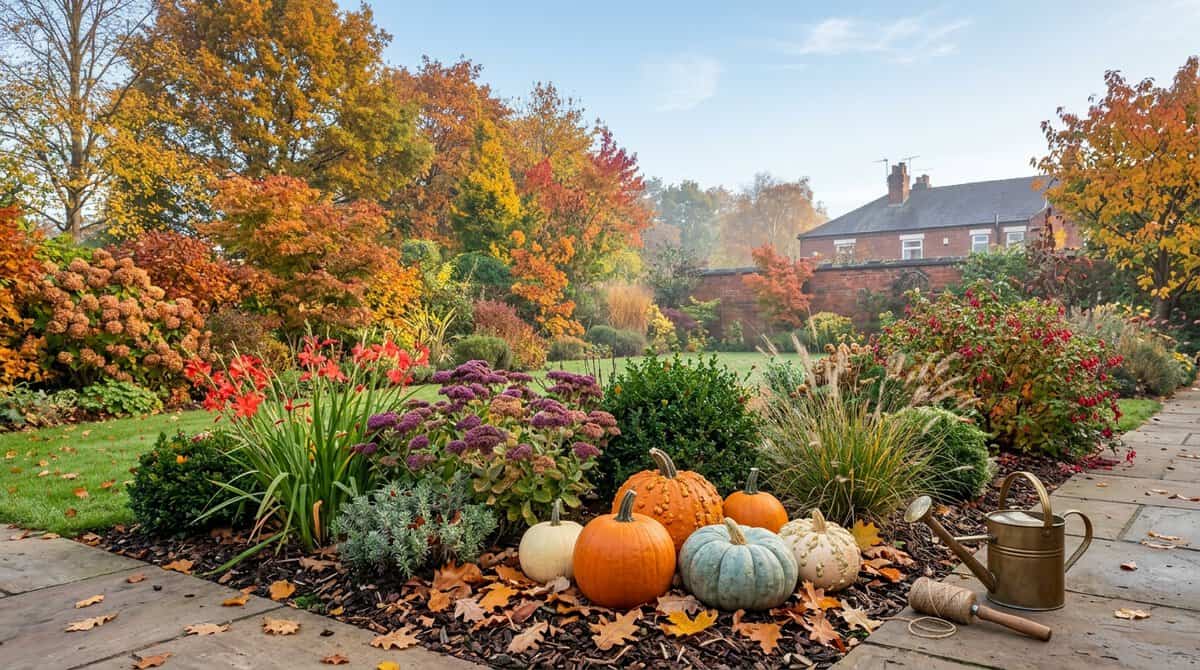
As the autumn leaves fall across Stoke-on-Trent and North Staffordshire, crisp sunny days quickly turn into chilly nights. While autumn brings a gorgeous shift in the landscape, it also brings a silent challenge for gardeners: the first hard frost.
Tender perennials, exotic shrubs, and summer-flowering tubers are vulnerable to sudden drops in temperature. When moisture inside plant cells freezes, it expands, bursting cell walls and leaving leaves blackened, stems mushy, and roots damaged.
Taking a few proactive steps in early autumn will safeguard your favorite plants so they come back strong and healthy next spring. Here is our practical, step-by-step guide to frost protection.
1. Know Your Timing & Keep an Eye on the Forecast
In our region, the first autumn frost typically arrives around mid-to-late October or early November. Keep a close eye on local evening forecasts—especially when clear, still skies are predicted, as this could cause ground temperatures to plummet rapidly overnight.
2. Wrap Half-Hardy & Border Plants
Half-hardy shrubs (such as tree ferns and cordylines) or large border perennials often can’t be moved inside, but they can easily be insulated outdoors.
- Horticultural Fleece: Cover vulnerable foliage with breathable horticultural fleece. Secure it tightly at the base with twine or pegs so cold winds don’t blow it away.
- Protecting Crowns: For tree ferns, pack straw or dried leaves loosely into the crown at the top, then wrap the top of the trunk with fleece or hessian to keep moisture and ice out.
- Mulching: Apply a thick layer (5–7 cm) of well-rotted manure, bark chippings, or leaf mould around the base of half-hardy perennials. This acts as a thermal blanket, protecting root systems from freeze-thaw cycles.
Top Tip: Avoid using plastic sheeting directly against plant foliage. Plastic traps condensation, which can freeze against the leaves and cause even more damage.

- Alt Text:
Professional gardener wrapping half-hardy outdoor shrub in horticultural fleece before autumn frost in Stoke-on-Trent - Suggested Image: A close-up shot of hands securing breathable fleece around an exotic garden plant using garden twine. This visual visually demonstrates Section 2 and reinforces local SEO through descriptive alt tags.
3. Move Potted Plants Indoors or Under Cover
Container plants are particularly susceptible to frost because cold air surrounds the entire root ball, not just the top soil.
- Tender Exotics: Move pelargoniums, fuchsias, citrus trees, and begonias into a frost-free environment like a greenhouse, cool conservatory, or bright garage before night temperatures consistently drop below 5°C.
- Grouping Containers: If you have pots that must stay outside, move them against a sheltered, south-facing house wall. Grouping pots together allows them to share ambient warmth.
- Pot Feet: Raise terracotta and ceramic pots off the cold ground using pot feet or bricks. This improves drainage and prevents waterlogging, which causes pots to crack during a freeze.

- Alt Text:
Potted terracotta garden plants raised on pot feet grouped together against a sheltered house wall for winter frost protection - Suggested Image: A photograph showing container pots neatly arranged together on ceramic pot feet next to a brick wall. It breaks up text in Section 3 and provides clear visual guidance on proper pot elevation.
4. Lift and Store Tender Tubers (Dahlias & Cannas)
Dahlias, Cannas, and Begonias produce stunning summer displays, but their fleshy tubers and rhizomes will rot if left in frozen ground over winter.
- Wait for the Signal: Let the first light frost blacken the top growth. This signals to the plant that it’s time to go dormant.
- Cut Back: Cut the stems down to about 10–15 cm above the soil line using clean secateurs.
- Lift Carefully: Use a garden fork to gently lift the tubers out of the soil, taking care not to puncture or bruise the roots.
- Clean & Dry: Carefully brush off loose soil (avoid washing them with water, as excess moisture encourages rot). Turn them upside down for a few days in a dry spot to drain any trapped water from the hollow stems.
- Store for Winter: Place the tubers in shallow wooden crates or cardboard boxes filled with dry peat-free compost, sawdust, or vermiculite. Store them in a dark, cool, frost-free space (like a shed or cellar) until spring. Check them periodically over winter and remove any that show signs of decay.

- Alt Text:
Gardener lifting dahlia tubers with a fork and storing them in wooden crates with sawdust for winter - Suggested Image: A side-by-side or step-by-step composite image showing a dahlia tuber being dug out of soil and subsequently placed into a crate with sawdust. Great for keeping visual learners engaged during this detailed process.
Need a Hand Preparing Your Garden for Winter?
Winterizing a garden takes time, effort, and the right tools. If you’d like professional assistance wrapping delicate plants, lifting tubers, or putting your garden to bed for the season, Stoke Gardening Services is here to help.
Get in touch with our friendly team today to book your autumn garden maintenance service!