
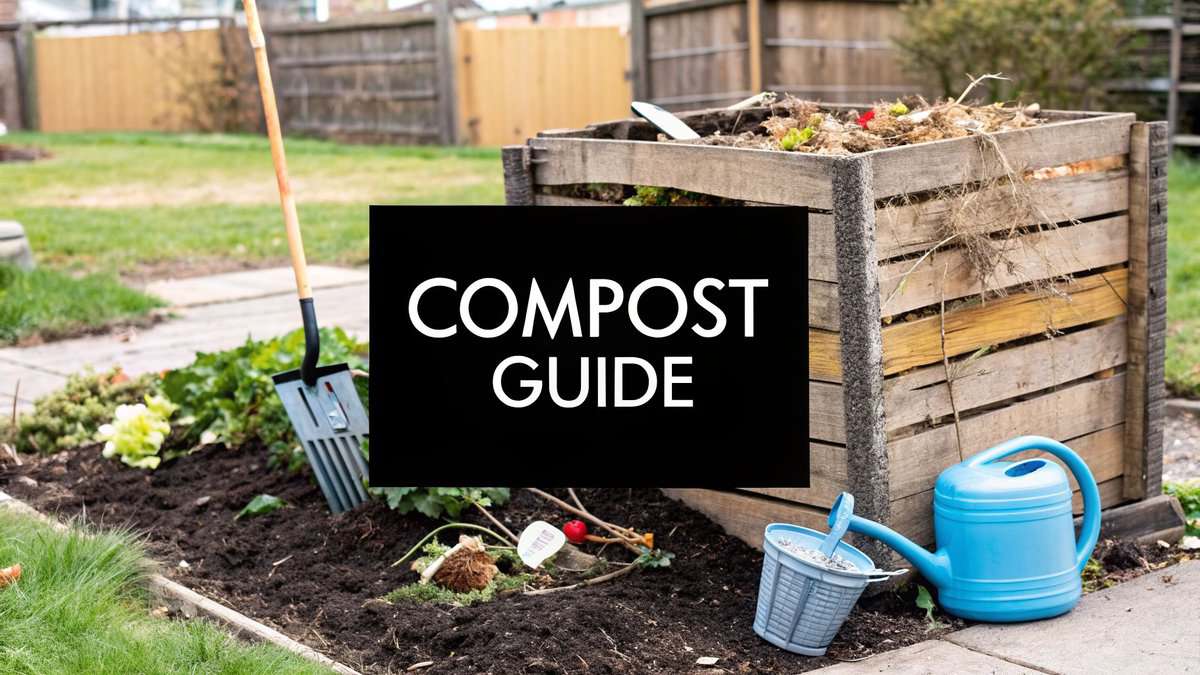
Starting a compost pile is one of the best things you can do for your garden, and it’s surprisingly simple to get going right here in Stoke-on-Trent. It’s all about turning your everyday kitchen scraps and garden waste into a wonderfully rich, dark soil conditioner that gardeners affectionately call ‘black gold’.
For quotes and bookings, call or email us here.
Creating Black Gold for Your Staffordshire Garden
This guide is all about getting you started with your own compost pile, with practical tips that work for our local UK conditions. Composting is a real game-changer for Staffordshire’s typically heavy clay soils, helping to improve both drainage and overall structure.
If you’ve ever battled waterlogged flowerbeds after a classic Potteries downpour, you know exactly what I mean. Working compost into your soil is the answer. We go into more detail on this in our guide on how to prepare soil for planting.

Beyond the benefits for your plants, composting also massively cuts down on your household waste. You’ll be amazed how much less you’re putting in your council-issued bin each week. It’s a small change with a big impact on your environmental footprint.
Globally, food waste is a huge issue. When it rots in a landfill, it produces methane, a powerful greenhouse gas. By composting, you’re not just feeding your garden; you’re doing your bit for the planet right here from your Stoke-on-Trent home.
Why Composting Works Wonders Here
For us gardeners in Stoke-on-Trent, the results are fantastic. Our soil can be a real challenge, but adding homemade compost helps to:
- Break up that heavy clay, making it much easier for plant roots to spread out.
- Improve water retention during dry spells, which means less time spent with the hosepipe.
- Introduce millions of vital microorganisms, creating a healthy, living soil.
- Save you money on pricey fertilisers and soil conditioners from the garden centre.
Forget the complicated science and confusing jargon. This is a straightforward guide to creating a powerhouse of nutrients for your plants. A healthy compost pile truly is the heart of a thriving UK garden.
Of course, if your garden is a bit overgrown or neglected, the idea of getting started can feel overwhelming. Before you can even think about where to put your compost bin, you might need a clean slate.
Our garden clearance services in Stoke-on-Trent can handle the tough jobs for you, clearing out stubborn brambles, weeds, and old debris. We’ll help you create the perfect tidy space to begin your composting journey, setting you up for success right from the start.
Choosing the Right Spot for Your Compost Bin
Picking the right place for your compost bin is a bigger deal than you might think. Get it right, and you’re well on your way to beautiful, rich compost. Get it wrong, and it can become a bit of a chore. The location really can make or break how well everything breaks down, especially with our classic Stoke-on-Trent weather.
You’re looking for that sweet spot – close enough to the back door that you’ll actually use it on a drizzly Tuesday night with a bowl of veg peelings, but not so close it’s an eyesore.

Ideally, you want to set your bin on a level patch of bare soil. This is a game-changer because it gives all the helpful worms and microorganisms a direct route into your pile from the ground up. They’re your little composting army, and you want to make it easy for them to get to work.
Sun or Shade in a Staffordshire Garden
The age-old question: sun or shade? Honestly, here in Staffordshire, a bit of sun is a good thing. It helps generate the heat your compost pile needs to get going and break down all that waste efficiently.
That said, you don’t want it baking in direct sun all day during one of our rare summer heatwaves, as it’ll dry out in no time. The perfect spot is often one that gets partial sun, maybe some morning light, but is shaded during the hottest part of the day. This gives you the best of both worlds – enough warmth to keep things active without you having to constantly water it.
One of the biggest mistakes I see people make is hiding the bin at the very bottom of the garden. Out of sight, out of mind. If it feels like a trek, you’ll be less likely to add to it regularly. Convenience is key!
Finding the Right Bin for Your Space
Once you’ve scouted the perfect location, it’s time to think about the bin itself. What works best really comes down to your garden’s size, what you want to spend, and how much kitchen and garden waste you think you’ll produce.
- Terraced Gardens in Hanley: If you’re working with a smaller, more compact space, a plastic compost tumbler can be brilliant. They’re sealed, which is great for keeping pests out, and the tumbling mechanism makes turning the compost a doddle. They look neat and tidy on a patio or in a small yard.
- Spacious Gardens in Trentham: Got a bit more room to play with? A classic wooden bin is a fantastic choice. They look natural, blend into the garden, and can handle a much larger volume of grass clippings and prunings. You can even build your own multi-bay system from old pallets. We’ve got a whole guide full of great ideas for DIY compost bin designs if you fancy a weekend project.
At the end of the day, the best compost bin is simply the one you’ll use. Whether it’s a slick modern tumbler or a rustic wooden box tucked behind the shed, choosing one that suits your space and your routine will make all the difference.
The Perfect Recipe for Rich Garden Compost
The secret to making brilliant, nutrient-rich compost isn’t complicated at all. Think of it like baking a cake; getting the ingredients in the right proportions is the key to success. For a compost pile, that means balancing two types of materials: nitrogen-packed ‘greens’ and carbon-heavy ‘browns’.
Getting this mix right is probably the single most important part of starting a compost pile that actually works. If you throw in too many greens, you’ll get a slimy, smelly mess. On the other hand, a pile with too many browns will just sit there, dry and lifeless, taking an age to break down.
The Green and Brown Balance
So, what’s the magic formula? As a rule of thumb, you want to aim for roughly two parts brown material for every one part green material. This 2:1 ratio gives the microbes—the little critters doing all the hard work for you—the perfect diet to get things cooking.
Green materials are the wet, fresh stuff that provides the nitrogen. They really kickstart the whole process. Think of things like:
- Veggie peelings and fruit scraps from your kitchen.
- Fresh grass clippings after mowing the lawn in Longton.
- Used coffee grounds and old teabags.
- Young weeds, as long as you pull them before they set seed!
Brown materials are the dry, carbon-rich ingredients. They give the compost pile its structure and stop it from turning into a soggy bog. You’ll have plenty of this stuff around your Stoke home:
- Shredded cardboard from all those parcel deliveries.
- Torn-up newspaper (just steer clear of the glossy pages).
- Fallen leaves you’ve raked up, maybe from a trip to Hanley Park.
- Small twigs and the dried-out stems from last season’s plants.
This simple visual is a great reminder of how to layer things up.

As you can see, building your pile with alternating layers really helps create a healthy, efficient system. Layering is a classic technique, but there are plenty of different methods of composting you can try to see what works best for your garden.
What to Add and What to Avoid
While most of the organic waste from your kitchen and garden is fair game, a few things can cause real headaches. Some materials attract pests, while others can spread diseases right back into your flowerbeds. Knowing what to leave out is just as crucial as knowing what to put in.
A local tip: be extra cautious with weeds here in Staffordshire. Pesky perennials like couch grass or bindweed are tough customers. They can easily survive in a cooler compost pile and will gleefully take over your garden when you spread the finished compost.
To keep things straightforward, I’ve put together a quick reference table. It’s a simple guide to what should and shouldn’t go into your Stoke-on-Trent compost pile.
Compost Ingredients Green Light vs Red Light
| Material Type | Add to Your Pile (Greens & Browns) | Keep Out of Your Pile |
|---|---|---|
| Kitchen Waste | Fruit & veg scraps, eggshells, coffee grounds, teabags, plain bread/pasta. | Meat, fish, bones, dairy products, oily foods, cooked leftovers. |
| Garden Waste | Grass clippings, leaves, small twigs, annual weeds (no seeds), old plants. | Diseased plants, perennial weeds (like bindweed), treated wood. |
| Household Waste | Shredded cardboard, newspaper, paper towels, natural fibres (cotton/wool). | Glossy magazines, coal ash, pet waste (cat/dog), plastic packaging. |
Stick to this list, and you’ll avoid the most common composting pitfalls. Your pile will stay healthy, smell earthy (not foul!), and produce that wonderful ‘black gold’ for your garden.
Building and Managing Your Compost Pile
Right, let’s get our hands dirty. This is the part where the magic happens – building your pile and watching kitchen scraps and garden clippings turn into something amazing for your soil. I like to think of it as making a garden lasagne. A few simple layers, a bit of patience, and you’ll be well on your way to creating that ‘black gold’ every Stoke-on-Trent gardener dreams of.
First things first, you need a solid foundation. If you just chuck everything in, the bottom can quickly become a soggy, compacted mess. That slows everything down and, trust me, it can get a bit smelly.

To get started, put down a base of rough, brown stuff. A few inches of small twigs, torn-up cardboard, or a bit of straw works perfectly. This creates crucial air pockets at the bottom, which is exactly what you need for good drainage and airflow.
Layering for Success
With your base down, you can start layering up your greens and browns. It doesn’t have to be perfect, but alternating them is the key to getting great compost. Pop a layer of browns on top of your twiggy base, then follow it with a thinner layer of greens.
Just keep repeating this pattern as you add more materials. Here’s a tip that’s saved me a lot of hassle: keep a bag of dry leaves or some shredded paper right next to your compost bin. Every time you tip in your kitchen caddy, you can toss a scoop of browns on top. It’s a simple trick that keeps the balance right and stops flies from getting interested.
Getting the Moisture Just Right
Moisture is make-or-break for composting. The tiny microbes doing all the hard work need a damp home to thrive. You’re aiming for the consistency of a wrung-out sponge – it should feel moist, but not sopping wet.
Living in Stoke, we all know the UK weather can be a bit all-or-nothing. You’ll likely need to play a hands-on role in managing the moisture levels.
- During dry spells: On those rare occasions we get a proper bit of sun, your pile can dry out fast. Just give it a quick spray with the hose or a watering can to liven it back up.
- After heavy rain: A classic Staffordshire downpour can easily waterlog an open compost bin. If it looks drenched, the best fix is to add a load of dry, brown material (like torn cardboard) and give the whole thing a good mix with a garden fork.
Why Turning Your Pile Matters
Think of turning your compost as giving it a good stir and a breath of fresh air. It gets oxygen right into the core, which is exactly what the good bacteria need to work quickly. Turning also mixes everything up, spreads the moisture around, and breaks apart any clumps that have formed.
For a fast, ‘hot’ compost pile, try to turn it with a garden fork every one to two weeks. You’ll feel the heat coming from the centre – that’s a brilliant sign your microbe army is busy working! I’ll be honest, though, if you have a bad back or a massive pile, it can be hard graft.
If the thought of all that heavy lifting is putting you off, don’t worry. Our garden maintenance services in Stoke-on-Trent can take care of it for you. We’re happy to help with everything from setting up your first pile to regular turning, making sure your compost stays healthy and productive without you having to break a sweat.
Getting Through Common Composting Hiccups
Even the most seasoned gardeners run into composting snags. Don’t throw in the trowel if your pile starts acting up! It happens to all of us, and thankfully, the fixes are usually pretty simple. Once you know what to look for, you’ll be able to sort things out in no time.
Why Does My Compost Smell So Bad?
Is your compost pile smelling more like a bin lorry than a forest floor? A strong, ammonia-like pong is a dead giveaway that your mix is off-balance.
Nine times out of ten, this smell means you’ve got too many nitrogen-heavy ‘greens’ and not enough air circulating. The pile has become anaerobic, which is a fancy way of saying it’s suffocating.
The fix is easy. Grab a garden fork and get some ‘browns’ in there—think torn-up cardboard, dry leaves, or shredded newspaper. Mix everything thoroughly to break up the soggy clumps, introduce oxygen, and soak up that excess moisture. Your pile should start smelling earthy and sweet again soon.
Why Is My Compost Pile Cold?
Another classic problem is a pile that just sits there, cold and lifeless. If you’ve been adding your kitchen scraps and garden waste but there’s no heat, the microbes are likely starving for fuel.
A cold pile needs a jolt of nitrogen to get things cooking. A bucket of fresh grass clippings is perfect for this, but coffee grounds or a few handfuls of vegetable scraps will also do the wonder.
Make sure to mix these new ‘greens’ right into the centre of the heap. Give it a good turn, and you should feel the pile starting to warm up within a day or so.
What Should I Do About Pests?
Finding rats or a swarm of flies around your compost is definitely unpleasant. This almost always happens when the wrong kinds of food have found their way into the pile—things like meat, dairy, or cooked, oily leftovers are a massive welcome mat for pests.
The trick is to bury any new food scraps deep inside the pile. After you add them, always cover them with a thick blanket of ‘browns’ like wood chips, soil, or leaves. This simple habit makes it much harder for critters to get a sniff, encouraging them to find an easier meal somewhere else.
Composting is one of the best things you can do for your garden and the planet. It’s a brilliant way to recycle waste, slash the amount of rubbish going to landfill, and reduce methane emissions. Plus, the finished compost works wonders on our heavy Stoke soil, improving its structure and fertility.
A healthy pile is a happy pile. If you notice your compost is getting slimy and waterlogged, especially after one of our famous Stoke-on-Trent downpours, it’s a cry for help. Poor drainage is the culprit. While adding more bulky brown materials will help absorb the moisture, it could also point to compacted soil underneath your bin. If you’re wrestling with the local clay, have a look at our guide on how to improve clay soil drainage for some more permanent fixes.
Your Top Composting Questions, Answered
If you’re just starting out with composting, you’ve probably got a few questions. That’s a good thing! It means you’re on the right track. We get asked a lot of the same things by folks around Stoke-on-Trent, so let’s get those common questions out of the way.
How Long Until I Get Usable Compost?
This is the big one, isn’t it? The honest answer is: it depends. It’s all about the season and how much attention you give your pile.
During a warm Stoke-on-Trent summer, if you’re actively managing your compost—turning it every week or two and keeping that green/brown mix right—you could have beautiful, rich compost in as little as 2-3 months.
Come autumn and winter, though, everything slows down. The microbes doing all the hard work get a bit sluggish in the cold. You’re looking at more like 6 months to a year for the pile to mature. And if you’re taking a more relaxed ‘cold’ composting approach (just piling it up and leaving it), a year or more is pretty standard. The real test is the look and smell: it’s ready when it’s dark, crumbly, and smells like a fresh, earthy forest floor.
What If I Only Have a Small Garden or Patio?
No problem at all! You absolutely don’t need a massive garden to make ‘black gold’. For the typical smaller yards and patios we see across so many Stoke neighbourhoods, a compost tumbler or a wormery is a brilliant bit of kit.
These are fantastic because they are:
- Compact: They take up very little space, fitting neatly into a corner.
- Contained: Being sealed means no mess and no attracting any unwanted critters.
- Fast: They’re incredibly efficient at breaking down your kitchen scraps.
With one of these, you can be making a top-tier soil improver without needing a traditional, sprawling compost heap.
Help! I’ve Got Far Too Much Garden Waste!
First off, that’s a great ‘problem’ to have! It’s a sign of a healthy, productive garden. If your garden is a bit larger or you’ve just done a massive clear-out, a single compost bin might not cut it. This is where a multi-bay system comes in.
The gold standard for serious gardeners is a three-bay system. It allows for a continuous cycle: one bay is for adding new material, the middle bay is for the compost that’s actively breaking down, and the third bay holds all the finished stuff, ready for your garden.
This setup creates a really smooth, ongoing process. But if building a system like that feels a bit daunting, or you’re just swamped after a big pruning session, that’s where we can step in.
Our Compost Building Services
At Stoke Gardening Services, we can take care of the heavy lifting. Our garden clearance services in Stoke-on-Trent can whisk away any excess waste and even help you build a composting system that’s perfectly suited to your garden’s size and needs.
For quotes and bookings, call or email us here.
Responses
[…] compost in under a month. For a deeper dive into the initial setup, you can learn more about how to start a compost pile with our foundational guide. This method is perfect for dedicated gardeners who have a large volume […]
[…] gardeners looking for other eco-friendly ways to handle organic waste, learning how to start a compost pile is a fantastic alternative to sending material […]
[…] your soil. If you’re just starting out, we’ve put together a straightforward guide on how to start a compost pile to walk you through […]