

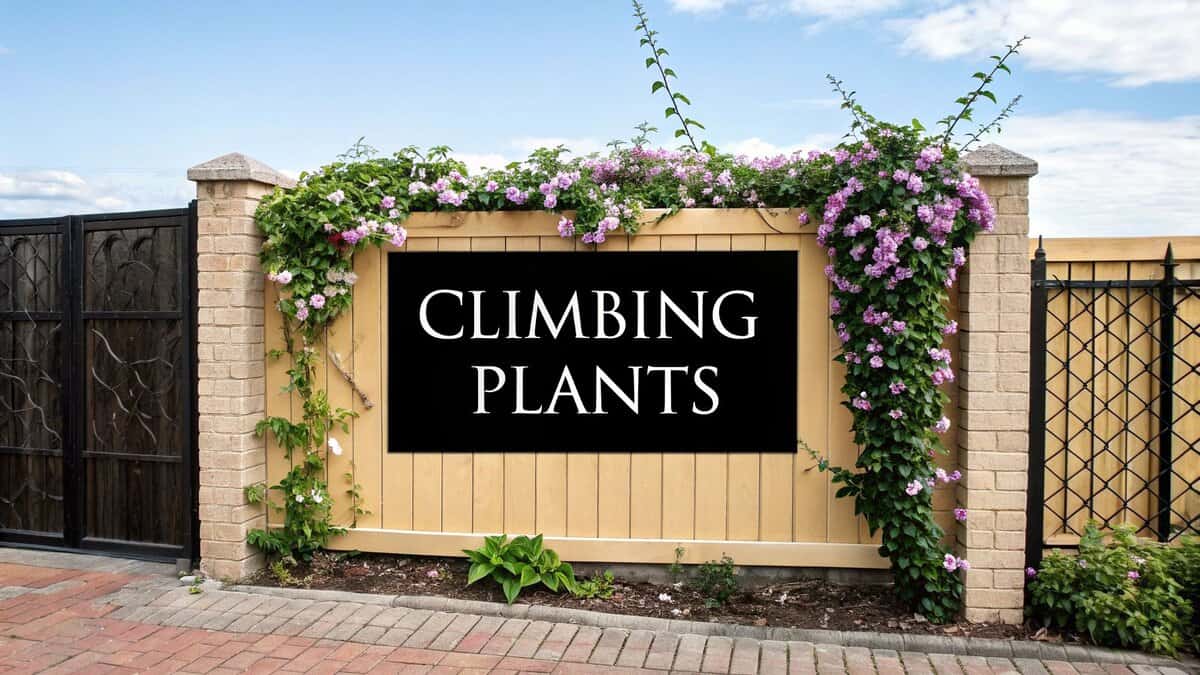
A bare fence can be an eyesore, but it’s also a blank canvas. Consequently, transforming that plain barrier into a living wall of foliage and flowers is easier than you might think. With the right climbing plants, you can add privacy, support local wildlife, and introduce stunning seasonal colour to your garden. This guide helps you choose the best climbing plants for fences, turning a functional boundary into a beautiful, natural feature.
We’ll explore a variety of options, from the fast-growing Virginia Creeper to the fragrant Star Jasmine. Furthermore, we will detail how each plant climbs, its specific needs for sun and soil, and what level of maintenance you can expect. This isn’t just a list; it’s a practical roadmap to help you select, plant, and train the perfect climber for your space.
For homeowners in Stoke-on-Trent, we understand the local climate and soil conditions. Therefore, we’ve focused on plants that thrive right here in our region. If you need professional help to install supports or maintain your new vertical garden, our landscaping team is always ready to assist. Let’s find the ideal plant to elevate your fence from simple to spectacular.
For quotes and bookings, call or email us here.
1. Clematis (Clematis spp.): A top choice for fences
Clematis is often called the “Queen of Climbers,” and for good reason. This plant is a top contender for the best climbing plants for fences because of its spectacular flowers and vigorous growth. With a vast family of over 300 species, you can find a clematis to suit almost any garden aesthetic in Stoke-on-Trent. They are primarily deciduous climbers that cling to fences using their twisting leaf stalks, creating a beautiful tapestry.
From the deep purple of ‘Jackmanii’ gracefully covering a traditional Victorian fence to the clouds of tiny white blossoms from a Sweet Autumn clematis blanketing a modern chain-link fence, their versatility is unmatched. Indeed, a well-chosen variety can transform a plain boundary into a stunning vertical garden feature.
Key Characteristics and Growth
Clematis varieties differ significantly in size, bloom time, and care needs. Understanding their basic traits is crucial for success. For example, some grow to a manageable 6 feet, while others can vigorously climb to 30 feet, completely covering a tall fence in just a few seasons.
To help you choose the right variety, this quick reference summarizes key data points for a typical clematis.

The infographic highlights the incredible diversity in flower size and a rapid growth rate. This means you can achieve a lush, flower-filled fence relatively quickly.
Planting and Care Tips for Your Fence
Proper planting and maintenance are essential for a healthy clematis that produces abundant blooms year after year. For gardeners in Stoke-on-Trent, ensuring the plant is well-established before winter is key.
- Planting Depth: Dig a hole and plant your clematis so the crown is about 2-3 inches below the soil surface. This encourages strong shoots from below ground and helps prevent clematis wilt.
- Root Protection: Clematis famously prefers “sunny tops and shady feet.” Therefore, plant low-growing perennials or place mulch around the base to keep the roots cool and moist.
- Provide Support: While clematis climbs, it needs a structure to cling to. A simple wire or trellis system attached to your fence will give the twining stems something to grab onto.
- Watering Wisely: Water deeply but infrequently to encourage a robust root system. Once established, clematis is moderately drought-tolerant but performs best with consistent moisture.
By understanding the plant’s pruning group, you can also plan for a sequence of blooms. For more detailed guidance, learn more about clematis care in winter.
2. Boston Ivy (Parthenocissus tricuspidata)
Boston Ivy is a powerful, deciduous vine renowned for its ability to create a dense, living green wall. It’s an excellent choice for the best climbing plants for fences if your goal is complete and uniform coverage. Despite its name, this plant is native to East Asia. It is famed for the lush greenery it lends to iconic buildings, such as university campuses.
This vigorous climber uses small, adhesive discs at the end of its tendrils to cling directly to surfaces. As a result, it doesn’t need a trellis for support, making it perfect for solid fences. Imagine your plain fence transformed into a vibrant green backdrop in summer, which then shifts to a spectacular display of fiery red and deep purple hues in autumn.
Key Characteristics and Growth
Boston Ivy is known for its rapid growth and tenacious climbing habit. This allows it to quickly cover large areas. Its three-lobed leaves overlap to form a dense screen, offering excellent privacy and a classic, established look. However, this vigorous nature means it requires some management to keep it in check.
This vine can reach heights of 50 feet or more, so it can easily cover any standard fence. Its fast growth rate ensures you can achieve a dramatic transformation in just a few seasons. This makes it one of the most effective climbers for creating a privacy screen.
Planting and Care Tips for Your Fence
To ensure your Boston Ivy thrives without becoming unmanageable, proper planting and regular maintenance are crucial. For gardeners in Stoke-on-Trent, its hardy nature makes it a reliable choice that can withstand our local climate.
- Choose the Right Fence: Boston Ivy is best suited for sturdy, non-porous surfaces like metal, vinyl, or masonry. Its adhesive pads can be difficult to remove and may damage wooden fences over time.
- Give it Space: Plant the ivy about 2-3 feet away from the base of your fence. This allows for good air circulation, which helps prevent mildew and other fungal issues.
- Pruning is Key: This plant requires annual pruning in late winter or early spring to control its size and shape. You should immediately trim any growth that spreads beyond your desired area to prevent it from becoming invasive.
- Contain the Roots: To stop the ivy from spreading, consider installing a root barrier underground at the time of planting. This is an effective way to manage its vigorous nature.
3. Honeysuckle (Lonicera spp.): A fragrant choice for fences
Honeysuckle is a classic choice for gardeners in Stoke-on-Trent, celebrated for its delightful fragrance and wildlife-attracting flowers. As one of the best climbing plants for fences, its twining stems can quickly create a living screen. Consequently, it fills the air with a sweet scent on warm summer evenings. This vigorous climber is perfect for adding a touch of rustic charm to any garden boundary.
From the vibrant reds of Coral Honeysuckle covering a split-rail fence to the creamy yellows of our native Wild Honeysuckle blanketing a farm boundary, the visual appeal is immense. Its ability to attract bees, butterflies, and even hummingbirds also turns your fence into a bustling hub of nature.
Key Characteristics and Growth
Honeysuckle varieties offer a range of colours, fragrances, and growth habits, but they are all generally vigorous climbers. Most are deciduous, though some semi-evergreen types exist that can provide winter interest. In fact, their rapid growth makes them ideal for covering unsightly fences or establishing privacy quickly.
This quick overview highlights the typical features of a climbing honeysuckle plant.

The image showcases the plant’s beautiful, tubular flowers and dense foliage. These work together to create effective and attractive fence coverage.
Planting and Care Tips for Your Fence
To get the most from your honeysuckle, proper planting and ongoing maintenance are crucial. It’s an adaptable plant, but a little care ensures it thrives and remains a garden asset rather than an overgrown tangle.
- Choose Wisely: Opt for native or non-invasive varieties like Lonicera periclymenum to protect our local Stoke-on-Trent ecosystem. Some species, like Japanese Honeysuckle, can become aggressive.
- Provide Strong Support: Mature honeysuckle vines become quite heavy with woody stems. Therefore, ensure your fence is sturdy or install strong support wires for the plant to twine around.
- Pruning for Health: The best time to prune is right after the flowering season ends. This encourages bushier growth and more flowers the following year, while also keeping the plant’s size in check.
- Planting Time: For best establishment, plant honeysuckle in the spring. This gives the roots plenty of time to grow strong before the colder months arrive. Regular watering during its first season is key.
4. Climbing Roses (Rosa spp.)
For a truly classic and romantic feel, few plants can rival the timeless beauty of climbing roses. They are an exceptional choice when considering the best climbing plants for fences, renowned for their stunning blooms. Unlike true vines, climbing roses are essentially shrubs with long, pliable canes that require training and tying to a support structure. This makes them perfect for adorning any fence.
The visual impact is undeniable. Imagine a ‘New Dawn’ rose with its pale pink blossoms spilling over a rustic fence in a Stoke-on-Trent country garden. Or the deep red of a ‘Don Juan’ creating a dramatic backdrop. This versatility allows climbing roses to transform a functional boundary into a breathtaking floral feature.

Key Characteristics and Growth
Climbing roses are not self-clinging; their long canes must be manually attached to the fence with ties. This gives you complete control over their shape and direction. Varieties range from moderate climbers reaching 6-8 feet to vigorous ramblers that can easily scale heights of 20 feet or more. Many modern climbers are repeat-bloomers, providing waves of flowers from late spring until the first frost. Their growth is robust, but they direct their energy into producing flowers rather than dense foliage like ivy.
Planting and Care Tips for Your Fence
To get the most out of your climbing roses, proper training and care are essential. For gardeners in Stoke-on-Trent, selecting a sunny, well-ventilated spot is the first step to success.
- Sunlight is Key: Plant your climbing rose where it will receive at least six hours of direct sunlight per day. This is crucial for promoting healthy growth and abundant flowering.
- Train Canes Horizontally: For maximum bloom production, gently bend the main canes and tie them horizontally along your fence. This encourages the plant to send up more lateral shoots that produce flowers.
- Promote Air Circulation: While they need support, avoid pressing the plant flat against a solid fence. Allowing air to circulate around the leaves helps prevent common fungal diseases.
- Pruning for Health: Prune in late winter or early spring. First, remove any dead, diseased, or weak canes. Then, you can shorten the flowering side shoots to encourage vigorous new growth.
A sturdy fence is paramount for supporting the weight of a mature rose. If you’re planning a new installation, a well-built structure is a great investment. You can explore professional options for your garden fence install from our team to ensure it lasts for years.
5. Virginia Creeper: One of the best climbing plants for fences
For a truly dramatic and low-maintenance option, Virginia Creeper is one of the best climbing plants for fences. It is especially good for those seeking rapid coverage and spectacular seasonal colour. This vigorous, deciduous vine is native to North America but thrives in the UK climate, making it a reliable choice for gardens in Stoke-on-Trent. It climbs using adhesive pads on its tendrils, meaning it can cling to almost any fence surface without needing extra support.
Its key feature is the breathtaking transformation in autumn. The lush green, five-fingered leaves turn into a brilliant tapestry of fiery crimson, scarlet, and deep burgundy. Subsequently, this makes it perfect for turning a drab fence into an explosive display of fall colour, creating a powerful seasonal focal point in your garden.
Key Characteristics and Growth
Virginia Creeper is celebrated for its sheer speed and tenacity. It often covers large areas in just a few years. While this makes it excellent for quick screening, it also means that its growth needs monitoring to prevent it from becoming overwhelming.
Its ability to self-cling is a major advantage for fence coverage. Unlike plants that need tying in, Virginia Creeper will find its own way up. It creates a dense, natural-looking screen with minimal intervention. The vine also produces small, dark blue berries in late summer, which are a valuable food source for local bird populations.
Planting and Care Tips for Your Fence
Proper placement and occasional pruning are the keys to successfully growing Virginia Creeper on your fence. For gardeners in Stoke-on-Trent, its hardiness means it requires very little fuss once established.
- Proper Spacing: Plant the vine at least 3-4 feet away from the base of your fence. This allows for good air circulation, which helps prevent mildew and keeps the fence material from staying damp.
- Pruning for Control: This is a fast-growing plant. To keep it in check, perform a hard prune in late winter or early spring while the plant is dormant. You can cut it back significantly to control its size.
- Be Aware of Lookalikes: When young, Virginia Creeper can sometimes be mistaken for poison ivy. The key difference is the leaf structure: Virginia Creeper has five leaflets, whereas poison ivy typically has three.
- Planting Time: For best results, plant Virginia Creeper in the autumn. This allows the root system to establish itself over the winter, preparing the vine for vigorous growth the following spring.
6. Star Jasmine (Trachelospermum jasminoides)
Star Jasmine is a true sensory delight and an excellent choice for one of the best climbing plants for fences. It is particularly good for those seeking year-round interest. Despite its name, it isn’t a true jasmine but offers an even more intoxicating, sweet fragrance. This evergreen vine provides dense, glossy green foliage that keeps a fence covered throughout the year.
The plant’s versatility makes it a perfect fit for many Stoke-on-Trent gardens. Imagine it elegantly trained along the top of a modern fence, providing a fragrant screen for a patio. Its ability to thrive in containers also makes it a superb option for smaller spaces.
Key Characteristics and Growth
Star Jasmine is a woody, twining vine that climbs by wrapping its stems around a support structure. While it can be vigorous once established, its growth is more manageable than some other climbers. It typically reaches heights of 10 to 20 feet on a fence. It is prized not only for its beautiful flowers but also for its handsome, leathery leaves.
This plant’s combination of evergreen foliage and powerful fragrance makes it a standout performer. It creates a lush, living wall that is both visually appealing and aromatic, especially during its peak blooming season.
Planting and Care Tips for Your Fence
To get the most from your Star Jasmine, proper planting and ongoing care are crucial. For gardeners in Stoke-on-Trent, giving it a good start helps it withstand our cooler winters.
- Planting and Location: Plant in spring after the last frost to allow it to establish before winter. Choose a sunny, sheltered spot against your fence to protect it from cold, drying winds.
- Provide Support: Star Jasmine needs a framework to climb. Install a trellis or a system of horizontal wires on your fence. You will need to gently tie in the young stems to guide them.
- Pruning for Shape: The best time to prune is immediately after it has finished flowering. This tidy-up encourages bushy growth and ensures you don’t accidentally remove the wood that will produce next year’s blooms.
- Watering and Mulching: Water regularly during its first year. Once established, it is fairly drought-tolerant but performs best with consistent moisture. A layer of mulch around the base will help retain soil moisture.
With its evergreen nature, Star Jasmine is an excellent candidate for enhancing outdoor privacy. Its dense growth can be incorporated into many clever landscaping ideas for small gardens to create a secluded oasis.
7. Trumpet Vine: A vigorous climbing plant for fences
Trumpet Vine is a powerhouse climber known for its dazzling, trumpet-shaped flowers and incredibly vigorous nature. This deciduous vine is one of the best climbing plants for fences if you need rapid coverage and a spectacular floral display. Native to North America, it uses aerial rootlets to cling firmly to surfaces. It quickly transforms a bare fence into a lush, green wall that attracts pollinators.
Its exotic, tropical-looking orange-red blooms create a dramatic effect from mid-summer to autumn. For instance, imagine a rustic farmhouse fence in the Stoke-on-Trent countryside completely enveloped in these vibrant flowers. While its aggressive growth requires mindful management, its ornamental value is undeniable.
Key Characteristics and Growth
Trumpet Vine is famed for its rapid growth and hardiness, but this vigour is also its biggest challenge. It can easily spread via underground runners and may become invasive if not properly contained. However, for a large fence where quick, dense coverage is the primary goal, few plants can compete. It thrives in full sun and is tolerant of a wide range of soil conditions.
Understanding its growth habit is essential before planting. It can reach heights of over 30 feet, so it requires a sturdy fence to support its weight. Its fast growth rate means you can achieve a fully covered fence in just a few seasons.
Planting and Care Tips for Your Fence
Proper containment and pruning are the keys to successfully growing Trumpet Vine without it taking over your garden. For homeowners in Stoke-on-Trent, managing its spread from the outset is crucial for long-term success.
- Contain the Roots: To prevent unwanted spreading, consider installing a root barrier around the plant at the time of planting. Alternatively, growing it in a large container buried in the ground can help restrict its root system.
- Provide Strong Support: This is a heavy, woody vine. Therefore, ensure your fence is strong enough to handle its mature weight. Guiding young shoots onto a trellis or wire system attached to the fence will help establish an even framework.
- Prune Hard: This vine blooms on new wood, so a hard pruning in late winter or early spring is essential. Cut it back significantly to control its size, encourage more flowers, and remove any dead or damaged stems.
- Manage Suckers: Be vigilant about removing any suckers that appear from the roots away from the main plant. Simply cut them off at ground level as soon as you spot them.
Top 7 Climbing Plants for Fences Comparison
| Plant | Implementation Complexity 🔄 | Resource Requirements ⚡ | Expected Outcomes ⭐📊 | Ideal Use Cases 💡 | Key Advantages ⭐ |
|---|---|---|---|---|---|
| Clematis (Clematis spp.) | Moderate; requires pruning knowledge and sturdy support | Moderate; mulching and watering needed | Long flowering season with diverse colors; 6-30 ft coverage | Vertical color, 3-season interest fences | Spectacular blooms; attracts pollinators; varied bloom times |
| Boston Ivy (Parthenocissus tricuspidata) | Low; self-clinging, minimal maintenance | Low; no support needed | Dense uniform coverage; up to 50 ft tall | Solid fences needing privacy and noise reduction | Self-clinging; excellent fall color; pollution tolerant |
| Honeysuckle (Lonicera spp.) | Moderate; frequent pruning to control spread | Moderate; support structure recommended | Fast, continuous blooms; strong fragrance; 10-20 ft growth | Wildlife gardens; fast coverage fences | Intense fragrance; attracts hummingbirds; long bloom season |
| Climbing Roses (Rosa spp.) | High; regular pruning; disease management | High; fertilization and careful upkeep | Classic romantic blooms; moderate growth (3-6 ft/year) | Decorative, fragrant focal points on fences | Repeat bloomers; many colors; strong fragrance |
| Virginia Creeper (Parthenocissus quinquefolia) | Low to moderate; can be aggressive, needs control | Low; hardy and drought tolerant | Brilliant fall color; 30-50 ft coverage; wildlife support | Native plant gardens; eco-friendly screening | Native; supports wildlife; hardy across zones |
| Star Jasmine (Trachelospermum jasminoides) | Moderate; requires support and pruning | Moderate; mulch and cold protection | Evergreen year-round coverage; fragrant blooms | Warm climates; year-round privacy screens | Evergreen; intense fragrance; drought tolerant |
| Trumpet Vine (Campsis radicans) | High; aggressive growth requires pruning and control | Moderate; root barriers advised | Very fast coverage with large, showy flowers; 25-40 ft tall | Large areas; wildlife habitat gardens | Attracts hummingbirds; hardy; long bloom period |
Transforming Your Fence into a Living Masterpiece
You’ve explored a fantastic range of options, from the delicate blooms of Clematis to the vigorous, fiery foliage of Virginia Creeper. Each of these climbing plants offers a unique way to turn a functional fence into a stunning vertical garden. The key takeaway is that the best climbing plants for fences are not one-size-fits-all. Instead, the perfect choice depends on your goals, your fence’s material, and your commitment to maintenance.
Ultimately, the journey from a bare fence to a vibrant, green screen is about making informed decisions. By understanding the distinct climbing mechanisms, growth habits, and care needs of each plant, you can confidently select a climber that will thrive in your Stoke-on-Trent garden.
Key Decisions for Success
To ensure your project is a resounding success, let’s recap the critical factors to consider before you plant:
- Sunlight Exposure: First, accurately assess your garden’s light. Sun-loving plants like Trumpet Vine or Climbing Roses will falter in the shade. Meanwhile, shade-tolerant varieties might struggle in intense, direct sun.
- Fence Strength and Material: Furthermore, match the plant to your fence. Lightweight twining plants such as Star Jasmine are ideal for delicate trellis supports. Conversely, heavy growers like Virginia Creeper require a robust, sturdy structure.
- Maintenance Commitment: Finally, be realistic about your time. Do you want a low-effort option like Boston Ivy, or are you prepared for the regular pruning that Climbing Roses demand?
Your Next Steps to a Beautiful Boundary
With this knowledge, your path forward is clear. First, observe your chosen fence area for a full day to map out sun and shade patterns. Next, inspect your fence’s condition to confirm it can support your desired plant’s mature weight. Once you’ve made your choice, you can gather your materials and prepare the soil.
Remember, planting is just the beginning. Consistent watering and proper training during the first few years are crucial for establishing a healthy, beautiful living wall. This initial effort pays off for years to come, creating a stunning visual feature and a valuable habitat for local wildlife. Your fence is a blank canvas, and with the right climbing plant, you can create a work of art.
Stoke Gardening Services
Feeling inspired but short on time or expertise? Let our local Stoke-on-Trent team handle the hard work. At Stoke Gardening Services, we specialize in transforming gardens with professional planting and maintenance. We can help you select, source, and correctly install the best climbing plants for fences, ensuring a beautiful display for your home.
For quotes and bookings, call or email us here.
Responses
[…] Finally, regular pruning is necessary to train the plant. This encourages dense growth and prevents it from becoming unmanageable. Consistent watering is also crucial. For guidance on installing a professional trellis system in your Stoke-on-Trent garden, our team is ready to help. For more ideas, you can learn more about the best climbing plants for fences. […]
[…] ways to use vertical space, see our guide on best climbing plants for fences. For hands-on help, our Stoke-on-Trent garden team is here to […]
[…] a wonderful structure for vining plants. You can find inspiration by checking out some of the best climbing plants for fences, as many will adapt […]
[…] are truly some of the best climbing plants for fences and pergolas, bringing stunning colour and life to any vertical space. With this simple winter […]