

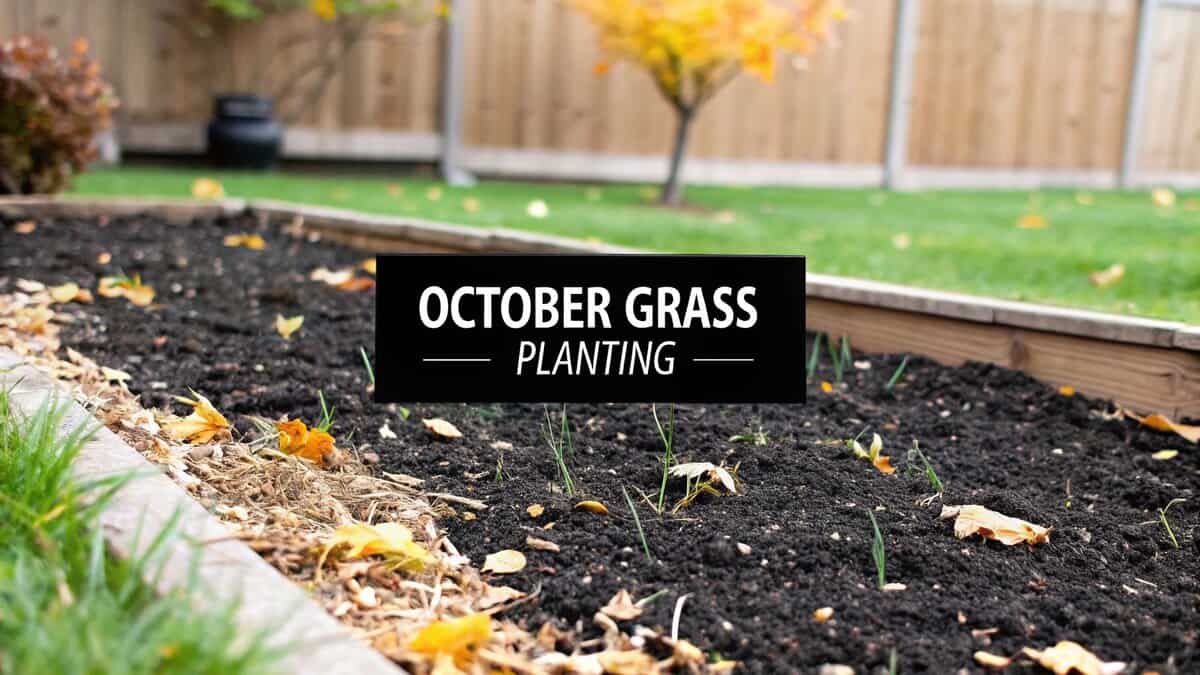
Absolutely. In fact, for many of us in the gardening world, October isn’t just a good time to plant grass seed—it’s often the perfect time. This is the sweet spot in the UK calendar when the conditions align just right for growing a lush, healthy lawn from scratch, especially here in Stoke-on-Trent.
For quotes and bookings, call or email us here.
Why October Is a Golden Opportunity for Your Lawn
Most people instinctively think of spring when it comes to planting, but here in Stoke-on-Trent, we know that autumn holds a distinct advantage. Planting in spring can be a gamble, as you’re in a race against the coming summer heat and the dry spells that stress out new seedlings.
October, on the other hand, gives your new lawn a much gentler start in life. The soil across Staffordshire has held onto the warmth from the summer, which is exactly what seeds need to germinate quickly. But crucially, the air temperature is cooler, so the delicate new grass shoots aren’t getting scorched. This ideal balance means the seedlings can pour all their energy into growing deep, strong roots before winter sets in.
The Perfect Natural Conditions
Working with the October climate here in our region just makes sense. You’re giving your lawn a head start by taking advantage of several key natural benefits:
- Less Weed Competition: Those aggressive summer weeds like clover and dandelions are winding down for the year. This leaves the field wide open for your new grass to get established without having to fight for space, water, and nutrients.
- Consistent Moisture: You can usually count on more reliable rain in the autumn. This natural, steady moisture keeps the soil perfectly damp for germination, meaning you’ll spend far less time dragging a hose or sprinkler around.
- A Stress-Free Start: Young grass won’t have to endure the punishing heat of a British summer. It gets a chance to mature and toughen up before its first real test, preparing it for the following year.
As a team at Stoke Gardening Services, this is the window we look forward to all year. When you work with nature’s schedule instead of fighting it, the results speak for themselves: lawns that come back in the spring looking thick, green, and incredibly healthy.
This period works so well because it gives the seedlings several weeks to establish a robust root system before the ground gets too cold. Think of it as a crucial head start that sets them up for a vibrant return next spring. Gardening experts widely agree that this combination of warm, moist soil is the best you can get for sowing grass seed in the UK. You can learn more about the benefits of autumn gardening from RTE’s lifestyle section. We’ve built our success on this principle, ensuring our clients see fantastic, lasting results from their new lawns.
October vs Spring Seeding A Quick Comparison
Here’s a quick look at why planting grass seed in October often outperforms the traditional spring season for lawns in Stoke-on-Trent.
| Factor | October Seeding (Autumn) | Spring Seeding |
|---|---|---|
| Soil Temperature | Warm from summer, promoting fast germination. | Cold and warming slowly, which can delay germination. |
| Weed Competition | Low. Summer weeds are dying off. | High. Aggressive spring weeds compete for resources. |
| Watering Needs | Lower. Consistent rainfall is common. | Higher. Requires frequent manual watering as temperatures rise. |
| Upcoming Stress | A gentle run-up to winter dormancy. | Faces the stress of summer heat and potential drought. |
| Root Growth | Excellent conditions for deep root development. | Focuses more on blade growth to compete for sun. |
As you can see, autumn provides a much more nurturing environment for new seeds to thrive, setting the stage for a stronger, more resilient lawn the following year.
Choosing the Right Grass Seed for Stoke-on-Trent Soil

When you plant grass in October, picking the right seed is just as important as getting the timing right. It’s easy to feel a bit lost staring at a wall of seed boxes in a garden centre, each one promising a perfect lawn. But the truth is, not all grass seed is the same, especially when you’re dealing with the unique soil and climate we have here in Stoke-on-Trent.
The trick is to match the seed to what you’ll actually be using your lawn for. A tough, resilient blend is a must-have for a garden that hosts kids’ football games, while a finer, more ornamental mix might be the better choice for a front lawn that gets very little foot traffic. At Stoke Gardening Services, we source and supply the ideal seed mixes for our local conditions, taking the guesswork out of it for you.
Understanding Common Grass Seed Types
Most lawn seed you’ll find for sale is actually a mix of different grass species, and each one brings something different to the table. Knowing a bit about them will help you pick the right blend for your Staffordshire garden.
- Perennial Ryegrass: This is the workhorse of most hard-wearing lawn mixes. It sprouts quickly—often in just 7-10 days when the soil is still warm in October—and stands up brilliantly to wear and tear. It’s the perfect foundation for a busy family garden.
- Fescue Grasses: You’ll see names like Creeping Red Fescue or Chewings Fescue. These varieties are known for their fine blades, tolerance for shady spots, and good drought resistance. They’re often mixed with ryegrass to create a lawn that’s both tough and good-looking.
- Bentgrass: This is the stuff of bowling greens and golf courses. It creates a beautiful, dense, and very fine turf, but it comes at a cost—it needs a lot more upkeep. You won’t find it in most general-purpose lawn mixes.
For most homeowners around Stoke-on-Trent, a top-quality mix led by perennial ryegrass with a healthy dose of fescues is the winning combination. It gives you the fast start and durability you need for a lawn to thrive in our local climate.
Decoding the Seed Label
Don’t ignore the information on the back of the box; it’s your best guide. Look for the “purity” percentage, which tells you how much of what’s inside is actual seed versus filler material. Also, check for a germination rate of 85% or higher. A lower rate means you’re paying for seeds that will never sprout.
Many of us in Stoke-on-Trent are working with heavy clay soil, which can get waterlogged during our wet autumns. A seed blend with deep-rooting grasses like Tall Fescue can be a game-changer, as the roots help break up that dense soil over time. Of course, this works best when you’ve prepared the ground properly first. For more on that, check out our guide on how to improve clay soil drainage.
At Stoke Gardening Services, we take all the guesswork out for you. We use professional-grade seed blends that are specifically chosen for our region because we know they perform brilliantly in our local soil, giving you a lawn that’s built to last.
Preparing Your Garden for a Flawless Lawn
If you want a thick, vibrant lawn, you absolutely cannot skip on good ground preparation. I’ve seen it time and time again—this is the stage where most DIY lawn projects fall flat. Getting it right sets you up for success, whether you’re just patching up a few bare spots or starting a whole new lawn from scratch.
Think of it like the foundation for a house. You wouldn’t build on shaky ground, right? Tossing seed onto old, compacted soil is pretty much the same thing. You’ll end up with a patchy, weak lawn that just can’t seem to get going.
Clearing and Cultivating Your Soil
First things first: you need a clean slate. That means getting rid of everything—the old grass, stubborn weeds, rocks, and any other junk. If you’re working on a small patch, a spade and a bit of elbow grease will get the job done. For larger gardens, though, this can be back-breaking work.
Once the area is clear, it’s time to break up the soil. Here in Stoke-on-Trent, we often deal with heavy clay soil that gets packed down like concrete. This stops water from draining and makes it nearly impossible for new grass roots to push through. You need to turn the soil over to a depth of at least 15-20 cm (6-8 inches).
At Stoke Gardening Services, we bring in professional rotavators that make quick work of this. Our equipment churns and aerates the soil, creating that perfect loose, crumbly texture that new seedlings thrive in. This is a critical step if you want your October-planted grass to really take hold.
Levelling and Amending for Perfect Results
With the soil all turned over, the next job is to get it level. This isn’t just about aesthetics; a level lawn ensures water doesn’t pool in low spots, which can drown your new seedlings and invite disease. Grab a rake to break up any large clumps and create a fine, even surface. After that, gently firm the soil by walking over it—what we call the “gardener’s shuffle”—and then give it one final rake to even everything out.
A common mistake I see is people skipping the addition of organic matter. Mixing in a layer of quality compost or well-rotted manure is a game-changer for our local clay soils. It massively improves drainage and adds vital nutrients for the new grass.
What’s interesting is that this timing aligns perfectly with recent weather trends. Lately, October has been showing higher-than-average grass growth rates. This is largely thanks to mild temperatures and consistent rainfall, creating ideal conditions for new lawns to establish. You can read more about October’s excellent growing conditions for grass on mainsitelive.azurewebsites.net.
Look, you can certainly prepare the ground yourself, but it’s physically demanding work that really needs the right tools to be done properly. Our team in Stoke-on-Trent has the experience and specialized equipment to get your garden’s foundation just right, guaranteeing a much better result while saving you a ton of time and effort.
Sowing the Seed for Your New Lawn

With the groundwork done, we get to the best part: sowing the seeds. This is where your vision for a lush lawn starts to become a reality. How you spread the seed now will directly impact how even and thick your grass grows later.
A handheld or walk-behind spreader is definitely the easiest way to get consistent coverage. But if you don’t have one, the old-fashioned way works just fine. The trick is to walk back and forth across your lawn, scattering half the seed in one direction (say, north to south). Then, do it all again at a right angle (east to west) with the remaining seed. This simple crisscross pattern is a game-changer for avoiding clumps and bare patches.
Getting the Seed Bedded In
Tossing seed on top of the soil and hoping for the best is a recipe for disappointment. For a seed to germinate, it needs to be in direct contact with the soil. This contact is everything—it allows the seed to draw in moisture and keeps it from getting blown away by the wind or becoming a snack for the local birds.
So, once the seed is down, you need to gently work it into the soil.
- Rake It In Gently: Flip your garden rake over and use the back of it to lightly pull a bit of soil over the seeds. You’re aiming for a very light dusting, just enough to cover them. About 0.5 cm of soil is plenty.
- Firm It All Down: After raking, you want to press the seed into the soil. You can do this by gently tamping the ground with the back of a spade. Or, you can just do the “gardener’s shuffle”—carefully walking over the entire area to make sure the seeds are snug.
It sounds simple, but this is where a lot of DIY lawn jobs go wrong. If you skip this, your germination rate will nosedive, and all that effort you put into preparing the soil will be for nothing. It’s a small step that makes all the difference.
Time to Water
Here in Stoke-on-Trent, planting in October has a major advantage: the weather usually takes care of the watering for us. That reliable autumn drizzle is often the perfect amount to get things going.
Of course, if we hit a dry patch, you’ll need to lend a hand. The goal is to keep the soil consistently damp but never soggy—think of a well-wrung-out sponge. If you do need to water, use a sprinkler on a fine mist setting. A heavy spray will just wash all your precious seeds away. A light watering every day or two during a dry spell is all it takes. Good soil preparation, like aeration, really helps the ground hold that moisture. If you’re curious, you can learn more about when to aerate your lawn in our guide.
While you can absolutely get great results doing this yourself, achieving that perfect, carpet-like evenness takes a bit of practice. At Stoke Gardening Services, we’ve honed our techniques over the years, using calibrated equipment to ensure every square inch gets the right amount of seed for a flawless finish.
Protecting Your New Grass Through Winter
Getting your seeds into the ground is a fantastic feeling, but the real work starts now. The care you provide over the next few months is what will make or break your new lawn, especially with winter just around the corner.
The first thing you’ll likely notice? Birds. They see a freshly seeded lawn as an all-you-can-eat buffet. A simple and highly effective trick is to cover the area with some lightweight horticultural fleece or fine netting. This not only keeps the birds off but also creates a mini greenhouse effect, offering a little extra warmth to shield the seedlings from those early light frosts.
The First Mow and a Pre-Winter Feed
Seeing that first green fuzz appear is exciting, but hold your horses on mowing. You need to let the grass get its legs first.
Wait until the new blades are at least 5-8 cm (2-3 inches) tall. When you do finally mow, set your mower to its absolute highest setting. The goal here isn’t to give it a proper haircut, just a tiny trim off the very tips.
Cutting new grass too short is one of the most common mistakes I see. It puts immense stress on the young plants, preventing them from developing strong roots. A high cut is the key; it encourages the grass to spread out and thicken up before the cold really sets in.
After you’ve mowed once or twice, it’s time for one last meal before winter. Grab an autumn-specific, slow-release fertiliser. These are specially formulated to be low in nitrogen (which encourages leafy growth you don’t want right now) and high in phosphorus and potassium. This combination is all about building robust roots and disease resistance, arming your lawn for the damp, chilly Staffordshire winter.
For a deeper dive, our complete guide on essential winter lawn care tips has all the details you’ll need.
This whole idea of autumn planting isn’t just a local gardening trick; it’s a massive agricultural strategy. Take Denmark, for example. It’s the world’s biggest producer and exporter of grass seed precisely because it capitalises on its prime autumn growing conditions—much like ours. You can actually read more about global grass seed production and climate on apps.fas.usda.gov.
These aftercare steps aren’t complicated, but they do require a bit of diligence. If you’d rather leave it to the experts, we at Stoke Gardening Services offer maintenance plans designed to get your new lawn through its first winter and set it up for years of success. We can handle all the details, so you don’t have to worry.
Common Questions About Autumn Lawn Seeding
Even with all the benefits of planting in October, you probably have a few questions. That’s completely normal. Over the years, we’ve heard just about everything from homeowners here in Stoke-on-Trent, so we’ve put together answers to the most common queries to help you get started with confidence.
Is It Too Late to Plant Grass at the End of October?
This is easily the number one question we get as Halloween approaches. The short answer is: probably not! The real key isn’t the date on the calendar, but the temperature of the soil. For grass seed to really get going, the soil needs to stay consistently above 8-10°C.
Here in our local area, the weather often stays mild enough well into early November. If you’re heading into the last week of October and the forecast looks clear of any hard frosts, you’re likely still in a great position to get fantastic results. If you’re on the fence, we can always pop by to assess your garden’s specific conditions and give you some honest, practical advice.
How Long Does Grass Seed Take to Grow in October?
Gardening definitely teaches patience, but you won’t be waiting forever. How quickly you see those first green shoots really depends on the seed mix you’re using and, of course, the weather.
- Ryegrass varieties are the sprinters of the grass world. You’ll often spot the first signs of life in as little as 7 to 10 days.
- Fescue grasses, which give a lawn that lovely, finer texture, take their time a bit more, usually sprouting within 14 to 21 days.
The two biggest ingredients for success are consistent moisture and the warmth that’s still left in the soil from summer. Just keep the seedbed damp, and nature will take it from there.
A classic rookie mistake is to worry when nothing happens in the first week. Remember, a good seed blend has different types of grass that sprout at different speeds. Trust the process, and you’ll be rewarded with a fuzzy green carpet before you know it.
Do I Need a Special Autumn Lawn Feed?
Yes, absolutely. Using a fertiliser specifically designed for autumn is one of the smartest things you can do for a new lawn, and it’s a step we never skip. It’s easy to think all lawn feeds are created equal, but they’re formulated for completely different tasks. Spring feeds are loaded with nitrogen to encourage lots of leafy green growth.
Autumn feeds, on the other hand, focus on potassium and phosphates. These nutrients work underground, building a strong, deep root system and making the grass tougher against cold and disease. This is precisely what your new seedlings need to survive their first winter and come roaring back in the spring.
Can I Still Plant Grass on Heavy Clay Soil?
Of course. Heavy clay soil is a signature of so many gardens across Stoke-on-Trent and North Staffordshire—it’s something we handle every single day. It might seem like a major hurdle, but it’s far from a deal-breaker.
The secret is all in the preparation. Before you even think about scattering seed, that compacted clay needs to be thoroughly aerated. After that, working in plenty of organic matter, like good quality compost, is crucial. This simple step dramatically improves drainage and creates a much more welcoming home for new roots to establish themselves. It’s tough, physical work, which is why a lot of folks choose to have our team come in and get that foundation perfect from the get-go.
Our Services
Ready to get that lush lawn you’ve been dreaming of, without all the back-breaking work and uncertainty? At Stoke Gardening Services, we use our local knowledge and professional-grade equipment to give your new lawn the best possible start. Let us handle the heavy lifting of prep and seeding, so all you have to do is look forward to a beautiful garden next spring. Get in touch with us today for a free consultation!
For quotes and bookings, call or email us here.
Response
[…] know it’s tempting when we get that one sunny Tuesday in February, but don’t rush the seed. Grass seed needs a consistent soil temperature of about 10°C to […]