

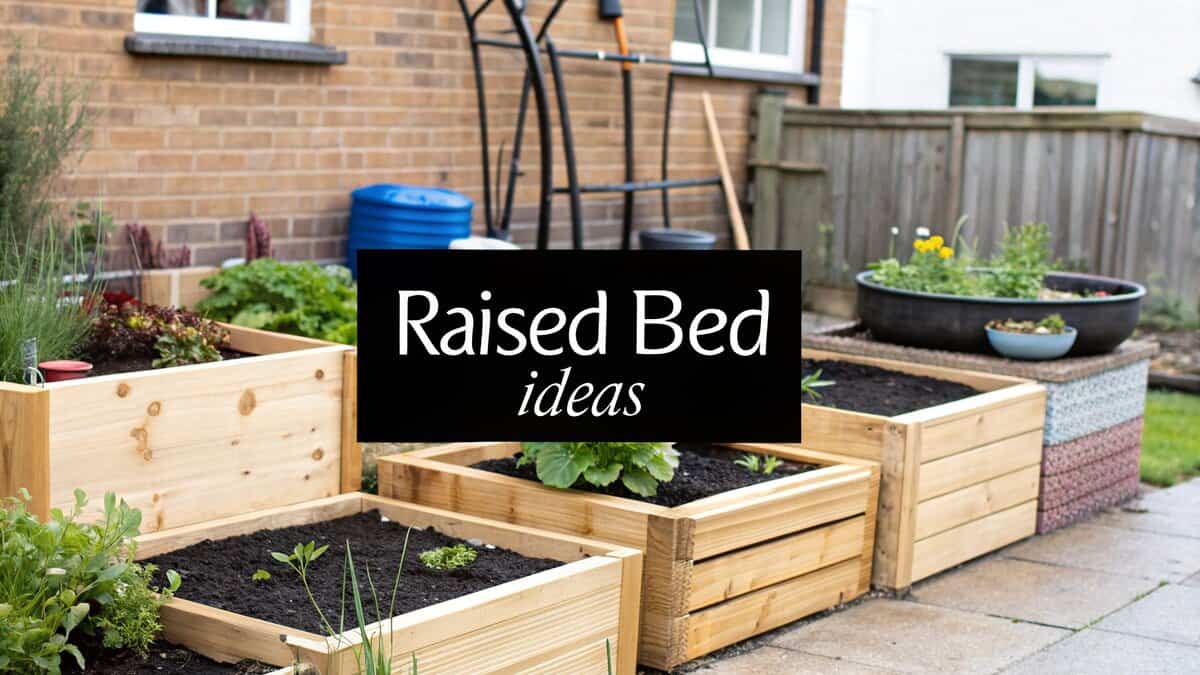
Ready to elevate your gardening game? Raised beds offer a fantastic solution for gardeners in Stoke-on-Trent, providing better drainage, fewer weeds, and easier access. They are perfect for navigating the challenges of our local clay soil, allowing you to create the ideal growing environment for your plants. Whether you’re dreaming of a thriving vegetable patch or a stunning floral display, the right design can make all the difference.
This guide explores 10 practical and inspiring raised bed designs for gardening, with tips tailored specifically for UK conditions. We move beyond generic advice to provide actionable insights for your outdoor space. You’ll discover how different materials and structures can solve common gardening problems and enhance your home’s aesthetic.
From classic timber frames that blend seamlessly into a traditional garden to innovative self-watering systems perfect for busy homeowners, you’ll find the perfect match to bring your vision to life. We will cover everything from tiered layouts for small spaces to hugelkultur mounds that create nutrient-rich soil over time. Let’s explore the structures that will help your Stoke-on-Trent garden flourish, making it more productive and enjoyable than ever before.
For quotes and bookings, call or email us here.
1. Traditional Wooden Raised Beds: The Timeless Classic
The quintessential choice for gardeners in Stoke-on-Trent and beyond, traditional wooden raised beds are a timeless classic for a reason. These simple, rectangular structures provide an effective and aesthetically pleasing foundation for any garden, from compact terraces to sprawling backyards. Their clean lines and natural appearance blend seamlessly with traditional British garden designs.
This design is particularly beneficial for local homeowners dealing with Staffordshire’s heavy clay soil. By creating a contained planting area, you can bypass the challenging native soil entirely. You gain complete control over the growing medium, filling the bed with a perfectly balanced mix of loam, compost, and other amendments to give your plants the best possible start. This is one of the simplest yet most effective raised bed designs for gardening success.
Key Considerations for Wooden Beds
When planning your wooden raised bed, material choice is paramount for longevity in the damp UK climate.
- Best Wood Choices: Opt for naturally rot-resistant timbers like cedar or larch. These woods contain natural oils that help them withstand moisture and decay without chemical treatments. High-quality, food-safe composite materials are another excellent, long-lasting alternative.
- What to Avoid: Steer clear of old railway sleepers or certain types of pressure-treated wood. These can contain creosote or other chemicals that may leach into your soil over time, which is a concern for anyone growing edible crops.
- Site Preparation: Always ensure your beds are positioned on level ground. This prevents water from pooling in one area and ensures even distribution to plant roots. A simple cardboard layer at the bottom before filling is a great way to suppress weeds naturally.
2. Galvanized Metal Raised Beds: A Modern and Durable Choice
For gardeners in Stoke-on-Trent seeking a modern, long-lasting alternative to traditional materials, galvanized metal raised beds offer a sleek and contemporary solution. These structures, often made from corrugated steel or aluminum, bring an industrial-chic aesthetic to gardens and are prized for their exceptional durability. Their robust construction makes them a popular choice for both urban and suburban landscapes.
This design is highly practical for homeowners looking for low-maintenance raised bed designs for gardening. Unlike wood, galvanized metal will not rot, warp, or succumb to pests over time. When considering materials for your garden structures, it is useful to consult a detailed steel vs. wood building comparison to understand the long-term benefits of metal. This resilience ensures your investment provides a solid foundation for growing vegetables and flowers for many years.
Key Considerations for Metal Beds
Proper setup is crucial to maximise the benefits of galvanized metal beds in the variable UK weather.
- Heat Management: Metal can absorb and radiate heat more than wood. In a sunny spot, consider lining the interior sides with cardboard or landscape fabric to insulate the soil and protect plant roots from overheating during a summer heatwave.
- Material Safety: Always select food-grade galvanized metal, especially when growing edible crops. This ensures no unwanted compounds leach into your soil. Look for beds made from zinc-coated steel, which is safe for gardening applications.
- Drainage and Assembly: Ensure your chosen spot is level to prevent waterlogging. Most metal beds come as kits that are simple to assemble. Place a layer of cardboard at the base to suppress weeds before filling it with your preferred soil mix.
3. Keyhole Garden Design: The Permaculture Powerhouse
The Keyhole Garden is an ingenious permaculture design that combines a raised bed with a central composting basket. This circular structure features a keyhole-shaped cutout, allowing easy access to the entire planting area and the compost pile. Originating from African village gardens, this design is a masterpiece of efficiency, making it one of the most sustainable raised bed designs for gardening, particularly in water-conscious households.
It works by placing kitchen scraps and garden waste into the central basket. As you water the compost, nutrient-rich liquid leaches directly into the surrounding soil, feeding plant roots where they need it most. This self-fertilising system creates an incredibly fertile, moisture-retentive growing environment, perfect for the variable British weather and for gardeners in Stoke-on-Trent looking to reduce waste and watering chores.
Key Considerations for Keyhole Gardens
A successful keyhole garden relies on layering and continuous feeding to create a thriving ecosystem.
- Building the Layers: Start the bed with a base layer of cardboard to suppress weeds. Then, add layers of carbon-rich materials like twigs and straw, followed by nitrogen-rich materials like grass clippings and manure. Top it off with a good quality compost and topsoil mix. This technique is a core principle of permaculture, which you can explore in more detail here.
- Feeding the Centre: Regularly add uncooked kitchen scraps, coffee grounds, and green garden waste to the central compost basket. Avoid meat, dairy, or oily foods to prevent pests.
- Planting Strategy: Plant thirstier plants like tomatoes and courgettes closer to the central compost basket where moisture and nutrients are concentrated. Place drought-tolerant herbs like rosemary and thyme along the drier outer edges.
4. Tiered/Stepped Raised Beds: Maximising Slopes and Space
Tiered or stepped raised beds offer a brilliant solution for Stoke-on-Trent gardeners facing sloped or uneven terrain. This design transforms a challenging hillside into a productive, multi-level masterpiece. By stacking beds at different heights, you create a terraced effect that not only prevents soil erosion but also adds stunning visual depth and interest to your garden layout.
This approach is one of the most effective raised bed designs for gardening on a gradient, turning a potential landscaping headache into a beautiful and functional feature. It allows each level to have its own dedicated planting zone, improving drainage and sun exposure for different crops. From terraced urban gardens to accessible community plots, the stepped design maximises every square inch of available growing area.
Key Considerations for Tiered Beds
Proper planning is crucial to ensure the stability and longevity of a tiered garden structure, especially given the variable weather in Staffordshire.
- Stable Foundations: The lowest tier must have a solid, level foundation to support the weight of the levels above it. Ensure the ground is well-compacted and consider using a gravel base for the first layer to improve drainage and prevent shifting.
- Irrigation Planning: Installing a drip irrigation system before filling the beds with soil will save you a significant amount of time and effort. A cascading system can efficiently water each tier, ensuring plants at every level receive consistent moisture without waterlogging the lower beds.
- Plant Placement: Use the varying heights to your advantage. Plant taller crops like sunflowers or climbing beans on the highest tier so they don’t overshadow smaller plants. Place sun-loving herbs on the top levels and more shade-tolerant greens, like lettuce or spinach, on the lower tiers.
5. Wicking Bed Systems: The Self-Watering Solution
For Stoke-on-Trent gardeners looking to reduce watering chores and improve water efficiency, wicking beds are an ingenious solution. This innovative system features a hidden water reservoir beneath the soil. Water is drawn up into the root zone through capillary action, providing a consistent moisture supply directly where plants need it most. This design is exceptionally practical for busy homeowners or for use in allotments where daily watering isn’t always feasible.
This approach is one of the most resource-efficient raised bed designs for gardening, drastically cutting down on water waste from evaporation and runoff. It creates a stable growing environment, protecting plants from the stress of fluctuating moisture levels common during unpredictable UK summers. By maintaining ideal hydration from below, it encourages deep, healthy root development and can lead to more vigorous plant growth.
Key Considerations for Wicking Beds
Building an effective wicking bed requires careful construction to ensure the system functions correctly.
- Reservoir Construction: The base must be a waterproof container. You can repurpose old livestock tanks or even bathtubs. A perforated pipe is laid in the reservoir, often surrounded by gravel, to allow for even water distribution and create an air pocket for healthy roots.
- Wicking Medium: A geotextile fabric separates the water reservoir from the soil layer. The soil itself acts as the wick, but ensuring you have the right composition is vital. To learn more about getting the mix just right, explore our guide on how to prepare soil for planting.
- Maintenance: Install an overflow pipe to prevent waterlogging during heavy Staffordshire rain. A capped fill tube allows for easy refilling of the reservoir and can be screened to keep debris and pests out. Adding a thick layer of mulch on top will further reduce evaporation and keep the system efficient.
6. Hugelkultur (Mound) Beds: The Permaculture Powerhouse
For the gardener in Stoke-on-Trent looking to create a truly self-sustaining and fertile growing space, Hugelkultur offers an ingenious solution. This permaculture technique involves building a raised garden bed not with frames, but by creating a large mound over a base of decaying wood and other organic matter. As the logs, branches, and plant debris decompose, they become a slow-release source of nutrients and warmth for your plants.
This method transforms garden waste into a horticultural asset, creating one of the most resource-efficient raised bed designs for gardening. The internal decomposition process generates gentle heat, extending the growing season slightly, while the spongy wood core acts like a reservoir, retaining moisture and reducing watering needs. It’s an ideal way for Staffordshire gardeners to make use of fallen tree limbs or prunings, turning them into a long-term, fertile foundation for years to come.
Key Considerations for Hugelkultur Beds
Building a Hugelkultur mound is a fantastic way to embrace natural gardening cycles, but proper construction is key to its success.
- Layering for Success: Begin with the largest materials, like logs and thick branches, at the very bottom. Layer progressively finer materials on top: smaller twigs, grass clippings, autumn leaves, and finally a generous topping of compost and topsoil.
- What to Avoid: Never use treated or painted wood, as chemicals can leach into your soil. Also, avoid wood from allelopathic trees like black walnut, which can inhibit plant growth. Ensure any plant material used is free from disease. You can find more information about how this decomposition process works in our guide to different methods of composting.
- Settling and Soaking: Build your mound higher than your desired final height, as it will settle significantly over the first year. Water the mound thoroughly after construction to kickstart the decomposition process and eliminate air pockets.
7. Container-Based Modular Systems: Ultimate Flexibility
For Stoke-on-Trent gardeners facing space constraints or renting their homes, container-based modular systems offer unparalleled flexibility. This approach uses individual containers like large pots, wooden crates, or even recycled troughs, arranged together to create a cohesive and productive garden. It is one of the most adaptable raised bed designs for gardening on balconies, patios, or in small urban courtyards.
This design is a fantastic solution for renters or those who might move house, as the entire garden is portable. It also allows for total control over each plant’s specific needs, grouping plants with similar light and water requirements together. From a small herb garden on a sunny terrace in Hanley to a vibrant vegetable patch in a shared community space, modular systems empower anyone to start growing, regardless of their garden size or soil quality.
Key Considerations for Modular Systems
Success with container gardening comes down to a few critical details that ensure your plants thrive.
- Proper Drainage is Essential: Any container you use, whether salvaged or new, must have adequate drainage holes. This prevents waterlogging, which is a common issue in our damp climate and can quickly lead to root rot.
- Choose the Right Soil: Never fill containers with heavy garden soil from the ground. It compacts quickly, suffocating roots. Instead, use a high-quality, lightweight potting mix specifically formulated for containers to ensure good aeration and moisture retention.
- Strategic Arrangement: Grouping containers close together helps create a beneficial microclimate, increasing humidity and protecting plants from wind. You can also easily rearrange them to follow the sun or bring plants needing more attention to the front. Consider self-watering containers to reduce daily maintenance.
8. In-Ground Raised Beds with Barriers
For homeowners in Stoke-on-Trent wanting a permanent, streamlined look, in-ground raised beds with barriers offer a sophisticated solution. This hybrid approach combines the defined planting zones of a raised bed with the seamless appearance of an in-ground garden, creating clean, manageable areas directly within your landscape. It’s an excellent choice for formal gardens or for protecting perennial installations from invasive roots.
This design is particularly effective in areas with aggressive weeds or invasive plants, a common challenge in some Staffordshire gardens. By burying a barrier around the perimeter, you create a fortress for your chosen plants, preventing unwanted intruders from taking over. This method provides the control of a raised bed while maintaining a natural, integrated aesthetic, making it one of the most subtle yet powerful raised bed designs for gardening.
Key Considerations for In-Ground Barriers
Achieving a durable and effective in-ground bed requires careful selection of materials and precise installation to withstand UK weather conditions.
- Best Barrier Choices: Use heavy-duty, non-rusting materials like galvanised metal, thick recycled plastic, or specialised root barrier fabric. These materials provide a strong, long-lasting defence against both roots and pests.
- Installation Depth: The barrier should extend deep enough to block invasive roots, often at least 30cm (12 inches) into the soil. For added definition and to prevent soil spillage, ensure the barrier extends at least 5cm (2 inches) above ground level.
- Pest and Drainage: For gardens prone to moles or gophers, laying hardware cloth at the base of the bed before filling is a crucial step. It is also vital to ensure the area has good drainage so water doesn’t become trapped by the barrier.
9. Spiral Tower Gardens: The Vertical Herb Haven
For Stoke-on-Trent gardeners with limited space, the spiral tower garden is an ingenious solution that maximizes growing area with a minimal footprint. This vertical design, typically around three to four feet tall, spirals upwards, creating numerous pockets for planting along its structure. It’s a striking and productive feature, perfect for balconies, patios, or small urban garden corners.
This design is particularly celebrated for growing a wide variety of herbs and smaller vegetables like lettuces and strawberries. The spiral creates different microclimates: the top receives the most sun and has the driest soil, ideal for Mediterranean herbs, while the lower, shadier sections stay moister, suiting plants that prefer cooler conditions. This makes it one of the most efficient raised bed designs for gardening when you want diversity in a tight space.
Key Considerations for Spiral Towers
Building and maintaining a spiral tower requires a slightly different approach to traditional beds to ensure its success and longevity.
- Strategic Planting: Maximise your harvest by planting sun-loving herbs like rosemary and thyme on the south-facing side where they get the most light. Use the shadier, north-facing pockets for mint, chives, or parsley.
- Watering and Soil: Consider installing a central irrigation tube with holes drilled along its length for easy, even watering. Use a lightweight potting mix to reduce the overall weight, which is especially important for balconies. Refreshing the top few inches of soil annually will keep your plants thriving.
- Material Choices: Stones, bricks, or interlocking blocks are excellent choices for a permanent and visually appealing structure. For a simpler, quicker build, timber or even pre-fabricated kits can be used to create the spiral frame.
10. Sunken/Recessed Raised Beds: The Water-Wise Innovator
In an interesting reversal of the typical raised bed design, sunken or recessed beds are built at or even below ground level. This innovative approach creates a depression that acts as a natural water reservoir, maximising moisture retention. It’s a clever technique borrowed from ancient desert gardening practices, perfectly adapted for managing water in specific UK garden scenarios.
This design is particularly useful for gardeners on sloped properties in Stoke-on-Trent or for those with very sandy, free-draining soil that struggles to retain moisture during drier spells. By sinking the growing area, you create a microclimate that concentrates water directly at the root zone, reducing runoff and evaporation. It’s one of the most resource-efficient raised bed designs for gardening in challenging conditions, turning a potential problem into a productive advantage.
Key Considerations for Sunken Beds
Success with this method hinges on understanding your site’s drainage and planning the structure carefully.
- Drainage is Crucial: This design is not suitable for heavy clay soil prone to waterlogging, as it could drown plant roots. It excels in sandy or loamy soils. Before committing, perform a simple percolation test: dig a hole, fill it with water, and see how quickly it drains.
- Maximise Water Capture: Gently slope the surrounding earth towards the bed to channel rainwater into the growing area. Combining this with a thick layer of organic mulch like bark chippings or straw will dramatically reduce water loss.
- Strategic Planting: Consider planting taller, sun-loving plants around the perimeter. This creates natural shade for the lower, central area, further protecting moisture-loving plants from the intense midday sun.
Top 10 Raised Bed Designs Comparison
| Style / Item | Implementation Complexity 🔄 | Resource Requirements ⚡ | Expected Outcomes / Impact 📊 | Ideal Use Cases ⭐ | Key Advantages / Tip 💡 |
|---|---|---|---|---|---|
| Traditional Wooden Raised Beds | Low — simple rectangular build and assembly | Low — affordable lumber and basic tools | Reliable yields; customizable soil; moderate lifespan (5–15 yrs) | Home vegetable and herb gardens; beginners | Affordable and easy to customize. Tip: use cedar/composite and avoid pressure-treated wood. |
| Galvanized Metal Raised Beds | Low–Medium — panel assembly, occasional sealing | Medium — higher upfront cost; metal tools | Long-lasting, low maintenance; faster soil warming | Urban rooftops, modern landscapes, long-term installations | Very durable and sleek. Tip: choose food-grade metal and shade in hot climates. |
| Keyhole Garden Design | Medium–High — circular layout with central compost chamber | Medium — more materials, compost basket, planning | High productivity per area; reduced water and nutrient loss | Permaculture, small plots, water-scarce sites | Efficient nutrient/water cycling. Tip: direct greywater into the center compost. |
| Tiered / Stepped Raised Beds | High — terracing, retaining structures, precise leveling | High — significant materials and labor | Maximizes usable area and sunlight; excellent drainage | Sloped terrain, accessible/therapeutic gardens | Great for accessibility and visual impact. Tip: install drip irrigation before filling. |
| Wicking Bed Systems | Medium–High — reservoir, wicking layer, drainage setup | Medium — liners, pipes, fill tube; higher initial cost | Very water-efficient; consistent moisture; reduced watering labor | Dry climates, water-restricted areas, vacation gardens | Cuts watering needs substantially. Tip: reuse tanks and screen fill tubes. |
| Hugelkultur (Mound) Beds | Medium — layered mound construction and settling | Low–Medium — requires large amounts of woody biomass | Self-fertilizing as it decomposes; excellent drainage and heat generation | Permaculture/regenerative systems, sites with wood debris | Low maintenance once established. Tip: avoid treated or diseased wood. |
| Container-Based Modular Systems | Low — simple placement and potting | Low — containers and quality potting mix; frequent upkeep | Flexible but lower total yield; easy isolation of problems | Renters, balconies, patios, temporary/urban gardens | Highly portable and low-cost. Tip: use self-watering containers and good potting mix. |
| In-Ground Raised Beds with Barriers | Medium–High — excavation and buried barrier installation | Medium–High — barrier materials and labor | Permanent beds that prevent root spread and burrowing pests | Perennial beds, sites with invasive roots or wildlife | Effective root/pest exclusion. Tip: extend barriers below ground and 2″ above surface. |
| Spiral Tower Gardens | Medium — vertical spiral construction, pockets and center tube | Medium — specialized structure; lightweight soil mixes | Extremely space-efficient for herbs; limited root depth | Very small spaces, herb-focused patios and balconies | Compact and accessible. Tip: plant sun-loving herbs on south-facing side and use central drip. |
| Sunken / Recessed Raised Beds | Medium–High — excavation with drainage and microclimate planning | Medium — earthworks, possible drainage tiles | Exceptional water retention and wind protection; microclimate benefits | Arid/water-harvesting sites, Mediterranean climates | Great for conserving water. Tip: test drainage and install tile if soil is slow-draining. |
Ready to Build Your Perfect Garden in Stoke-on-Trent?
We’ve explored a diverse landscape of raised bed designs for gardening, each offering a unique pathway to a more productive, accessible, and beautiful outdoor space. From the timeless appeal of traditional wooden frames to the sustainable ingenuity of Hugelkultur mounds, the possibilities are as varied as the plants you wish to grow. You’ve seen how galvanized metal offers modern durability, tiered beds maximize vertical space, and wicking systems provide a clever solution for consistent watering.
The journey from inspiration to implementation is where the real magic happens. Choosing the right design is the first crucial step. The best fit for your Stoke-on-Trent garden will depend on your specific goals, the available sunlight in your yard, your soil conditions, and how much time you want to invest. Whether it’s the efficient composting of a keyhole garden or the architectural interest of a spiral tower, each design provides a framework for success.
Key Takeaways for Your Garden Project
Mastering these concepts allows you to create a garden that works for you, not against you. A well-chosen raised bed can solve common local challenges like heavy clay soil, poor drainage, and accessibility issues. By elevating your garden, you gain superior control over your soil composition, reduce weed pressure, and create an ergonomic environment that makes planting and harvesting a joy.
Consider these final points as you plan:
- Space & Scale: A tiered or spiral design can be a game-changer for smaller patios, while large plots can benefit from the long-term fertility of a Hugelkultur bed.
- Material Matters: Your choice of materials, from natural timber to recycled plastics or metal, will influence both the aesthetic and longevity of your garden beds.
- Gardening Goals: Are you aiming for a high-yield vegetable patch, a fragrant herb garden, or a stunning floral display? Your ambition will guide your design choice.
Ultimately, the power of raised bed gardening lies in its adaptability. You are no longer limited by the ground beneath your feet. Instead, you can build the exact environment your plants need to flourish, creating a thriving ecosystem right in your own backyard. This approach transforms gardening from a challenging chore into a rewarding and creative process, allowing you to cultivate not just plants, but a beautiful and functional extension of your home.
Our Raised Bed Gardening Services
Ready to turn these ideas into reality but need an expert hand? Stoke Gardening Services specialises in designing and constructing bespoke raised bed solutions tailored to the unique climate and soil of Stoke-on-Trent. Let us handle the heavy lifting so you can enjoy a beautiful, productive garden without the stress. Contact Stoke Gardening Services today to start planning your perfect garden!
For quotes and bookings, call or email us here.
Response
[…] Constructing Raised Beds: Get a head start on the planting season by building your raised beds now. It’s a brilliant way to improve drainage and soil quality, which can be a real challenge for many gardens here in Stoke-on-Trent. If you need some ideas, check out these great raised bed designs for gardening. […]