
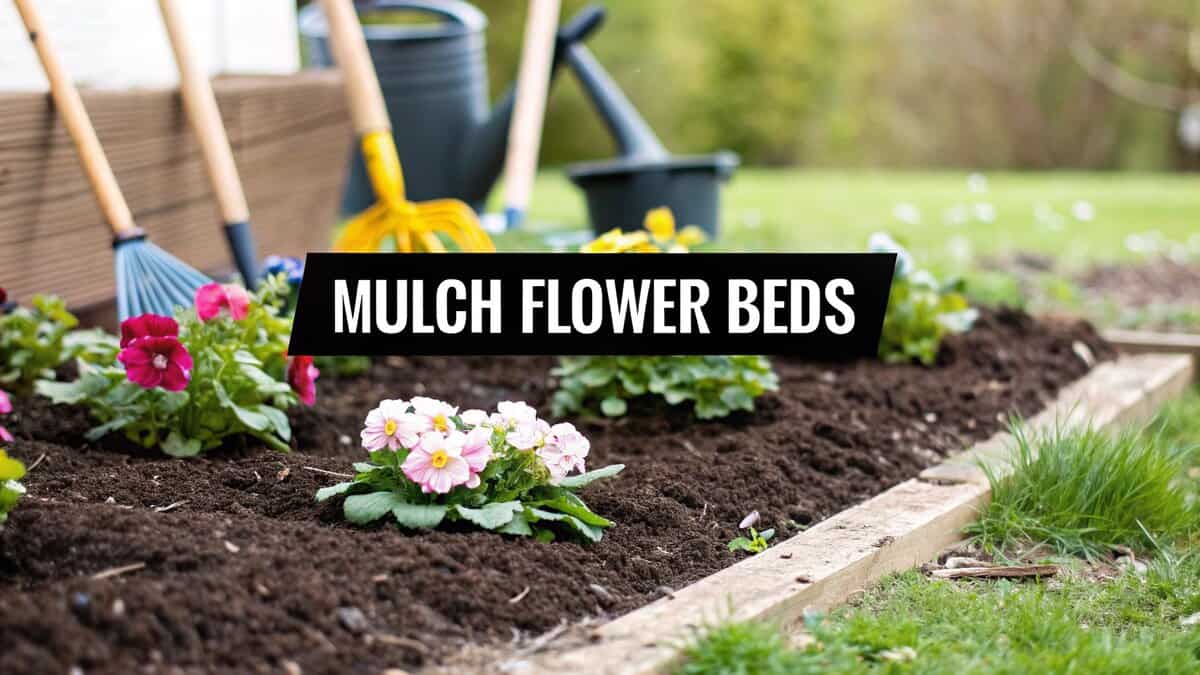
Learning how to mulch your flower beds is one of the best things you can do for your garden. The basic idea is simple: prepare the ground, pick a good material like bark or compost, and spread a layer about 5-7cm deep. This one step protects your plants, keeps the soil moist, and honestly, just makes everything look neat and tidy. For gardeners in Stoke-on-Trent, it’s a key step to a healthier, more resilient garden.
For quotes and bookings, call or email us here.
Why Mulching Is a Game Changer for UK Gardens

If you feel like you’re constantly fighting a losing battle with weeds and dry soil, mulching is the secret weapon you need. Here in Stoke-on-Trent, where the weather can be unpredictable, a good layer of mulch acts as a much-needed buffer for your plants. Think of it as a protective blanket—it keeps the soil a bit warmer during those unexpected late spring frosts and cooler when a summer heatwave hits.
The benefits don’t stop there. Mulching saves you a surprising amount of time and effort in the long run, all while helping your plants grow stronger and healthier.
Key Benefits You’ll Notice Almost Immediately
- Less Watering: Mulch is fantastic at slowing down water evaporation from the soil. This means you won’t have to drag the hose out nearly as often, which is a real bonus during our drier summer months.
- Fewer Weeds: A thick layer of mulch blocks sunlight, stopping most weed seeds from ever getting a chance to sprout. You’ll spend a lot less time on your hands and knees weeding. It’s a real back-saver.
- Better Soil: As organic mulches like bark or compost break down, they slowly feed the soil, adding valuable nutrients and improving its overall structure. This is especially helpful for the heavy clay soil we often see around Staffordshire.
The positive impact of mulching isn’t just a local secret; it’s a practice valued worldwide. The global market for mulching materials was estimated at around USD 10.49 billion in 2024, which just goes to show how essential it is for everyone from large farms to home gardeners like us. You can explore more about mulching market trends and see how it’s becoming a key part of sustainable gardening.
To quickly see why it’s worth the effort, here’s a simple breakdown of the advantages.
Quick Guide to Mulching Benefits
| Benefit | Impact on Your Stoke-on-Trent Garden |
|---|---|
| Moisture Lock-In | Keeps soil damp for longer, reducing your watering chores, especially in summer. |
| Weed Barrier | Prevents pesky weeds from taking over, giving your plants room to flourish. |
| Temperature Control | Insulates soil from extreme heat and cold, protecting delicate plant roots. |
| Soil Enrichment | Organic mulch decomposes to add nutrients, perfect for improving our local clay soil. |
| Erosion Prevention | Stops heavy rain from washing away topsoil, keeping your beds intact. |
| Clean Appearance | Gives your garden a professional, finished look that makes your plants pop. |
In short, mulching is one of the smartest things you can do for your flower beds. It’s a simple investment of time that pays off all season long.
For gardeners in Stoke-on-Trent, mulching isn’t just a chore; it’s a strategy. It prepares your flower beds to handle whatever the unpredictable British weather throws at them, leaving you with a garden that’s both beautiful and easier to manage.
Of course, applying mulch correctly is what makes all the difference. Our Stoke-on-Trent team has the local know-how to pick the right type of mulch for your garden and apply it for a perfect, professional finish. If you’re starting with compacted ground, it’s a good idea to sort that out first—take a look at our guide on how to improve clay soil drainage before you lay down any mulch.
Choosing the Right Mulch for Your Garden

Walking into a garden centre and seeing all the different types of mulch can be a bit overwhelming. But don’t worry, it really just comes down to two main types: organic and inorganic. Figuring out which one is right for you is the first step to getting the most out of mulching your flower beds.
Organic mulches are simply materials that were once alive—think bark, wood chippings, or garden compost. Their biggest plus is that they slowly break down, feeding your soil and improving its structure. This is a game-changer for anyone dealing with the heavy clay soil we often find here in Stoke-on-Trent.
Inorganic options, like gravel or slate, don’t break down. They’re fantastic for a clean, modern look and are incredibly low-maintenance. The trade-off is that they won’t add any nutrients back into the soil.
To make the choice easier, let’s break down the pros and cons of each.
Organic vs Inorganic Mulch Comparison
| Mulch Type | Best For | Pros | Cons |
|---|---|---|---|
| Organic | Feeding soil, retaining moisture, weed control in flower beds. | Improves soil structure and fertility as it decomposes. | Needs to be topped up every 1-3 years. |
| Inorganic | Low-maintenance areas, modern designs, pathways, and drought-tolerant plants. | Permanent and doesn’t need replacing. Clean appearance. | Offers no nutritional benefit to the soil. Can get very hot in summer. |
Ultimately, your choice depends on whether your priority is to feed the soil or to create a long-lasting, decorative finish.
Organic Mulches: The Soil Improvers
For most flower beds, we almost always recommend an organic mulch. Roses, hydrangeas, lavender, and pretty much any perennial will thank you for it. As it decomposes, it adds that crucial organic matter that helps break up dense soil, improving both drainage and aeration.
Some of the most popular choices you’ll find are:
- Bark Chippings: A classic for a reason. They look neat and tidy and will last a couple of seasons before you need to add more.
- Composted Bark Fines: This is a much finer material that breaks down faster, giving your soil a quicker boost of nutrients.
- Homemade Compost: If you have it, use it! This is the absolute best thing for your soil’s health, and it’s a brilliant way to recycle waste from your garden and kitchen.
There’s a good reason these natural materials are flying off the shelves. More and more gardeners are recognising the long-term benefits they bring to soil fertility and weed prevention. The interest in gardening has really highlighted the value of sustainable, organic options.
Inorganic Mulches: The Durable Decorators
Inorganic mulches really come into their own in specific situations. Slate chippings, for example, can create a sharp, contemporary look and are perfect for rockeries or gardens with drought-tolerant plants that thrive in poorer soil, such as sedums or alpine plants.
Gravel is another great option, especially for paths or areas where you don’t intend to do much digging. Just be mindful that stones can absorb a lot of heat from the sun, which might be a bit too much for more delicate plants during a hot Staffordshire summer.
Our Pro Tip: You can get the best of both worlds. Try laying down a generous layer of compost before you put down your decorative stones or gravel. Your plants’ roots will get the nutrients they need, and you still get that clean, long-lasting finish on top.
Making your own compost is the most cost-effective way to create a fantastic, nutrient-dense mulch. If you want to get a compost pile going quickly, check out our guide on fast composting methods.
Getting Your Flower Beds Ready for Mulch
The secret to a great mulching job isn’t just in the spreading—it’s all in the prep work. If you want your mulch to keep moisture locked in and weeds out, you can’t skip these steps. Honestly, rushing this part is probably the biggest mistake we see people make.
First things first, you have to get every last weed out. We know it’s tempting to think you can just smother them, but trust us, tough weeds like bindweed or ground elder will find a way to push right through. Take the time to get them out, roots and all. A little extra effort now saves you from pulling weeds all season long.
Water, Feed, and Edge
With the weeds gone, give your flower bed a really good, deep soak. Never, ever put mulch on top of dry soil. If you do, the mulch will just act like a sponge, stealing the first rain shower before it ever reaches your plants’ roots. Watering first means you’re trapping that precious moisture right where it needs to be.
This is also the perfect moment to give your soil a boost. Here in Stoke-on-Trent, we deal with a lot of heavy clay. Working in a good layer of compost or well-rotted manure does wonders for drainage and gives your plants a slow-release feed. Just spread a couple of centimetres over the surface before you mulch. For a deeper dive, check out our guide on how to prepare soil for planting.
Think of a well-prepared bed as a clean canvas. By clearing weeds, watering deeply, and enriching the soil, you’re creating the perfect foundation for your mulch to protect and nourish your garden.
The final touch? A crisp, clean edge. Grab a half-moon edger or a sharp spade and cut a neat line where your bed meets the lawn. This little detail looks fantastic and creates a small trench that stops your mulch from escaping onto the grass. It’s the difference between an okay job and a professional one.
Applying Mulch Like a Pro
Alright, your flower beds are prepped and ready to go. Now for the satisfying part: laying down the mulch. This isn’t just about dumping it on and hoping for the best. A few simple techniques we’ve picked up over the years can make a massive difference, both for the health of your plants and the final, polished look of your garden.
The first thing to get right is the depth. You’re aiming for a nice, even layer about 5-7cm (that’s 2-3 inches) thick. If you go too thin, weeds will just laugh and push right through, and you won’t get much moisture retention. Pile it on too thick, though, and you can actually suffocate your plants’ roots, blocking out the air and water they need. It’s all about hitting that sweet spot.
Spreading It Right
The best way to spread your mulch really depends on the type you’re working with. For finer stuff like compost or bark fines, it’s often easiest to just use your hands, carefully placing it around smaller, more delicate plants. When you’re dealing with chunkier bark chips over a larger area, a garden fork or a rake is your best friend for getting an even spread.
This is especially true for more structured layouts, like those you often see in raised bed gardening, where a consistent depth is absolutely essential for it to look right.
The infographic below really nails the simple but crucial prep work you should do before mulching.

As you can see, a great mulching job starts with weeding, watering, and edging. It’s that groundwork that gives you a truly professional finish.
Now, if there’s one technique to master, it’s how you apply mulch around the plants themselves.
Remember the ‘Doughnut, Not Volcano’ Rule: Always leave a small, clear circle right around the base of each plant stem or tree trunk. Never pile mulch up against the stem in a ‘volcano’ shape. This is a classic mistake that traps moisture against the plant, leading to rot, disease, and all sorts of problems you don’t want.
That little gap is vital—it lets the plant’s crown stay dry and breathe. If this all feels like a bit much or you’re short on time, our Stoke-on-Trent gardening team is always here to help. We can handle the whole process, giving you a perfect application that protects your plants and keeps your garden looking fantastic.
Keeping Your Mulch Looking Great All Year
Getting that first layer of mulch down feels great, but it’s not a one-and-done job. Think of your mulch as a dynamic part of the garden that needs a little attention now and then to keep doing its job right.
Organic mulches, like bark chips or compost, are fantastic because they slowly decompose and enrich your soil. The trade-off is that they disappear over time. You’ll likely need to top up the layer every year or two to maintain that ideal depth. A quick look in the spring is usually all it takes—if the layer is looking thin and you can see soil, it’s time for a refresh.
A Few Seasonal Pointers
As the seasons turn here in Stoke-on-Trent, your mulch will need a little help.
Come spring, once we’re past the last frost, grab a rake and gently fluff up the mulch. This simple step breaks up any matted or compacted spots from the winter rain, improving air circulation and helping water get down to the roots where it’s needed most.
Even the best mulch can’t stop every single weed. If you see a persistent one pop its head through, just pull it out right away. They usually come out easily from the loose material.
Need to add a new plant? No problem. Just pull the mulch aside, dig your hole, and settle the new plant in. Then, simply sweep the mulch back into place, leaving that small, crucial gap around the stem.
Your hard work putting the mulch down pays off season after season, but only if you give it a little upkeep. A quick top-up and a seasonal fluff are all it takes to keep those weeds down and the moisture locked in.
Of course, life gets busy. If you don’t have the time to keep on top of it, Stoke Gardening Services is always here to lend a hand. We offer garden maintenance services all year round to ensure your mulched beds stay in perfect condition.
A Few Common Mulching Questions
Reading about mulching is one thing, but it’s a whole different story when you’re actually out in the garden with a shovel and a big pile of bark. It’s only natural for questions to come up.
Here are a few of the most common ones we hear from fellow gardeners right here in Stoke-on-Trent.
What About Mulching Over Weeds?
This is probably the number one question we get asked. Can you just bury the weeds with mulch? The short answer is, unfortunately, no.
While a nice, thick layer of mulch will certainly stop new, small annual weeds from seeing the light of day, it won’t do much against the tough ones. Pesky perennials like dandelions, bindweed, or couch grass will just power right through it. For a clean look that lasts, you really need to put in the effort and weed the bed thoroughly first.
Is It Okay to Mulch in the Autumn?
Absolutely! Putting down a layer of mulch in the autumn is a brilliant move. It acts like a cosy blanket for your plant roots, protecting them from the sharp winter frosts we often get around Staffordshire.
Plus, it gives organic mulches a head start on decomposing over the winter, so they’ll be enriching your soil just in time for the spring growing season.
A quick tip: If you spot little mushrooms or other fungi popping up on your wood chip mulch, don’t panic! This is actually a great sign. It means the organic matter is breaking down naturally and feeding your soil. They won’t harm your plants.
Should Mulch Go Directly on the Soil?
Yes, mulch should always go directly onto the soil. We’ve seen people lay down plastic sheeting first, thinking it will stop weeds for good. Please don’t do this.
Plastic suffocates the soil. It blocks air and water from getting to your plants’ roots, which can do more harm than good. The best way is always a healthy layer of organic mulch spread over clean, weed-free soil.
If you find yourself short on time or just want to make sure the job’s done right, our team at Stoke Gardening Services is always here to lend a hand. We can handle the whole process, from prepping the beds to laying down the perfect type and amount of mulch to get your Stoke-on-Trent garden looking fantastic.
Our Services
Ready for a beautiful, low-maintenance garden? Let Stoke Gardening Services take care of the hard work for you. Contact us today to learn more about our local services.
For quotes and bookings, call or email us here.
Responses
[…] Combine for Best Results: Consider using a landscape fabric barrier underneath an inorganic mulch like slate chippings for ultimate long-term weed control in static beds. For a more detailed guide, you can learn more about how to mulch your flower beds effectively. […]
[…] Use mulch after planting to retain moisture – Learn more about mulching flower beds […]
[…] Use mulch after planting to retain moisture – Learn more about mulching flower beds […]