

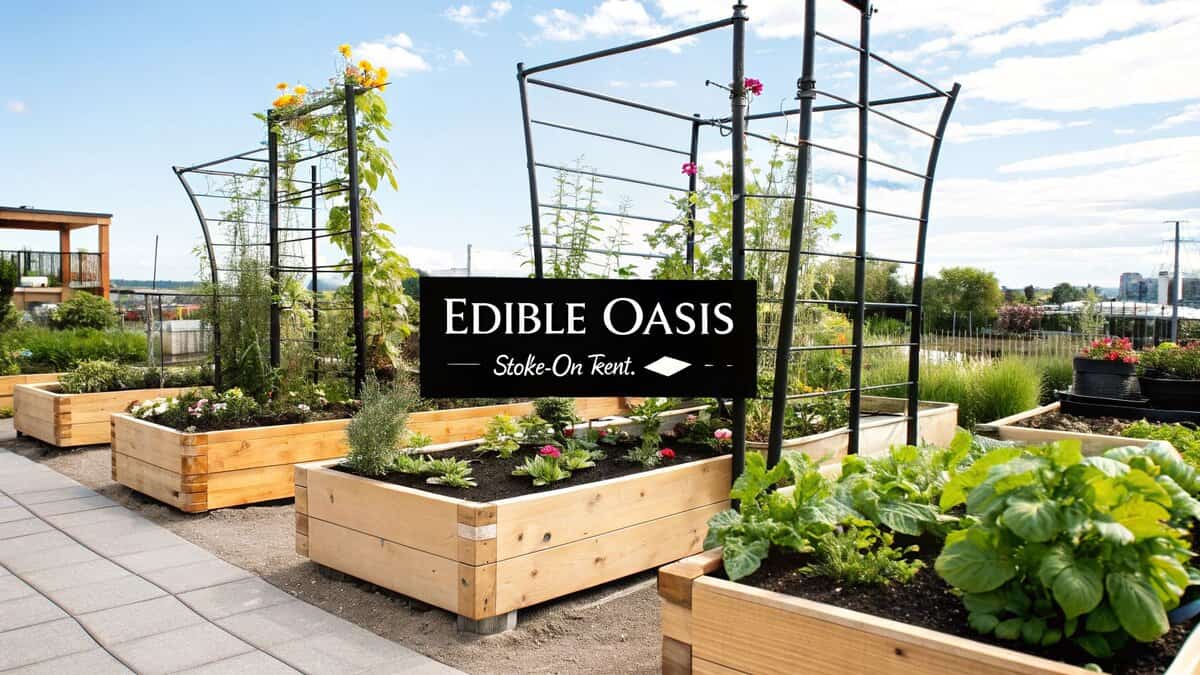
Imagine stepping into your Stoke-on-Trent garden and harvesting fresh, flavourful produce for your next meal. This is more achievable than you might think. The clay-rich soil and temperate climate here present unique opportunities for creating a vibrant, productive edible garden. Whether you have a spacious lawn, a compact yard, or just a small balcony, there are countless ways to grow your own food. This guide explores 12 innovative and practical edible gardening ideas specifically chosen for their suitability to our local UK conditions.
Forget generic advice; these are actionable strategies to help you cultivate everything from crisp lettuces to sweet berries right at home in Staffordshire. We’ll delve into smart construction, clever planting combinations, and sustainable techniques that work beautifully in Stoke-on-Trent gardens. For those looking to add enduring beauty and structure, exploring ideas for designing with stone walls for garden accents can truly elevate your space. Let’s get started on your journey to homegrown abundance.
For quotes and bookings, call or email us here.
1. The Stoke-on-Trent Staple: Mastering Raised Bed Gardening
Raised bed gardening is one of the most effective edible gardening ideas, especially for tackling the heavy, clay-based soil common in Stoke-on-Trent. This method involves building a contained frame, typically 6-12 inches high, and filling it with a custom soil mix. This gives you complete control over drainage and nutrients, creating the perfect environment for vegetables to flourish.
This approach is ideal if your garden suffers from poor drainage or if you prefer a tidy, organised vegetable patch. It also reduces the need for bending and kneeling, making gardening more accessible.
How to Get Started
Creating a successful raised bed is straightforward. By focusing on a few key details, you can ensure a productive harvest.
- Construction: Use locally sourced, untreated timber to build your beds. This ensures durability and avoids any chemicals leaching into your soil.
- Soil Mix: A blend of 60% quality peat-free compost, 30% topsoil, and 10% perlite provides an excellent, well-draining medium for most vegetables.
- Weed Prevention: Before filling the bed, lay a layer of cardboard at the base. This simple trick suppresses weeds and naturally decomposes over time.
- Sunlight: Position your beds where they will receive at least six hours of direct sunlight, a crucial factor for fruiting plants.
For Stoke-on-Trent homeowners looking for a low-maintenance and highly productive garden, raised beds are a fantastic starting point. If you need help with the construction and installation, our team at Stoke Gardening Services can build the perfect raised bed setup for your space.
2. The Urban Ascent: Maximising Space with Vertical Gardening
Vertical gardening is one of the most ingenious edible gardening ideas for Stoke-on-Trent homeowners with limited space. This method involves growing plants upwards on trellises, walls, or in hanging containers, turning compact yards, balconies, and patios into productive food sources. It allows you to grow more in a smaller footprint, transforming unused vertical surfaces into green, edible walls.

This approach is perfect for urban gardens or any area where ground space is at a premium. It also improves air circulation around plants, which can help reduce the risk of fungal diseases common in the damp UK climate.
How to Get Started
A successful vertical garden relies on a sturdy structure and the right plant choices. Focusing on these details will help you create a thriving upward garden.
- Structure: Choose strong, weather-resistant materials like cedar, metal, or durable recycled plastics for your trellis or frame. Ensure it is securely fastened to handle the weight of mature plants.
- Plant Selection: Opt for climbing varieties that are naturally suited for vertical growth. Pole beans, peas, cucumbers, and vining tomatoes are excellent choices for a Stoke-on-Trent garden.
- Watering: Vertical gardens can dry out quickly, especially at the top. Plan for consistent watering, perhaps with a drip irrigation system, to ensure even moisture distribution.
- Plant Support: As your plants grow, gently guide them up the structure using soft ties or clips. This prevents damage to the stems and encourages healthy upward growth.
Vertical systems are a superb solution for small spaces. If you need a custom vertical gardening structure built and installed in the Stoke-on-Trent area, our team can design one that perfectly fits your home and goals.
3. The Urban Maximiser: Adopting Square Foot Gardening
Square Foot Gardening (SFG) is a highly organised and productive system that takes the guesswork out of planting. This method divides a raised bed into a grid of one-foot squares, with specific planting rules for each square based on plant size. It’s one of the most efficient edible gardening ideas for small Stoke-on-Trent gardens, maximising yields while minimising water, soil, and effort.
This systematic approach is perfect if you have limited space but want to grow a wide variety of vegetables. It eliminates overcrowding and simplifies tasks like weeding and watering, making it ideal for both beginners and experienced gardeners seeking efficiency.
How to Get Started
Implementing Square Foot Gardening is simple once you grasp the core principles. A few key steps will set you up for a bountiful and well-managed harvest.
- Grid System: Build a 4×4 foot raised bed and lay a grid over the top using wood slats or string. This creates 16 distinct planting squares.
- Plant Spacing: Follow the system’s precise spacing guide. For example, plant 1 cabbage per square, 4 lettuce plants, or 16 carrots.
- Succession Planting: As soon as you harvest a square, add a scoop of compost and plant a new crop to ensure continuous production throughout the season.
- Vertical Growth: Install a trellis on the north side of the bed for climbing plants like peas and beans, freeing up squares for other vegetables.
For those in Stoke-on-Trent looking to get the most out of a small plot, Square Foot Gardening is a game-changer. If you want a perfectly structured vegetable patch, learn more about our custom gardening beds designed for this system.
4. The Urban Plot: Maximising Space with Container Gardening
Container gardening is a versatile edible gardening idea, perfect for Stoke-on-Trent homes with patios, balconies, or limited garden space. This method involves growing vegetables, herbs, and even fruits in pots and planters, offering ultimate flexibility and control over your growing environment. You can move pots to follow the sun or protect them from harsh weather.
This approach is perfect if you are renting, have poor soil, or want to start small without committing to a full garden bed. It allows anyone to enjoy fresh, homegrown produce, regardless of their outdoor space.
How to Get Started
A thriving container garden is all about selecting the right components. A few key decisions will set you up for a bountiful harvest.
- Container Choice: Always use pots with drainage holes. Terracotta is porous and great for plants that prefer drier soil, while glazed or plastic pots retain moisture longer.
- Potting Mix: Never use garden soil, which compacts easily and drains poorly in containers. A high-quality, peat-free potting mix provides the right balance of aeration and moisture retention.
- Plant Selection: Choose compact or dwarf varieties of your favourite vegetables, like ‘Tumbler’ tomatoes or ‘Patio Baby’ aubergines, which are bred for container life.
- Watering: Containers dry out much faster than garden beds. Check the soil daily, especially during warm weather, and water thoroughly until it runs from the drainage holes.
Container gardening makes growing your own food accessible to everyone. To explore more advanced options, you can learn more about planting a fruit tree in a pot.
5. Permaculture Design
Permaculture design is a holistic approach that creates self-sustaining edible ecosystems by working with natural patterns. Instead of imposing a rigid garden plan, this method observes the unique conditions of your Stoke-on-Trent garden to create a resilient, low-maintenance, and highly productive space that requires minimal external inputs.
This philosophy is perfect for homeowners who want to create a garden that largely takes care of itself, reduces waste, and enhances local biodiversity. It’s one of the most sustainable edible gardening ideas for long-term food production.
How to Get Started
Implementing permaculture principles is a gradual process focused on observation and thoughtful design. Here are a few key starting points.
- Zone Planning: Arrange garden elements based on how frequently you access them. Keep high-maintenance herbs and salads close to the house (Zone 1), with less-visited fruit trees further away.
- Plant Guilds: Group plants that support each other. For example, plant corn, beans, and squash together; the corn provides a trellis, the beans fix nitrogen, and the squash suppresses weeds.
- Soil Health: Focus on building rich, healthy soil. You can explore the different methods of composting to recycle garden and kitchen waste into valuable nutrients.
- Water Management: Observe how water flows through your property. Simple swales or rain gardens can capture runoff, reducing the need for watering and preventing soil erosion on Stoke’s clay slopes.
To further ensure a healthy, chemical-free harvest and truly work with nature, consider implementing robust Integrated Pest Management strategies. If you need guidance designing a permaculture-inspired garden in Stoke-on-Trent, our team can help you create a sustainable plan.
6. Succession Planting: The Key to a Season-Long Harvest
Succession planting is a smart technique that ensures a continuous supply of fresh produce, rather than one large glut. It involves staggering plantings of the same crop every 2-3 weeks. This method is one of the most productive edible gardening ideas, turning a short harvest window into a season-long affair right here in Stoke-on-Trent.
This approach is perfect if you want to avoid being overwhelmed by a single large harvest of crops like lettuce or radishes. It maximises your garden’s output and keeps your kitchen stocked with fresh ingredients from spring through autumn.
How to Get Started
Implementing a succession planting schedule is simple with a little planning. Following a few key steps will ensure a steady stream of produce.
- Create a Calendar: Note the “days to maturity” for your chosen crops. Plan to sow a new batch 2-3 weeks before the previous one is ready to harvest.
- Focus on Fast Growers: This technique works brilliantly for quick-maturing vegetables. Think radishes, salad greens, bush beans, and carrots.
- Stagger Seasonal Crops: Plant cool-season crops like spinach and lettuce early in spring, take a break during the summer heat, and start again in late summer for an autumn harvest.
- Keep Records: Track your planting dates and harvest times. This data will help you refine your schedule for even better results next year.
For Stoke-on-Trent gardeners wanting to make the most of their space, succession planting is a game-changer. If you need help creating a customised planting plan for your garden, our team can design a schedule that fits your garden and goals.
7. The Power of Partnership: Companion Planting
Companion planting is a smart and organic approach, making it one of the most resourceful edible gardening ideas for a healthy garden. This technique involves strategically placing different plants together that mutually benefit one another. These partnerships can deter pests, attract beneficial insects, improve soil nutrients, and even enhance the flavour of your crops.
This method is perfect if you want to create a more resilient, self-sustaining garden ecosystem and reduce your reliance on chemical pesticides. It works by creating natural synergies that lead to a more productive and balanced vegetable patch in your Stoke-on-Trent garden.
How to Get Started
Implementing companion planting is like assembling a team where every plant plays a role. Focusing on proven combinations is the key to success.
- Classic Combinations: Plant basil alongside tomatoes to help repel tomato hornworms and whiteflies. Similarly, planting marigolds around your vegetable beds can deter aphids and other common pests.
- The Three Sisters: Try this traditional planting method by growing corn, climbing beans, and squash together. The corn provides a trellis for the beans, the beans fix nitrogen in the soil, and the large squash leaves provide a living mulch.
- Pest Diversion: Use nasturtiums as a “trap crop.” Aphids are drawn to them, which can help protect your more valuable plants like beans and cabbage.
- Attract Helpers: Plant herbs like dill and parsley among your vegetables. Their flowers attract beneficial insects like ladybirds and lacewings, which prey on garden pests.
Companion planting transforms your garden into a cooperative community. If you need help designing a planting scheme that works for your specific space in Stoke-on-Trent, our team can provide expert advice to create a thriving edible garden.
8. Hydroponics and Aquaponics
For those with limited outdoor space, hydroponics and aquaponics are innovative edible gardening ideas that bring high-tech food production indoors. These soilless methods grow plants in nutrient-rich water solutions, allowing for precise control over the growing environment and maximising yields in compact areas like a spare room or garage.
This approach is ideal if you lack garden space or want to grow fresh produce year-round, protected from Stoke-on-Trent’s unpredictable weather. It offers a clean, efficient way to cultivate herbs, leafy greens, and even fruiting plants like tomatoes.
How to Get Started
Setting up a home system is more accessible than ever. With a focus on the right equipment and maintenance, you can enjoy a continuous harvest.
- System Choice: Start with a simple Deep Water Culture (DWC) or Kratky method system. These are beginner-friendly and require minimal components to set up.
- Essential Tools: You will need reliable pH and Electrical Conductivity (EC) meters. These tools are crucial for monitoring and maintaining the perfect nutrient balance in your water.
- Lighting: Unless you have a very sunny conservatory, you will need quality LED grow lights to provide the necessary light spectrum for healthy plant growth.
- Nutrients: Use a high-quality, pre-mixed hydroponic nutrient solution specifically formulated for the types of plants you intend to grow.
Hydroponics provides a fantastic opportunity for Stoke-on-Trent homeowners to engage in modern, highly productive gardening. If you’re interested in exploring a custom indoor setup, our team can advise on the best systems for your home.
9. Keyline Design and Swales: Maximising Water Retention
Keyline design is a landscape management technique that efficiently manages water. It uses swales, which are shallow, level trenches dug along your garden’s contours, to slow, spread, and sink rainwater into the soil. This method is one of the most sustainable edible gardening ideas for managing Stoke-on-Trent’s rainfall, preventing runoff and improving soil moisture.
This advanced approach is perfect for gardeners on sloped properties or anyone wanting to create a resilient, water-wise edible garden. It reduces the need for irrigation and builds healthy, deep soil over time, supporting robust plant growth.
How to Get Started
Implementing a keyline system requires careful planning, but the long-term benefits are substantial.
- Map Contours: Identify the contour lines of your property. This is a critical step to ensure water flows correctly.
- Construct Swales: Dig shallow trenches along these contour lines. The excavated soil is used to form a berm on the downhill side.
- Planting Strategy: Plant fruit trees, shrubs, and perennials directly into the berms, where they can access the stored water.
- Mulch Heavily: Cover the swales and berms with a thick layer of organic mulch to further reduce evaporation and build soil fertility.
For Stoke-on-Trent homeowners with larger or sloped gardens, keyline design can be a game-changer. If you need expert help with landscape assessment and installation, our Stoke-based team can design and implement a system tailored to your property.
10. The Urban Harvest: Mastering Microgreens and Sprouts
Microgreens and sprouts production is one of the most space-efficient edible gardening ideas, perfect for bringing fresh, nutrient-dense food into any Stoke-on-Trent home. These tiny powerhouses are young seedlings harvested just days after germination, offering concentrated flavours and vitamins. They can be grown indoors year-round with minimal equipment, making them ideal for flats, kitchens, or any small space.
This method is perfect if you have limited outdoor area or want a continuous supply of fresh greens regardless of the season. It’s a fast and rewarding way to add intense flavour and nutrition to salads, sandwiches, and other dishes without needing a traditional garden.

How to Get Started
Growing your own microgreens and sprouts is surprisingly simple. A few key practices will ensure you get a successful and healthy harvest every time.
- Easy Varieties: Begin with easy-to-grow seeds like radish, broccoli, or mustard. These germinate quickly and provide reliable results for beginners.
- Lighting: For consistent growth, especially during Stoke’s darker months, use a simple LED grow light placed just above your trays.
- Air Circulation: Ensure good airflow around your trays by using a small fan. This is crucial for preventing mould and promoting strong, healthy seedlings.
- Harvesting: Harvest microgreens with scissors just above the soil line once their first true leaves appear, typically within 7-14 days. Sprouts should be rinsed 2-3 times daily and are ready in under a week.
For those in Stoke-on-Trent looking for a quick and highly nutritious gardening project, growing microgreens is an excellent choice. If you want to integrate more advanced indoor growing systems into your home, our team can help design and install a setup that works for you.
11. Hugelkultur: The Self-Watering Garden Mound
Hugelkultur, a German term for ‘mound culture’, is an advanced edible gardening idea that creates incredibly fertile and water-retentive garden beds. The technique involves building a raised bed over a base of rotting logs and organic debris. As this material decomposes, it generates gentle heat, releases nutrients, and acts like a sponge, dramatically reducing the need for watering.
This approach is perfect for gardeners in Stoke-on-Trent wanting to create a long-lasting, low-maintenance, and highly productive plot. It recycles garden waste into a powerhouse of fertility, improving soil structure year after year.
How to Get Started
Building a hugelbed is a fantastic autumn project, allowing the mound to settle over winter. Follow these steps for the best results.
- Foundation: Start with a base of large, untreated logs and thick branches. Hardwoods like oak or beech are ideal as they decompose slowly. Avoid using wood from allelopathic trees like black walnut.
- Layering: Cover the wood with smaller branches, twigs, and then layers of green materials like grass clippings, leaves, and kitchen scraps.
- Finishing: Top the mound with a layer of good-quality compost and finish with 6-8 inches of topsoil to create a planting medium.
- Planting: For the first year, plant nitrogen-fixing crops like beans or peas to help enrich the soil as the wood begins to break down.
For Stoke-on-Trent homeowners interested in this sustainable permaculture method, our team can help you design and build a hugelbed that will thrive for years to come.
12. Intercropping and Polyculture: Building a Garden Ecosystem
Intercropping and polyculture are advanced edible gardening ideas that mimic natural ecosystems by growing multiple crops together in the same space. This method improves productivity and resilience by creating a diverse, self-supporting garden where plants with different heights, root depths, and nutrient needs work in harmony.
This approach is perfect for gardeners who want to maximise space and reduce pests naturally. By creating a balanced ecosystem, you can boost soil health and yield a more varied harvest from a single plot, which is highly efficient for smaller Stoke-on-Trent gardens.
How to Get Started
Implementing a polyculture system can transform your garden into a thriving, low-maintenance space. Careful planning is the key to success.
- Smart Companions: Pair heavy feeders like tomatoes with nitrogen-fixing plants like bush beans. The beans will enrich the soil, benefiting the tomatoes.
- Layer Your Planting: Combine tall plants (sweetcorn), medium-height plants (lettuce), and low-growing ground cover (nasturtiums) to use vertical space effectively.
- Vary Root Depths: Plant deep-rooted crops like carrots alongside shallow-rooted ones such as radishes. This minimises competition for water and nutrients below ground.
- Pest Control: Use aromatic herbs like basil and marigolds around your main crops. Their strong scents can deter common pests from attacking your vegetables.
For Stoke-on-Trent gardeners wanting a truly sustainable and productive patch, intercropping is a brilliant strategy. If you need help designing a complex polyculture planting scheme, our experts at Stoke Gardening Services can create a customised plan for your garden.
12 Edible Gardening Methods Comparison
| Method | Implementation Complexity 🔄 | Resource Requirements ⚡ | Expected Outcomes 📊 | Ideal Use Cases 💡 | Key Advantages ⭐ |
|---|---|---|---|---|---|
| Raised Bed Gardening | Moderate — build beds, soil preparation | Wood/metal beds, quality soil, moderate water, irrigation | Improved drainage, higher yields, extended season | Backyards, community gardens, accessible plots | Easier maintenance, soil control, reduced weeds |
| Vertical Gardening | Moderate — install supports and train plants | Trellises/walls, durable materials, regular watering | High yield per vertical area, better airflow | Balconies, urban small spaces, vining crops | Maximizes space, easier harvest, attractive design |
| Square Foot Gardening | Low–Moderate — set grid and follow spacing | Small raised bed, quality compost/soil mix | Intensive productivity, low water and weeding | Beginners, small yards, schools, therapy gardens | High yields per area, water-efficient, simple spacing |
| Container Gardening | Low — choose containers and potting mix | Pots/planters, potting soil, frequent watering, fertilizers | Flexible, portable production; constrained root growth | Renters, patios, balconies, indoor growing | Mobility, soil control, accessibility for limited space |
| Permaculture Design | High — holistic planning and zone design | Diverse plants, time, design knowledge, initial labor | Long-term sustainability, resilience, lower inputs | Whole-property design, homesteads, regenerative projects | Self-sustaining systems, biodiversity, soil regeneration |
| Succession Planting | Moderate — scheduling and record-keeping | Regular seeds/seedlings, planning time | Continuous harvests, efficient space use | Home gardeners needing steady supply | Extends harvest season, evens labor, reduces waste |
| Companion Planting | Moderate — knowledge-driven pairing | Diverse plantings, planning; minimal extra tools | Reduced pests, better pollination, improved soil | Organic gardens, small farms, permaculture setups | Natural pest control, enhanced biodiversity, low cost |
| Hydroponics & Aquaponics | High — technical systems and monitoring | Pumps, tanks, lights, nutrients, electricity, meters | Very high yields, year-round production, water-efficient | Urban settings, high-value crops | Precise control, extreme productivity, minimal water use |
| Keyline Design & Swales | High — surveying and earthworks | Heavy labor, contour mapping, large-scale planting | Increased water retention, reduced irrigation, erosion control | Large properties, sloped gardens, regenerative land use | Water harvesting, long-term soil improvement, erosion prevention |
| Microgreens & Sprouts Production | Low–Moderate — indoor setup, daily care | Trays, seeds, grow lights, small space, consistent environment | Rapid turnover, nutrient-dense harvests, high value per area | Apartments, restaurants, educational projects | Fast cycles, minimal space, low startup cost |
| Hugelkultur (Raised Hugelbed) | Moderate–High — material collection & construction | Large volumes of wood/organic matter, space, initial labor | Long-lasting beds, excellent moisture retention, soil building | Permaculture sites, poor soils, sites with wood supply | Low irrigation long-term, uses waste wood, high productivity |
| Intercropping & Polyculture | High — complex planning of species interactions | Diverse seeds/plants, careful layout and monitoring | Higher resilience, improved total yields, pest suppression | Sustainable farms, permaculture gardens, diverse plots | Maximizes space, ecosystem resilience, better yields |
Ready to Start Your Edible Garden in Stoke-on-Trent?
Growing your own food is a deeply rewarding experience, connecting you to the seasons and providing you with the freshest possible ingredients. As we’ve explored, there’s a wealth of edible gardening ideas perfectly suited to every space, budget, and ambition right here in Stoke-on-Trent. You don’t need a sprawling allotment to enjoy the taste of a homegrown tomato or the crunch of freshly picked lettuce.
The journey from a patch of lawn to a productive garden can feel daunting, but the key is simply to begin. The ideas we’ve covered, from the organised efficiency of Square Foot Gardening to the space-saving brilliance of a vertical herb wall, offer a starting point for any homeowner. Whether you’re drawn to the long-term sustainability of Hugelkultur or the clever partnerships of Companion Planting, your perfect garden is within reach.
Key Takeaways for Your Stoke-on-Trent Garden
Remember the core principles we’ve discussed. It’s not just about what you grow, but how you grow it.
- Maximise Your Space: Vertical gardening, container gardens, and Square Foot Gardening prove that even the smallest city gardens, patios, or balconies can yield an impressive harvest.
- Work with Nature, Not Against It: Techniques like Permaculture, Companion Planting, and Hugelkultur build healthier, more resilient soil and ecosystems. This reduces your workload and reliance on artificial inputs over time.
- Plan for a Continuous Harvest: Succession Planting ensures your garden beds remain productive throughout the Stoke-on-Trent growing season, preventing the “all-at-once” glut of produce.
- Start Small and Build Confidence: You don’t have to implement everything at once. Choose one or two edible gardening ideas that genuinely excite you and fit your lifestyle. Master them, enjoy the results, and then expand your ambitions next season.
Embarking on this journey transforms your outdoor space into a source of nourishment, learning, and immense satisfaction. Watching a tiny seed sprout and grow into food for your table is a powerful connection to the natural world. It’s an investment in your health, your environment, and your well-being. The possibilities are truly endless, and the best garden is the one you start today.
Our Services For Your Edible Gardening Ideas
Feeling inspired but not sure where to begin with the heavy lifting? Let Stoke Gardening Services help you turn these ideas into reality. We specialise in creating beautiful and productive edible gardens for homeowners across Stoke-on-Trent, handling everything from raised bed construction to full planting schemes. Contact Kathryn today for a friendly, no-obligation chat about your project.
For quotes and bookings, call or email us here.
Responses
[…] way to increase your yield and add visual appeal. You can find more inspiration by exploring other edible gardening ideas that make the most of limited […]
[…] something fresh to bring into the kitchen. If you want more inspiration, check out our guide to edible gardening ideas for more creative ways to plan your […]
[…] If you get the bug and want to grow more of your own food, there are so many other brilliant edible gardening ideas that work beautifully in […]