

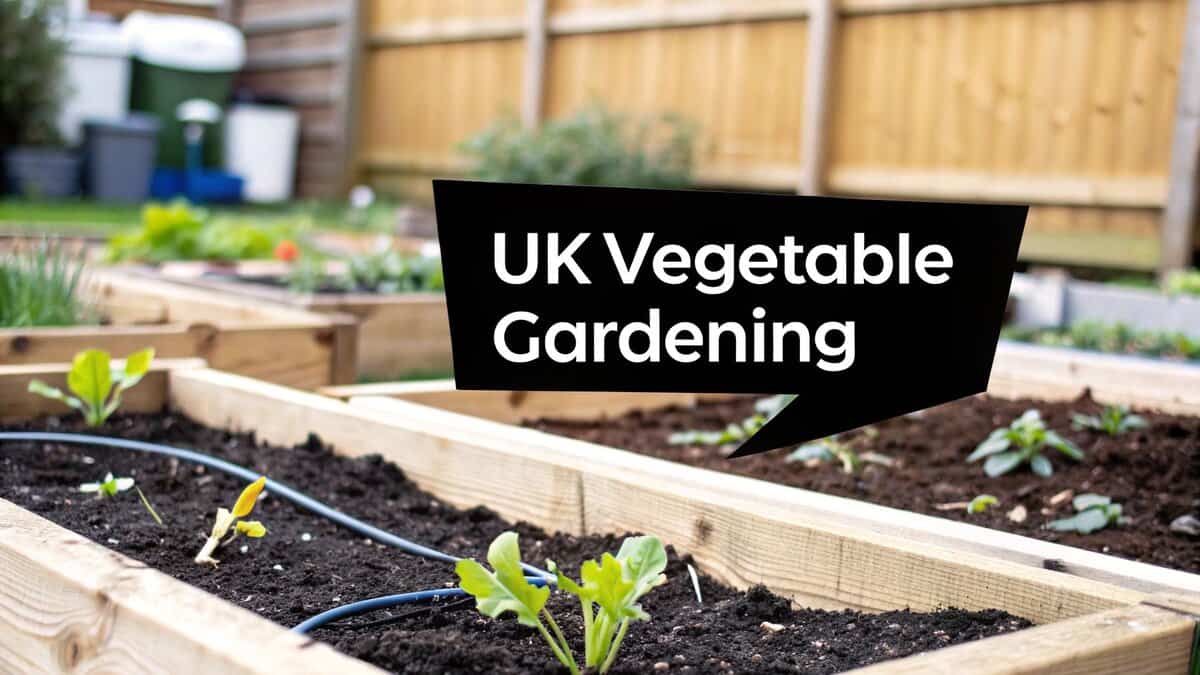
There’s nothing quite like the satisfaction of walking into your own back garden and picking fresh vegetables for dinner. It’s a simple pleasure that connects you directly to your food, offering a welcome break from the hustle and bustle of daily life. For us here in Stoke-on-Trent, success begins with understanding our local climate and soil – and that’s exactly what this guide is all about.
For quotes and bookings, call or email us here.
Embrace Local Vegetable Gardening in Stoke-on-Trent
Whether you’ve got a big lawn or just a small patio, growing your own veg is an incredibly rewarding and accessible hobby. It’s a chance to cultivate not just plants, but a healthier lifestyle right here in the Potteries.
This guide is specifically for gardeners in our area. We’re cutting through the generic advice you find online that often doesn’t work for our unique Staffordshire conditions. We’ll give you the practical, local knowledge you need to get started on the right foot and make your first harvest a roaring success.
Your Journey To A Homegrown Harvest
Starting a vegetable patch doesn’t have to be intimidating. The secret is to start with a clear plan and manage your expectations. Having gardened in Stoke-on-Trent for years, we know the challenges and opportunities our local environment presents.
Your first steps are pretty straightforward:
- Choose the right spot: Most vegetables need a good amount of sunlight, so finding the sunniest part of your garden is a must.
- Understand your soil: Staffordshire soil is often heavy on the clay. It’s a bit of work, but it’s packed with nutrients and can be improved with some organic matter.
- Select suitable plants: Not every vegetable you see in the supermarket will thrive here. It’s much smarter to pick hardy, proven varieties that can handle our UK climate.
If you’re brand new to all this, you might find our guide on the easiest things to grow in your garden a brilliant place to start. It’s full of simple ideas to help build your confidence.
Growing your own food is more than just a hobby; it’s a lifestyle choice that promotes wellness, sustainability, and a deeper connection to nature. It’s about tasting the difference that fresh, homegrown produce makes.
The interest in self-sufficiency has exploded recently. A huge number of people are planning to expand their growing spaces, showing just how big this movement has become.
Let’s take a look at some of the initial decisions you’ll need to make.
Key Decisions for Your Stoke-on-Trent Garden
This table gives a quick overview of the different ways you can start your vegetable patch, helping you decide what’s best for your space and goals.
| Gardening Style | Best For | Key Local Considerations |
|---|---|---|
| Raised Beds | Beginners, anyone with poor soil, or those wanting a tidy, managed look. | Excellent for managing our heavy clay soil. You control the soil mix from day one. |
| Containers | Small spaces like patios, balconies, or rented homes. | Perfect for a sunny spot. Just remember they need more frequent watering in summer. |
| In-Ground Bed | Larger gardens with decent existing soil. The traditional approach. | Will likely require digging in plenty of compost to break up the local clay and improve drainage. |
No matter which path you choose, the key is to start small and build from there.
Getting A Professional Start
While the rewards are immense, the initial setup can be tough work. Clearing an overgrown plot, breaking up compacted clay soil, or building sturdy raised beds all take time and a fair bit of muscle. This is where getting some professional help can make all the difference.
Our services in Stoke-on-Trent are designed to handle all that heavy lifting for you. We can properly prepare your garden plot, construct the perfect raised beds, and bring in the ideal soil mix to get you going. Let us lay the foundation, so you can focus on the fun part—planting and harvesting.
Choosing the Best Spot and Preparing Your Soil
Finding the perfect home for your vegetable patch is probably the single most important decision you’ll make. Get this right, and you’re halfway to a brilliant harvest. It all comes down to finding that sweet spot that balances sunlight, shelter, and easy access.
Most veg, especially crops like tomatoes and beans, are real sun-worshippers. They need at least six to eight hours of direct sunlight every day to thrive. Before you dig a single patch, spend a day watching how the sun moves across your garden. You’ll quickly see which areas get the most light and which are stuck in the shadow of a fence, a tree, or the house. In a Stoke-on-Trent garden, a south-facing spot is usually a winner.
Looking at Your Garden’s Conditions
Once you’ve found a sunny area, there are a few other practical things to think about.
- Shelter from the Wind: A strong gust of wind can flatten young plants in minutes and really cool the soil down. A spot tucked behind a wall, hedge, or fence is ideal. If your garden is a bit of a wind tunnel, a simple bit of windbreak netting can make a world of difference.
- A Nearby Water Source: Your veggies will get thirsty, especially in a dry spell. Make life easier for yourself and pick a spot that’s close to your water butt or an outdoor tap. Trust me, you’ll thank yourself later when you’re not dragging a heavy watering can across the entire garden.
- Level Ground: Working on a steep slope is a real pain. Water and nutrients tend to just wash away downhill. A reasonably flat area is far easier to manage and much better for your plants.
Don’t panic if your sunniest spot isn’t perfect. If the soil is poor or compacted, for example, we can simply build raised beds. This gives you total control, allowing us to fill them with the perfect, nutrient-rich soil your vegetables will love.
Getting to Grips with Your Soil
Here in Staffordshire, we’re often blessed with heavy clay soil. It’s full of nutrients, which is great, but it can also be dense, slow to drain, and a real workout to dig. The easiest way to check is to grab a handful of damp soil and give it a squeeze. If it forms a solid, sticky ball, you’ve got clay.
Don’t see clay soil as a problem—see it as a fantastic base that just needs a little bit of love. With the right additions, it can become incredibly fertile and perfect for growing vegetables.
The secret to taming clay soil is adding lots of organic matter. Think well-rotted manure, your own garden compost, or even leaf mould. This stuff works wonders, breaking up the heavy structure and improving both drainage and airflow for the roots.
Our best advice is to dig this in during the autumn. That gives it the whole winter to break down and mix in, leaving you with a lovely, crumbly bed ready for planting in the spring.
For a really detailed breakdown, have a look at our guide on how to prepare soil for planting. It’s a bit of hard graft, but getting your soil right from the start is the foundation for a healthy, productive garden for years to come.
What to Plant for a Thriving UK Harvest
With your plot picked out and the soil prepped, we get to the fun part: deciding what to grow. In Stoke-on-Trent, the secret to a great harvest is choosing vegetables that can handle our famously unpredictable British weather. Forget the delicate, sun-loving varieties for a moment and let’s focus on the tough, reliable growers that won’t let you down.
This is where a bit of local wisdom really shines. Some vegetables are just perfectly suited to our climate, giving you a brilliant shot at a rewarding crop.
Top Vegetable Picks for Stoke-on-Trent Gardens
For a garden that’s practically bursting with produce, you’ll want to lean into vegetables known for their resilience. Think of the classic allotment staples you see thriving year after year around here.
- Potatoes: You can’t go wrong with varieties like ‘King Edward’ or ‘Maris Piper’. They do exceptionally well in our local soil, are so satisfying to dig up, and will store nicely through the winter.
- Leafy Greens: Kale, chard, and spinach are your best friends in a Stoke garden. They’re incredibly hardy and often keep producing deep into the colder months, giving you fresh greens when not much else is growing.
- Brassicas: Cabbages, broccoli, and Brussels sprouts absolutely love our cooler climate. The one thing to watch for is the cabbage white butterfly—a bit of fine netting is an easy way to keep them protected.
- Hardy Root Veg: Carrots, parsnips, and beetroot are fantastic choices. If you’re working with heavy clay soil, go for shorter, stumpier carrot varieties like ‘Chantenay Red Cored’ to stop them from getting misshapen.
Another great trick is to pick plants that help each other out. We’ve put together a whole guide on what is companion planting, which explains how pairing certain plants can naturally deter pests.
Starting with good-quality seeds or young plants is non-negotiable. It’s the foundation of your entire harvest. Honestly, it’s much better to buy a few really healthy-looking plants than a whole tray of weak, spindly ones.
It’s great to see so many people getting into growing their own food. The global vegetable seeds market is actually expected to hit USD 14.18 billion by 2033, which is largely down to a growing interest in organic produce. For us gardeners, this means we have access to a better range of high-quality, organic seeds than ever before. You can read more about this growing market on BusinessWire.com.
A Simple Planting Calendar for Stoke-on-Trent
To keep a steady supply of fresh vegetables coming, a little planning goes a long way. A simple calendar helps you keep track of what needs doing and when, from sowing the first seeds right through to harvest day.
Here’s a straightforward guide to get you started with some popular choices that grow well in our area.
| Vegetable | Sow Indoors | Plant Outdoors | Harvest Time |
|---|---|---|---|
| Potatoes | N/A (Chit in Feb/Mar) | March – April | June – October |
| Kale | February – April | April – June | September – February |
| Carrots | N/A | March – July | June – October |
| Broccoli | March – May | April – June | June – October |
| Beetroot | March – April | April – July | July – October |
| Lettuce | February – August | March – September | May – November |
Remember, this is just a rough guide! The weather in any given year can shift these timings a bit, so always keep an eye on the forecast and the conditions in your own garden.
This infographic neatly sums up the essential first steps for any garden bed: check your space, get the soil ready, and enrich it with good organic matter. Get these fundamentals right, and you’re well on your way.
If the thought of setting up a productive patch feels a bit daunting, that’s what we’re here for. Our Stoke-on-Trent team specialises in creating beautiful, functional kitchen gardens. We can build raised beds, source the best local plants, and do all the initial planting, leaving you with the most enjoyable part—watching it grow and reaping the harvest.
Smart Garden Designs for Any UK Space

You absolutely don’t need a sprawling country estate to grow your own veg. In fact, some of the most productive gardens we’ve seen have been tucked away in small Stoke-on-Trent yards, patios, and even balconies. It’s all about being clever with the space you’ve got.
The trick is to think differently. As more of us live in urban areas, smart techniques like vertical gardening, raised beds, and container growing have become incredibly popular. They’re brilliant solutions for making a small footprint work hard for you, letting you grow a surprising amount of food.
Making the Most of Raised Beds
For most gardeners around here, raised beds are a fantastic starting point. They immediately get around the all-too-common problem of our heavy, compacted clay soil. You just fill them with a perfect, nutrient-rich compost mix and you’re good to go.
But the benefits don’t stop at soil quality. They bring a few other practical wins to the table:
- Better Drainage: Excess water can escape freely, which stops roots from getting waterlogged—a real risk with our unpredictable weather.
- Easier on Your Back: Less bending down makes planting, weeding, and picking your produce so much more comfortable.
- A Tidy Look: They give your veg patch a neat, organised feel that can look great as part of your overall garden design.
If your garden is on a slope, you can get some great ideas for creating garden beds with retaining walls that are both sturdy and look the part.
Go Vertical to Maximise Your Yield
When you can’t expand outwards, the only way is up! Vertical gardening is a genuine game-changer for tight spaces. It’s as simple as using trellises, nets, or wall-mounted planters to grow climbing plants like peas, beans, and even some types of squash and cucumbers.
This not only frees up valuable ground space but also helps with air circulation around the plants, which can cut down the risk of fungal diseases. It’s a simple idea that can make a huge difference to your harvest.
Container gardening offers the ultimate flexibility. A few well-placed pots on a sunny patio can provide a steady supply of fresh herbs, salad leaves, and even tomatoes, bringing your kitchen garden right to your doorstep.
If building beds or setting up trellises sounds like a hassle, our local Stoke-on-Trent team lives for this stuff. We can design and build custom raised beds to create a functional, attractive kitchen garden that fits your space perfectly, taking all the hard work out of it. For a bit more inspiration, take a look at our guide to landscaping ideas for small gardens.
Keeping Your Garden Healthy and Tackling Common Problems
A well-tended garden is a productive garden, but it’s not just about planting and walking away. Consistent care is what really makes the difference, especially with Stoke’s changeable weather. Let’s get into the simple routines that will keep your vegetables thriving.
Watering is, without a doubt, one of the most crucial jobs. Getting it right means your plants establish strong roots and grow steadily.
The best time to water is early in the morning. This gives the leaves a chance to dry out during the day, which helps prevent common fungal diseases. It also means less water is lost to evaporation on a hot afternoon.
A simple finger test is the most reliable way to check if your plants are thirsty. Just push your finger into the soil near the base of a plant. If the top 5cm feels dry, it’s time to give them a good soak.
- Soaker hoses are brilliant. They weep water directly onto the soil, getting it right to the roots where it’s needed most.
- A drip irrigation system is even more efficient, helping to conserve water, which is better for both the environment and your bills.
Of course, watering isn’t the only task. Keeping on top of weeds and pests before they get out of hand will save you a world of headaches later on.
Regular vigilance is the gardener’s best defence against pests and diseases.
Aphids, slugs, and snails are the usual suspects in any UK garden, and they can make short work of tender young plants. Thankfully, you don’t need harsh chemicals to deal with them.
Organic Ways to Handle Weeds and Pests
For aphids, a homemade spray of soapy water is often effective and won’t harm beneficial insects like bees and ladybirds. Slugs, on the other hand, can often be managed with simple beer traps. Just sink a shallow dish of beer into the soil, and they’ll crawl in.
A bit of clever companion planting works wonders, too.
- Pop some marigolds in with your cabbages and broccoli to help deter cabbage white butterflies.
- Check the undersides of leaves for caterpillars and just pick them off by hand. It’s surprisingly effective if you catch them early.
- A good layer of straw mulch is fantastic for suppressing weeds and keeping the soil moist.
Feeding Your Plants for a Better Harvest
Just like us, plants need food to grow strong. A good, balanced organic feed provides all the essential nutrients they need to flourish and fend off diseases.
Something like fish, blood, and bone is a classic choice for a reason. It gives a slow, steady release of nutrients. A good rule of thumb is to apply a feed every four to six weeks during the growing season, but always follow the instructions on the packet.
Consistent feeding can boost yields and improve flavour.
Keep an eye out for tell-tale signs of hunger, like yellowing leaves or slow, stunted growth. Catching these nutrient deficiencies early means you can correct them before they become a real problem.
A thick layer of mulch (about 5cm) spread in late spring is a game-changer. It locks moisture in the soil, keeps weeds down, and slowly breaks down to enrich the soil with organic matter.
Sometimes, though, you might run into issues that need a bit more attention. If you’re struggling with bigger jobs, our Stoke Gardening Services are here to help with things like seasonal clear-outs and soil improvements.
| Problem | Cause | Easy Fix |
|---|---|---|
| Wilting leaves | Underwatering | Increase water frequency or give a deeper soak |
| Yellow foliage | Nutrient lack | Feed with a balanced organic fertiliser |
| Soil compaction | Heavy clay soil | Work in plenty of compost and apply mulch |
Troubleshooting Common Garden Issues
Even with the best care, problems can pop up. Knowing what to look for is half the battle.
Black spots on tomato or potato leaves? That’s often a sign of blight. The key is to act fast: remove any affected leaves immediately and make sure there’s good air circulation around your plants.
If you notice your plants’ leaves are yellow and wilting despite being watered, you might actually be overwatering them. Make sure your soil has good drainage and let it dry out a little between waterings.
Here are a few other common culprits and their fixes:
- Stunted seedlings: The soil might be too cold. Make sure the soil temperature is consistently above 10°C, and use cloches or fleece to protect them on chilly nights.
- Blossom end rot on tomatoes: This is caused by a calcium deficiency. A quick fix is adding crushed eggshells or a bit of dolomite lime to the soil.
- Powdery mildew: This looks like a white, dusty coating on leaves. A simple spray made of one part milk to nine parts water, applied weekly, can often keep it under control.
With a little bit of regular attention and these simple strategies, your vegetable patch will stay healthy, productive, and a joy to be in.
Answering Your Stoke-on-Trent Gardening Questions
Let’s be honest, the clay soil around Stoke-on-Trent can be a real challenge when you’re starting a vegetable patch. It’s heavy, gets waterlogged, and can bake solid in the sun. But don’t despair! With a bit of work, you can turn it into a productive plot.
Once you’ve improved the soil with plenty of organic matter, you’ll find things like lettuce and kale absolutely thrive. Potatoes are fantastic for breaking up the dense structure, and carrots will do brilliantly if you give them a raised bed. Even broad beans and peas don’t mind the damp conditions too much and have the added bonus of putting nitrogen back into the soil.
If your soil is particularly stubborn and needs a complete overhaul, we can even build custom raised beds to give you the perfect growing environment from the get-go.
What are the easiest vegetables to grow in clay soil?
For beginners, we always recommend starting with leafy greens. Spinach and Swiss chard are incredibly forgiving. When it comes to potatoes, the Maris Piper variety is a reliable performer in our local soil. For carrots, your best bet is to grow them in raised beds filled with a rich, compost-heavy mix to avoid forked or stunted roots.
How can I protect my plants from pests without chemicals?
Organic pest control in Stoke-on-Trent is all about using simple, smart strategies. Slugs are a constant battle, but beer traps and copper tape really do work wonders. For aphids, you can encourage ladybirds to visit your garden or simply use a mild soap and water spray.
A bit of netting over your brassicas (like broccoli and cabbage) will keep the cabbage white butterflies from laying their eggs. And don’t forget companion planting! A few marigolds dotted around the plot can deter a surprising number of common pests.
Common Shade Gardening Tips
What if your garden doesn’t get full sun all day? You can still grow a fantastic amount of food. Many plots in Stoke have shady spots, but that doesn’t have to be a limitation.
Leafy greens like lettuce, spinach, and kale often prefer the relief from intense sun, doing just fine with 4-6 hours of dappled light. You’ll find that root crops like beetroot and carrots can also tolerate lower light levels. Peas and beans are surprisingly adaptable, too—give them a spot with morning sun against a sheltered wall, and they’ll produce a decent crop.
We’ve often found that vegetables grown in partial shade have a much better texture and flavour, as they don’t get scorched by the midday sun.
When is the best time to prepare a new vegetable patch?
Ideally, you want to start improving your soil in the autumn. This gives all that lovely organic matter time to break down over the winter, making planting so much easier in the spring. It also dramatically improves the drainage, which is crucial for our clay soil.
If the thought of all that heavy digging is putting you off, our Stoke-on-Trent team can handle the hard graft, clearing and top-dressing your new beds in a single day.
Here’s a simple plan for getting your patch ready:
- First things first, clear away any debris and weeds before you add anything.
- Spread a layer of well-rotted manure about 5cm deep and gently fork it into the top layer of soil.
- Finally, level the beds and cover them with a mulch to protect the soil from winter weather.
A Few Extra Tips For A Better Garden
One of the best habits you can get into is keeping a simple garden diary. Jot down what you planted, when you sowed it, and how well it did. It makes planning for the next season so much simpler.
Try to water early in the morning. This helps conserve moisture and reduces the risk of fungal diseases. A good layer of mulch, like straw or wood chips, is a game-changer for locking in that water and keeping the weeds down.
Finally, think about rotating your crops each year. Planting the same thing in the same spot can lead to a build-up of soil-borne diseases and strip specific nutrients. A simple rotation plan keeps your soil healthy and your plants happy.
With these focused steps and organic solutions, you can take the guesswork out of gardening. Stoke’s unique conditions don’t have to be a barrier when you have practical answers and a bit of hands-on support.
Why not book a free garden assessment to get personalised recommendations and start growing with real confidence?
For quotes and bookings, call or email us here.