

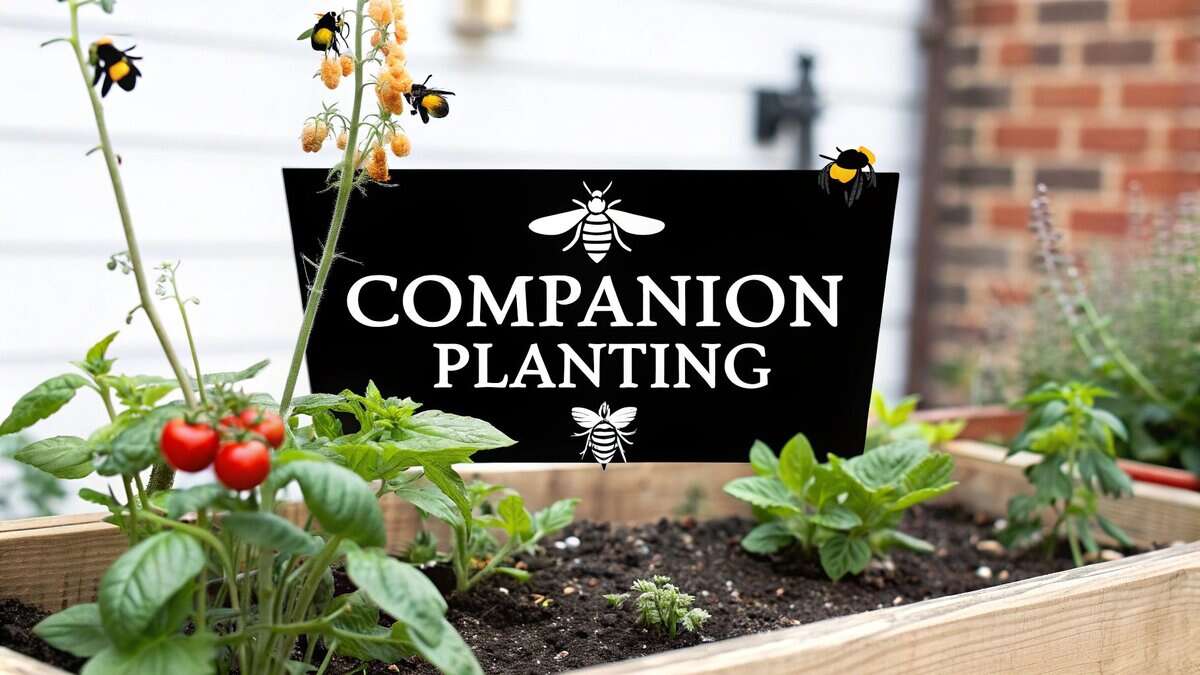
Companion planting is a simple, age-old gardening strategy: you plant certain plants next to each other because they help each other out. It’s like creating a little neighbourhood where the residents work together. Instead of fighting for resources, these plant buddies team up to create a healthier, more vibrant garden, which is a perfect approach for the gardening conditions we have here in Stoke-on-Trent.
For quotes and bookings, call or email us here.
A Smarter Way to Garden in Stoke-on-Trent
Think of your garden plot not just as a piece of land, but as a living community. In this community, some plants are the tough bodyguards, warding off pests from their neighbours. Others are the caretakers, enriching the soil for everyone to share. That’s the real magic of companion planting. It’s a natural, organic strategy that lets you build a garden that practically takes care of itself, saving you time and effort.
Instead of reaching for chemical sprays, you could plant a border of marigolds around your tomatoes. Their roots release a substance that nematodes—tiny soil pests—can’t stand. Or, you could tuck some aromatic basil plants nearby to confuse insects looking for a free meal on your veggies. It’s a clever way to let nature handle the heavy lifting, a method we at Stoke Gardening Services champion across the local area.
Key Benefits For Local Gardeners
For those of us with gardens here in Stoke-on-Trent, this approach offers some fantastic advantages that are a perfect fit for our local climate and often clay-heavy soil. Picking the right plant partners means you can get a more robust and productive garden with less fuss.
Take a look at this quick summary of the perks.
Companion Planting Benefits At A Glance
| Benefit | How It Works |
|---|---|
| Natural Pest Control | Some plants give off smells or chemicals that common garden pests hate, keeping them away from your crops. |
| Attracting Helpful Bugs | Certain flowers, like cosmos, bring in pollinators (bees) and predators (ladybugs) that keep pests in check. |
| Better Soil Health | Legumes, such as peas and beans, pull nitrogen from the air and “fix” it into the soil, acting as a free fertilizer. |
| Improved Growth & Flavour | A few classic pairings are said to boost the growth and even taste of their neighbours, like basil grown with tomatoes. |
When you get down to it, companion planting is all about working with nature, not against it.

By working with nature instead of against it, companion planting creates a self-sustaining garden that is healthier and easier to manage. It’s a key principle we use at Stoke Gardening Services to design beautiful and productive outdoor spaces for our clients right here in Stoke-on-Trent.
At the end of the day, understanding what companion planting is helps you create a garden that’s more than just a random collection of plants. It becomes a dynamic, interconnected ecosystem where everything plays a part in its success.
The Ancient Roots of Modern Garden Wisdom
Companion planting might feel like the latest buzzword in gardening circles, but it’s actually an ancient practice. We’re not talking about a new discovery here; this is wisdom that’s been handed down for generations by farmers and gardeners who learned by watching their plants.
Long before we had scientific studies to explain why, people simply knew that certain plants thrived when grown next to each other. This practical, field-tested knowledge is a cornerstone of organic and sustainable agriculture today, and it’s a technique we can easily apply to our gardens in Stoke-on-Trent.
The Original Plant Partnership: The Three Sisters
Perhaps the most famous example of this age-old wisdom is the “Three Sisters” garden. This is a classic planting method that combines corn, beans, and squash, creating a tiny, self-supporting ecosystem where all three plants benefit. This isn’t a recent idea—Native American communities perfected this technique more than 4,000 years ago.
It’s an incredible partnership that works in perfect harmony:
- Corn: It acts as a living trellis, giving the climbing beans a sturdy stalk to reach for the sun.
- Beans: These are the helpers. They pull nitrogen from the air and “fix” it into the soil, feeding the nutrient-hungry corn and squash.
- Squash: Its big, sprawling leaves create a natural ground cover. This living mulch shades the soil, keeping it cool and moist, and helps smother out pesky weeds.
This ingenious trio is the perfect illustration of what companion planting is all about—creating a little community where plants help each other grow.
The Three Sisters is a classic example of a guild—a group of plants that work together to create a stable and productive system. This concept is absolutely central to many modern sustainable gardening practices.
From Ancient Fields to Stoke-on-Trent Gardens
The lessons from the Three Sisters and other ancient methods are just as relevant today, whether you have a massive field or a small back garden in Stoke-on-Trent. Modern science is now catching up, confirming what those early farmers knew all along: mixing up your plantings leads to healthier soil, fewer pests, and bigger harvests.
This whole approach fits hand-in-glove with other sustainable methods that focus on working with nature, not against it. For anyone wanting to build a truly self-sufficient garden, understanding these historical roots is a game-changer. At Stoke Gardening Services, we use this time-honoured knowledge to help local residents create truly special gardens.
To see how these ideas connect to a larger philosophy, you might be interested in our guide on what is permaculture gardening. By learning from the past, we can create more vibrant, resilient, and productive gardens for the future.
How Companion Planting Leads to Better Harvests
Every gardener dreams of a bountiful, thriving harvest. Companion planting is one of the best ways to make that happen, turning your garden into a cooperative ecosystem that works smarter, not harder. This isn’t just about aesthetics; it’s a time-tested strategy that genuinely boosts what you can grow in the Stoke-on-Trent climate.
When you create a diverse garden, you’re essentially sending out an invitation to all sorts of helpful wildlife. This includes crucial pollinators like bees and hoverflies, which are absolutely essential for fruiting plants like tomatoes, courgettes, and beans. Planting flowers like cosmos and snapdragons among your veggies acts as a bright beacon, drawing these helpers in to ensure your crops get pollinated and produce fruit.
Boosting Your Garden’s Productivity
Think of companion planting as a natural security system for your crops. Many aromatic herbs and flowers—basil and marigolds are classic examples—release strong scents that confuse and repel common pests. This means fewer chewed-up cabbage leaves and healthier plants all around. And as any gardener knows, healthier plants are stronger, more resilient, and ultimately, more productive.
This method also helps you make the most of your space. You can interplant fast-growing crops like lettuce alongside slower ones like parsnips, ensuring you’re getting something out of every square foot of your Stoke-on-Trent allotment or garden. By maximising your growing area, you naturally increase your potential harvest. For more tips on setting up your plot, check out our complete guide to vegetable gardening.
The science backs up what gardeners have known for generations. Polyculture systems, where different crops are grown together, create a more stable and productive environment than a monoculture, where only one crop is grown alone.
The results are tangible and proven. One significant study, for example, found that companion-planted strawberries had a 32% increase in total crop yield compared to those grown in isolation. This boost came from harvesting 35% more fruit from the polyculture plots.
This kind of data just confirms the wisdom passed down through centuries: working with nature, not against it, leads to a fuller harvest basket. At Stoke Gardening Services, we build these principles into our designs to create gardens that are not only beautiful but incredibly fruitful for our clients in Stoke-on-Trent.
Building Healthier Soil Without Chemicals
A truly great garden starts from the ground up. The real secret to a thriving plot isn’t some magic formula—it’s the living, breathing soil right beneath your feet. Companion planting is one of the best ways to create that rich, healthy foundation without ever reaching for a chemical fertiliser. It helps turn your garden into a self-sustaining ecosystem.

Think of it this way: some plants act as “living fertilisers” and “soil conditioners.” Instead of just taking nutrients from the soil, these brilliant plant partners actively give back. This creates a natural cycle of enrichment that genuinely improves your soil, season after season.
Natural Soil Improvers for Your Garden
Some of the hardest-working soil builders are probably plants you’re already familiar with. Legumes, for instance, are the absolute superheroes of soil fertility.
- Nitrogen-Fixers: Plants like peas, beans, and clover have an incredible talent. They can pull nitrogen—an essential nutrient for lush growth—right out of the air. They store it in their roots, and as they grow (and later decompose), they release this nitrogen for hungry neighbours like corn and leafy greens to gobble up.
- Clay Busters: Here in Stoke-on-Trent, we know all about heavy clay soil. Deep-rooted plants like comfrey or borage act like natural ploughs. Their powerful roots drive down into compacted earth, breaking it up and drawing minerals from deep underground to the surface.
When these helper plants die back at the end of the season, their leaves and roots decompose, adding valuable organic matter that improves soil structure. It’s a core principle we use at Stoke Gardening Services to build resilient, low-maintenance gardens for our local clients.
Fostering a Living Underground Ecosystem
But the benefits of companion planting go much deeper than just the plants you can see. It fundamentally transforms the microbial life in the soil for the better. When you plant a diverse range of species, you create a bustling underground community of beneficial bacteria and fungi, which are crucial for strong root development and nutrient uptake.
This isn’t just gardening folklore; it’s backed by science. Research has shown that companion planting significantly boosts the activity of soil enzymes involved in nutrient cycling. The result is a more fertile and microbially diverse environment compared to gardens with just one type of crop.
This vibrant underground ecosystem is the real engine of a healthy garden, helping plants resist disease and making nutrients more accessible. You can give this microbial world an extra boost by adding organic matter, like homemade compost. We have a whole guide on the different methods of composting if you want to learn how to make your own “black gold.”
Combining smart planting with organic enrichment like this creates a truly sustainable foundation for years of fantastic gardening.
Proven Plant Pairings for Stoke-on-Trent Gardens
It’s one thing to read about companion planting, but it’s another thing entirely to see it work in your own garden. For those of us gardening here in Stoke-on-Trent, picking the right plant partners is key, especially when dealing with our unique climate and often heavy clay soil. The great news is, many of the classic combinations are a perfect fit for our area.
These aren’t just old wives’ tales; they’re time-tested strategies that create a garden that practically looks after itself. When you pair plants that help each other out, you’re building a tiny ecosystem that naturally fights off pests, enriches the soil, and can even make your vegetables taste better. It’s a smart way to garden without reaching for chemicals.
Classic Combinations That Thrive Locally
So, where do you start? Let’s dive into some reliable partnerships that are almost guaranteed to do well in your Stoke-on-Trent garden or allotment. These are simple to set up and deliver results you can actually see.
A brilliant first choice is the timeless duo of tomatoes and basil. Basil isn’t just for pesto; its powerful fragrance acts like a shield, confusing common pests like aphids and whiteflies that love to bother tomato plants. Plus, generations of gardeners will tell you it makes the tomatoes taste sweeter.
Another powerhouse team is carrots and rosemary. The aromatic oils from the rosemary help to hide the scent of carrots, throwing the dreaded carrot root fly off the trail. This simple, natural trick can save your entire crop.
The infographic below really drives home how impactful these small changes can be.

As you can see, a little planning goes a long way. You can get a much bigger harvest with far fewer pest headaches.
Proven Companion Pairs for Local Gardens
To help you map out your beds, here’s a quick-reference table of plant friendships we’ve seen work wonders right here in Stoke-on-Trent. At Stoke Gardening Services, these are the kinds of pairings we rely on to create gardens that are both beautiful and productive for our clients.
| Plant A | Plant B (Companion) | Primary Benefit |
|---|---|---|
| Tomatoes | Basil | Deters pesky whiteflies and aphids; believed to enhance flavour. |
| Cabbage | Marigolds | French marigolds are fantastic for repelling nematodes in the soil. |
| Carrots | Rosemary | Its strong scent masks the carrot smell, confusing the carrot root fly. |
| Lettuce | Chives | Helps keep aphids away, which are a real nuisance for leafy greens. |
| Beans | Corn | The sturdy corn stalks provide a natural, living trellis for beans to climb. |
| Strawberries | Borage | Acts as a magnet for bees and other vital pollinators. |
Think of these pairings as your garden’s support system. Each one strengthens the other, creating a space that is more resilient and naturally healthy.
“Choosing the right companions is like assembling a team where every player has a specific role. A well-planned garden with strong partnerships is naturally more resilient and requires far less intervention.”
By being thoughtful about who you plant next to whom, you’re setting the stage for a thriving garden that works in harmony. This is the heart of companion planting—creating a space that not only gives you a better harvest but also nurtures the entire environment.
Let Us Design Your Thriving Stoke-on-Trent Garden
Feeling inspired to give companion planting a go but don’t know where to start? That’s where we come in. As your local Stoke-on-Trent gardening experts, we specialise in creating custom garden plans that harness the power of plant partnerships for your unique space. We know the ins and outs of our local climate and soil, taking all the guesswork out of the process for you.
Our passion is designing beautiful, productive gardens that you’ll absolutely love. We truly understand what is companion planting and how to make it work wonders in your garden. From the initial design and planting to friendly, ongoing maintenance, we’re here to help you achieve your gardening dreams.
We believe a great garden should be a source of joy, not stress. Our expertise in companion planting allows us to create resilient, low-maintenance gardens that are both beautiful and bountiful.
Ready to see what these principles can do for your outdoor space? Contact us at Stoke Gardening Services today for a friendly chat about how we can bring your vision to life, right here in Stoke-on-Trent.

Common Companion Planting Questions
Diving into companion planting can feel like you’re trying to orchestrate a dinner party, making sure everyone at the table gets along. It’s natural to have a few questions as you start drawing up your garden’s “seating chart.”
Let’s clear up some of the most common questions gardeners here in Stoke-on-Trent ask. Getting these basics down will give you the confidence to create a garden where plants truly help each other thrive.
How Close Should I Plant Companions?
This is probably the number one question our team gets. The simple answer is: close enough to be neighbourly, but not so close they’re stepping on each other’s toes. You want cooperation, not a battle for resources like sunlight, water, and soil nutrients.
A great rule of thumb is to use the spacing guide on the seed packet for your main, larger plant. Let’s say your tomatoes need 24 inches of space. You can then pop a few basil plants into that empty space between them. This way, everyone has room to breathe, and the basil is right where it needs to be to help ward off tomato pests.
Can Companion Planting Go Wrong?
Oh, absolutely. Just like some people just don’t click, some plants are downright terrible neighbours. Knowing which plants to keep apart is just as crucial as knowing which ones to pair up. Ignoring these rivalries can lead to sad, stunted plants and a disappointing harvest.
For example, fennel is a classic garden bully. It secretes a substance from its roots that most other plants can’t stand, harming everything from beans to tomatoes. On that note, beans and anything in the onion family (like garlic or chives) also don’t play well together. A quick check before you plant can save you a lot of garden drama later.
How Long Until I See Benefits?
Gardening always teaches patience, but the good news is that some benefits show up surprisingly fast.
Some perks of companion planting, like pest control, can start working almost immediately. Others, such as improving your soil, are more of a long game that pays off season after season.
You’ll notice the pest-repelling magic of aromatic herbs like marigolds or mint almost as soon as they’re established—fewer aphids on your roses within weeks. On the other hand, the work of nitrogen-fixing plants like beans improving your soil is a slower, quieter process. You’re building a healthier garden foundation that gets better over the entire season and for years to come.
Our Companion Planting Services
At Stoke Gardening Services, we take the guesswork out of building a garden that works. We use our deep knowledge of companion planting to design, install, and look after beautiful, productive green spaces all over Stoke-on-Trent. Let us help you grow the garden you’ve always wanted.
For quotes and bookings, call or email us here.
Responses
[…] Smart Companions: Salvias work beautifully alongside other Mediterranean plants like lavender and rosemary. For more ideas on effective garden pairings, you can explore the principles of companion planting for a healthier garden. […]
[…] This method not only manages pests but also contributes to a more productive and vibrant garden. To discover more plant pairings that work well in our local conditions, you can learn more about the principles of companion planting. […]
[…] This will help you attract beneficial insects and confuse the pests even more. Our guide on what is companion planting explains how to pair these two methods to create a truly thriving […]
[…] great trick is to pick plants that help each other out. We’ve put together a whole guide on what is companion planting, which explains how pairing certain plants can naturally deter […]
[…] in sustainable gardening. This method is a practical application of the broader concepts you can explore when you learn more about companion planting. It’s a simple way to build a healthier, more productive […]
[…] Herbs also make excellent companion plants for vegetables, helping to deter pests. To learn more about creating beneficial plant pairings in your garden, you can explore the principles of companion planting. […]
[…] Another great strategy is companion planting, which is all about making plants work together. For instance, planting marigolds near your tomatoes can help keep pests away, and growing beans next to sweetcorn gives the corn a natural nitrogen fix. It’s a brilliant, organic approach to creating a balanced little ecosystem. If you’re curious, you can learn all about the clever pairings in our guide on what is companion planting. […]
[…] If you want to give your crops an even bigger head start, you can look into how certain plants help each other out. We cover this in our guide on what is companion planting. […]