

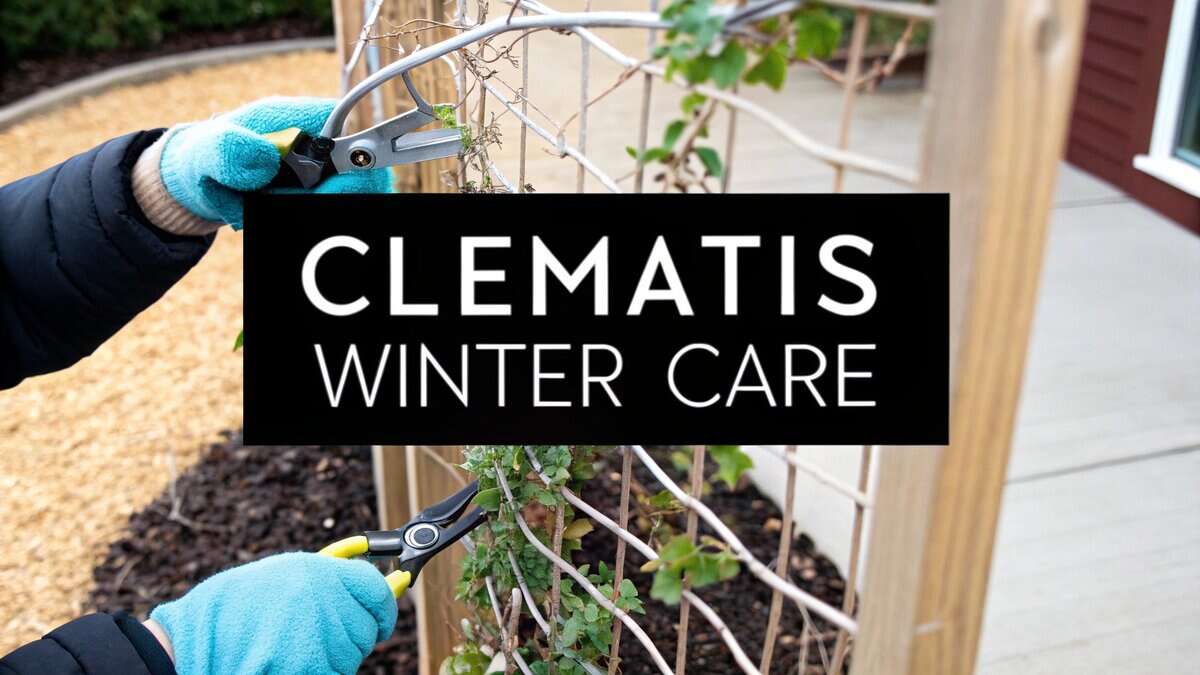
Your gorgeous clematis needs help to survive a harsh UK winter. Consequently, if you want it to return stronger next year, now is the time to act. Think of this dormant period as its chance to rest and recharge. Indeed, a little effort with clematis care in winter is the best insurance for a healthy vine.
Contact us here for quotes and Bookings.
Why Your Clematis Needs a Winter Helping Hand
As the garden’s vibrant colours fade, your clematis slips into a crucial dormant phase. This is not a time for neglect. Instead, it is the perfect moment for essential prep work. This ensures the plant has the strength to bloom when spring arrives.
For us gardening in Stoke-on-Trent and Staffordshire, these steps are even more critical. Here, the weather can be particularly unforgiving. For instance, a sudden hard frost or biting winter winds can seriously damage an unprepared vine. This impacts its health for the entire next year.
The A-to-Z of Winter Protection for Clematis Care
The main goal of winter care is simple. You must shield the plant’s most vulnerable parts from the cold. This means protecting the crown and the root system. The soil’s constant freezing and thawing can damage these parts. Ultimately, without protection, you risk root damage and a weakened plant.
- Prevent Root Damage: A protective layer over the soil acts like a duvet. It keeps the root temperature much more stable.
- Encourage Vigorous Growth: A healthy, protected root system is the foundation for strong, new growth in the spring.
- Maximise Future Blooms: By helping the plant conserve its energy, you set it up for an impressive floral show.
Good soil is also a huge part of the puzzle. Therefore, making sure the ground is not a soggy mess is vital. This prevents root rot during our wet winters. If you want to dive deeper, you can learn more about how to prepare soil for planting in our detailed guide.
Don’t get me wrong, clematis are remarkably tough plants. Many varieties are hardy enough for very cold climates. But even the toughest ones benefit from some thoughtful winter prep. Proper clematis care in winter ensures the plant not only survives but truly thrives. If left exposed, extreme temperatures can damage the vine’s rootstock. This will seriously reduce its flowering power.
Let’s break down the key tasks with a simple checklist to keep you on track.
Winter Clematis Care Checklist
This table gives a quick overview of the essential tasks. It will help get your clematis through the colder months successfully.
| Core Task | Best Time to Act | Why It Matters |
|---|---|---|
| Pruning | Late autumn or late winter, depending on the group. | Removes dead wood and encourages healthy new growth where you want it. |
| Mulching | Late autumn, after the first light frost. | Insulates the root system and crown from freezing temperatures. |
| Watering | Sparingly, only during prolonged dry spells. | Prevents the roots from completely drying out without causing waterlogging. |
| Pest Check | During any mild winter days. | Catches overwintering pests like aphids or scale before they multiply. |
Following these simple steps will make a world of difference for your vine. As a result, it will be ready for a spectacular comeback.
Pruning Clematis Without the Guesswork
Let’s be honest, pruning is the one part of clematis care that seems to make everyone nervous. But it really does not have to be a source of dread. The secret is simply knowing which pruning group your clematis falls into. Get that right, and you are setting the stage for a stunning show next summer.
The whole pruning strategy boils down to when your specific clematis blooms. Take Group 3 clematis, for example. These are the late summer bloomers, so you prune them back in late winter. They are incredibly forgiving. Seriously, even if you get it wrong, the worst that happens is a season with fewer flowers. You have not killed the plant. The Piedmont Master Gardeners have great insights on just how resilient these vines are.
Understanding Your Clematis Pruning Group
First things first, you need to identify your plant’s group. If the tag is long gone, do not worry. Just think back to when it flowered this year.
- Group 1: These are the early birds. They bloom in spring on stems that grew last year. They barely need any pruning, just a quick trim after flowers fade.
- Group 2: This group gives a big flush of flowers in late spring on old wood. They sometimes offer a second, smaller round on new growth. They need a slightly more careful approach.
- Group 3: The easiest of the bunch! These flower from mid-summer into the fall. All flowers appear on the new stems they grow this season.
After a good prune, your next move is to protect the base of the plant. You should use healthy soil and a layer of mulch.

This image really drives home how vital good soil and a thick layer of mulch are. Both are key for protecting the plant’s roots through the cold months ahead.
Group 3 Pruning for Big Rewards in Clematis Care in Winter
If you have a Group 3 clematis, you are in luck. They are wonderfully straightforward. Because all their flowers appear on brand new stems, you can give them a ‘hard prune’. This should happen in late winter, usually sometime in February.
This means cutting all old stems down to a pair of strong buds. These should be about 12 inches from the ground.
I know it feels brutal cutting it back so far. But trust me, this is the best thing you can do for the plant. It encourages a huge flush of vigorous new growth. This growth will be absolutely loaded with blooms. Just make sure your pruners are clean and sharp to avoid any problems.
Feeling a bit hesitant to make the first cut? Perhaps you are still not sure which type of clematis you have. Our team at Stoke Gardening Services can take the guesswork out of it for you. We are based right here in Stoke-on-Trent, ready to help your plants get the right care to thrive.
The Secret to Protecting Clematis Roots

Once your clematis is pruned back, the next critical job is to protect its roots. A hard ground freeze is the biggest danger your plant will face. This is why mulching is your absolute best friend.
Think of it as tucking your plant in for the winter. This simple step creates an insulating blanket over the crown and root zone. It shields the delicate system from damaging freeze-thaw cycles. We often see these in Stoke-on-Trent. It also helps the soil hold onto moisture. Plus, it stops pesky winter weeds from popping up.
Choosing the Right Mulch for Winter Clematis Care
Picking the right material is key. But the good news is you probably have great options in your own garden. Each one has its own perks.
- Well-rotted garden compost: This is my personal favourite. It not only insulates but also slowly feeds the soil as it breaks down.
- Leaf mould: If you have saved your autumn leaves, you have a fantastic free resource. It creates a lovely, light layer of protection.
- Bark chips: These are great for insulation and last a long time. However, they don’t enrich the soil as quickly as compost.
The trick is to be generous. You want to apply a thick layer—at least 3 to 4 inches deep. Apply it in a wide circle around the base of the plant. Just make sure to leave a small gap right around the stems. This will prevent them from getting damp and rotting.
It is a low-effort job with a huge payoff for your clematis’s health. It gives it a strong foundation for vigorous growth come spring. This is one step I never, ever skip.
If finding good quality mulch feels like a chore, we can handle it for you. Here at Stoke Gardening Services, we bring and apply the perfect mulch for your Stoke-on-Trent garden. Consequently, your plants are properly protected. This simple service gives you peace of mind, knowing your clematis care in winter is in expert hands.
Extra Protection for Vulnerable Plants and Clematis Care in Winter
Sometimes, a good layer of mulch is not enough. This is especially true for very young clematis. They have not had a chance to get established. The same applies to any plant in a windy, exposed corner of the garden. We see this a lot here in Stoke-on-Trent. If that sounds like your situation, your clematis care in winter routine needs a couple of extra steps.

Those biting winter winds are the real enemy. They do not just cause windburn on the stems. In fact, they can physically snap the dormant, brittle vines right off. Thankfully, shielding your plants is pretty straightforward. You can create a simple windbreak with some burlap. Or you can wrap the lower stems with horticultural fleece for an extra layer of defence.
What About Clematis in Pots?
Clematis grown in containers are far more exposed to the cold. Unlike plants in the ground, their roots lack the earth’s natural insulation. This leaves them wide open to a hard freeze that can kill the plant outright. They absolutely demand a bit more attention.
Here are a few good ways to protect them:
- Wrap the Pot: Do not just protect the plant; insulate the pot itself. Bubble wrap or a few layers of burlap work wonders.
- Move to Shelter: If you can, shift the pot to a more protected spot. This could be against a house wall or inside a cold frame.
- Huddle Them Together: Grouping several pots close together helps them insulate each other. It creates a more stable microclimate.
Taking these extra steps gives you real peace of mind. You know your prized plants are tucked in and safe from the worst winter weather. It is a small effort that pays off big time in the spring.
These practical winter measures can make all the difference. In fact, simple actions like mulching can boost their survival rate. The boost is an estimated 70-90%, depending on winter’s harshness. Clematis are tough, but why leave it to chance?
And if that sheltered spot is also a bit shady, you might be interested in our guide. See our post on wild flowers that like shade. It is a great way to make the most of every corner of your space.
Expert Winter Garden Care in Stoke-on-Trent
Feeling the winter crunch? If you are short on time or want the peace of mind that comes from a job done right, we are here to help. For anyone in Stoke-on-Trent or Staffordshire, our team is ready to take on your clematis care in winter.
We handle professional pruning, mulching, and winter protection. Our services are specifically tailored for our local Stoke-on-Trent climate. We know exactly what your plants need and, just as importantly, when they need it.
Local Expertise for Your Stoke-on-Trent Garden
Instead of spending your weekend deciphering pruning groups, let us take care of it. You can relax, knowing your garden is in capable local hands. We live and breathe gardening in Stoke-on-Trent. We understand the unique challenges our weather throws at us.
Let us do the hard work. Then you can simply look forward to a stunning floral display next summer. A small investment now yields huge rewards when your garden bursts back to life.
Our team offers a whole range of services to get your garden ready for the cold. From simple maintenance to complex winter prep, we have you covered. You can explore our Stoke gardening services for a comprehensive solution to see everything we can do.
Ultimately, our goal is to take the stress out of seasonal garden jobs. This frees you up to enjoy your outdoor space. You can do so without worrying about what winter might bring. We are passionate about helping local Stoke-on-Trent gardens not just survive, but truly thrive.
Feel free to get in touch for a friendly chat about your needs. We are always happy to provide a no-obligation quote. Let us help prepare your garden for a spectacular spring.
Clearing Up Common Questions About Winter Clematis Care
Let’s tackle some of the questions I hear most often from local gardeners. Getting your clematis ready for winter can feel a bit daunting. However, these quick answers should help you feel more confident.
Do I Need to Water My Clematis in Winter?
Most of the time, you can leave it to Mother Nature. The winter rain we get in Staffordshire is usually plenty. You rarely need to intervene with plants in the ground.
The big exception is for clematis in pots. If they are tucked away under the eaves, they will miss out on the rain. Just check the pot every now and then. If the top inch of compost is bone dry, give it a small drink. But be careful. Soggy, freezing soil is a clematis’s worst enemy, so do not overdo it.
What if I Prune My Clematis Wrong?
First off, do not panic! It is incredibly hard to kill a clematis with a bad haircut. These plants are survivors.
The worst-case scenario from a pruning mistake is a lacklustre flower show for one year. For example, if you chop back a clematis that flowers on old wood, you cut off next spring’s flower buds. The plant itself will be perfectly fine. It will grow back. Just chalk it up to experience and get the pruning right next year. The blooms will return.
The most important thing is not to let fear stop you. Honestly, your clematis will almost always give you a second chance. A missed prune is better than the wrong one. But even a mistake is just a lesson for next time.
Can I Leave My Clematis on the Trellis Over Winter?
Yes, you absolutely should. Once a clematis is established, its woody stems become quite brittle. Trying to wrestle it off its support is a surefire way to snap stems. This damages the plant and means fewer flowers next season.
Leaving it on the trellis also gives it stability against harsh winter winds. Your main jobs for clematis care in winter are pruning correctly and mulching the roots. Most experts agree it is far riskier to take the vines down than to just leave them be.
Should I Feed My Clematis During Winter?
Definitely not. Feeding a dormant plant is like trying to give a sleeping person a big meal. It is just not what they need.
Fertiliser encourages soft new growth. This is exactly what you do not want in winter. That tender growth will just get zapped by the first hard frost. This wastes the plant’s energy. Hold off on the plant food until early spring. Wait until you see the first signs of life. That is when it can actually use the nutrients to power its comeback.
How Can We Help?
Feeling ready to tackle your winter garden prep? If you’d rather have an expert handle it, Stoke Gardening Services is always here to help. We provide professional garden care across Stoke-on-Trent, making sure your plants are tucked in and ready for the cold.
Contact us here for quotes and Bookings.
Responses
[…] for instance, timing is everything. If you’re growing clematis, you might find our guide on clematis care in winter […]
[…] By understanding the plant’s pruning group, you can also plan for a sequence of blooms. For more detailed guidance, learn more about clematis care in winter. […]
[…] Protect Vulnerable Plants: This is especially crucial for plants susceptible to root rot, such as clematis. For more details on protecting these delicate climbers, you can learn more about winter care for clematis. […]