
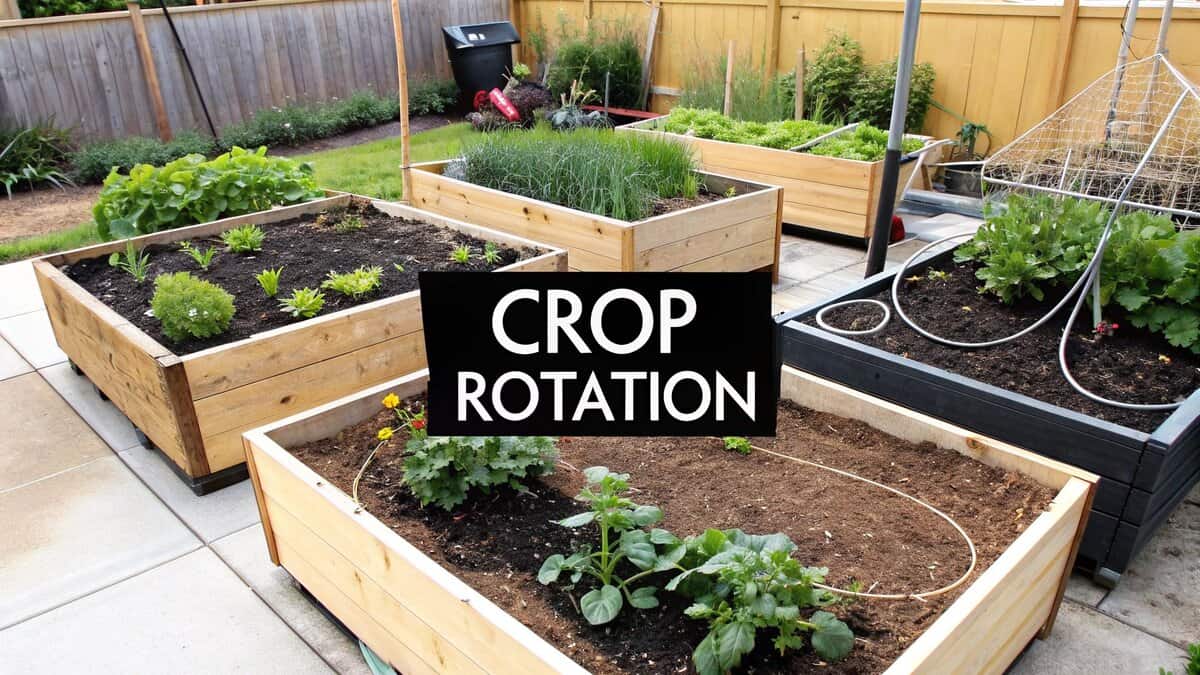
Ever wonder how some gardeners seem to get bigger, healthier harvests year after year without a ton of extra work? The secret isn’t some expensive chemical or complicated tool. It’s an ancient, brilliantly simple technique called crop rotation.
So, what is crop rotation? In a nutshell, it’s the practice of not planting the same things in the same spot every year. Instead, you move your different plant families around your garden beds in a planned sequence.
For quotes and bookings, call or email us here.
Your Guide to Smarter Gardening in Stoke-on-Trent

Think of your garden soil as a pantry. Some plants are incredibly hungry—your cabbages and potatoes, for instance, are “heavy feeders” that take a lot out of the soil. If you plant them in the same spot over and over, you’ll deplete that patch of specific nutrients, leading to weaker plants and a disappointing crop.
Rotating your crops is like restocking the pantry and giving the soil a break. It prevents any one area from becoming completely exhausted.
But it’s not just about nutrients. This method is also one of the best organic pest control tricks in the book. Many pests and soil diseases are picky eaters; they target one specific plant family. By moving their favourite meal to a different bed each year, you break their life cycle and stop them from building up in the soil. It’s a natural defence strategy that creates a much healthier garden.
A Game-Changer for Local Gardens
This isn’t just theory—it’s a massive advantage for anyone with an allotment or garden here in Stoke-on-Trent. Our local soils often have a heavy clay content, which can make managing nutrients and drainage a real challenge. Crop rotation helps with both. It balances nutrient use and, over time, can even improve the soil’s structure.
This guide will walk you through crop rotation with simple, practical steps. We’ve seen countless local gardeners transform a struggling patch into something truly productive with just a little bit of planning.
By alternating crops, you ensure no single group of nutrients is completely depleted from the soil. This creates a balanced ecosystem that naturally supports robust plant growth and reduces the need for constant fertilising.
We’ll start with the absolute basics: getting to know the main plant families and what they do for your garden. Understanding this foundation is the key to creating a smart, sustainable garden that works with nature, not against it. Let’s get our hands dirty and plan for your best growing season ever.
How Crop Rotation Revitalizes Your Soil

To get your head around what crop rotation is, you first have to understand the ‘why’. It helps to think of your garden soil not as just dirt, but as a living, breathing pantry for your plants. Every plant you grow takes something out and, sometimes, puts something back in.
Take your leafy cabbages and big, juicy tomatoes. We call these ‘heavy feeders’ for a reason. They’re greedy, pulling a huge amount of nutrients from the soil to grow big and strong. If you plant them in the same spot year after year, you’re essentially stripping the soil bare. It’s like taking money out of a savings account and never putting any back in—sooner or later, it’s going to be empty.
Then you have the ‘givers’. These are the real heroes of the veg patch. Plants like peas and beans belong to a family called legumes, and they have a neat trick up their sleeve. They can pull nitrogen right out of the air and store it in their roots, enriching the soil for whatever comes next. This natural top-up gets the ground ready for the next round of hungry crops.
Balancing The Soil Ecosystem
Crop rotation is all about creating a healthy balance between this giving and taking. By simply moving different plant families around your garden each year, you stop any one nutrient from being completely drained. This builds a far more fertile and resilient garden bed over time. This is a game-changer here in Stoke-on-Trent, where our heavy clay soil can easily become overworked and compacted if we don’t look after it properly.
But it’s not just about food for your plants. This is also one of the smartest forms of organic pest control you can use. Many pests and diseases that live in the soil are fussy eaters; they only target one specific family of plants. When they emerge in the spring and find their favourite meal waiting in the exact same spot as last year, their numbers can explode.
By moving their food source, you break their life cycle. You’re pulling the rug out from under them before they can get established, which means you’ll spend less time fighting pests and more time enjoying your harvest.
This is a proactive way to keep your garden healthy. And it works. For example, planting legumes like broad beans can significantly boost your soil’s organic matter. That’s a massive win for the long-term health of your Stoke garden.
Preparing For a Healthier Garden
This simple strategy also improves your soil’s structure, helping with drainage and keeping it from turning into a solid brick. All this behind-the-scenes work leads to stronger plants that can naturally fend for themselves. Before you get started, it’s always a good idea to make sure your soil is in top shape. Our guide on how to prepare soil for planting is a great place to start. A bit of prep work combined with a smart rotation plan is the secret to a truly brilliant garden.
The Real Benefits for Your Stoke-on-Trent Garden
The theory is all well and good, but what does crop rotation actually do for your vegetable patch here in Stoke? The short answer is: a lot. It’s the difference between fighting your garden every year and working with it to get bigger harvests, healthier plants, and a plot that can shrug off our unpredictable local weather.
The first, and maybe biggest, win is what it does for your soil. Anyone who’s dug a patch in Stoke knows we’re often dealing with heavy clay. By rotating different types of plants, you’re constantly changing what the roots are doing down there, which naturally breaks up that dense structure.
Suddenly, your soil drains better after a downpour but also holds onto moisture when we hit a dry spell. That means less time with the hosepipe and much happier plants.
Next up is pest and disease control, and this is where it gets really clever. Think of it like this: pests and diseases are often specialists. They love one particular plant family. If you plant your potatoes in the same spot year after year, you’re basically rolling out a welcome mat for potato blight spores and potato cyst nematodes that have been waiting in the soil.
Move the potatoes, and those pests wake up to find their favourite meal has gone. It’s a simple, organic way to break their lifecycle without reaching for a single chemical spray.
Weeds, Yields, and a Healthier Garden
Crop rotation is also a fantastic strategy for keeping weeds in check. Different vegetables have different habits—some grow tall and cast shade quickly, while others are slower off the mark. By constantly mixing it up, you prevent any single type of weed from getting a foothold and taking over. Your veg always has the advantage.
This infographic neatly sums up how all these benefits feed into one another.

It’s a powerful cycle: better soil leads to stronger plants, which are naturally more resistant to pests and can outcompete weeds. It’s not just a quaint old gardening tip; research consistently shows that rotating crops leads to healthier soil and better harvests compared to planting the same crop repeatedly.
For a local Stoke-on-Trent garden, this means more robust plants that can handle our often-damp conditions, leading to fewer losses from blight and rot, and ultimately, more fresh vegetables on your plate.
These benefits don’t exist in a vacuum, either. For an even bigger impact, you can combine this technique with companion planting. This will help you attract beneficial insects and confuse the pests even more. Our guide on what is companion planting explains how to pair these two methods to create a truly thriving garden.
Creating Your First Four-Year Rotation Plan
Alright, let’s get our hands dirty and put this crop rotation theory into practice. It’s a lot simpler than it sounds, and creating a straightforward four-year plan is the perfect starting point for any Stoke-on-Trent gardener. The idea is to build a simple cycle that keeps your soil healthy and pests on their toes.
First things first, grab a pen and paper and sketch out your veggie patch. Just divide the space into four roughly equal areas or beds. Even if you only have one long bed, you can just mentally divide it into sections. Don’t stress about making it perfect; this is just your roadmap.
Next, we’ll sort our common garden vegetables into four main “families.” This is the real secret to making crop rotation easy. Instead of juggling dozens of different plants, you only have to think about four groups.
The Four Key Plant Groups
Thinking of your veggies in these simple categories helps make sense of it all. Each group has different needs and gives something different back to the soil.
Group 1: Legumes
These are your soil-builders. We’re talking about peas, broad beans, and French beans. They have a brilliant ability to pull nitrogen from the air and store it in their roots, leaving your soil more fertile than they found it.Group 2: Brassicas
This is the cabbage family: broccoli, cauliflower, kale, and Brussels sprouts. They’re what we call “heavy feeders” because they need lots of nutrients to thrive, especially the nitrogen that the legumes so kindly left behind.Group 3: Roots & Onions
This group includes favourites like carrots, parsnips, and beetroot, along with the allium family (onions, garlic, and leeks). They are fantastic for breaking up compacted soil, and they prefer ground that isn’t too rich—too much nitrogen can make your carrots grow into weird, forked shapes!Group 4: Potatoes & Fruiting Veg
Often just called the potato family, this group also includes tomatoes, peppers, and aubergines. These are also hungry plants that do best in soil that has been well-dug and enriched with plenty of organic goodness.
Putting It All Into Motion
The real magic happens when you get these groups moving in the right sequence. The plan is simple: each year, you just shift every group one bed over. This creates a logical cycle where hungry crops follow soil-improving ones.
Here in Stoke, we know all about heavy clay soil. That’s why adding organic matter is so important. Potatoes are fantastic for breaking up the ground, so after you’ve harvested them is the perfect time to dig in some well-rotted manure or homemade compost. If you want to start making your own “black gold,” have a look at our guide on the different methods of composting.
At Stoke Gardening Services, this is a core principle we use when helping local gardeners. By following the legumes with brassicas, for example, we are using a natural cycle to feed the soil, reducing the need for artificial fertilisers and creating healthier plants.
This isn’t just some trick for commercial farmers. It brings those same fantastic benefits—better soil, fewer pests, and bigger harvests—right into your back garden.
Here’s a simple table to show you exactly how it works.
Sample Four-Year Crop Rotation Plan
This table shows how each vegetable group moves to a new bed each year, ensuring no family grows in the same spot for four years.
| Year | Bed 1 | Bed 2 | Bed 3 | Bed 4 |
|---|---|---|---|---|
| Year 1 | Legumes | Brassicas | Roots & Onions | Potatoes & Fruiting Veg |
| Year 2 | Potatoes & Fruiting Veg | Legumes | Brassicas | Roots & Onions |
| Year 3 | Roots & Onions | Potatoes & Fruiting Veg | Legumes | Brassicas |
| Year 4 | Brassicas | Roots & Onions | Potatoes & Fruiting Veg | Legumes |
After year four, you simply start the cycle all over again with Legumes back in Bed 1. It’s a sustainable, self-supporting system that will pay you back with healthier, more productive plants for years to come.
Your Local Partner for a Thriving Garden

While the ideas behind crop rotation are the same everywhere, getting them to work in a Stoke-on-Trent garden takes a bit of local knowledge. Simply copying a plan from a book won’t account for the unique challenges and opportunities we have right here.
Take our famously heavy clay soil, for instance. It can be a real struggle without the right strategy. A smart rotation can work wonders for its structure, but you have to pick the right plants in the right order. Likewise, if you’re working with a small urban garden or even just a few containers, your plan needs to be both creative and practical.
This is where having an expert on your side, someone who knows the local ground, can make all the difference.
Turning Theory into a Flourishing Reality
Here at Stoke Gardening Services, we don’t just know the theory; we know Stoke-on-Trent gardens. Our team is all about creating personalised crop rotation plans designed for your specific patch of earth, your soil, and what you want to grow. We help bridge that gap between knowing what is crop rotation and actually seeing fantastic results.
We can jump in at any stage, making sure your garden is set up for success right from the start. Our local services include:
- Professional Soil Testing: We’ll get a proper analysis of your soil to see exactly what nutrients it has and what its structure is like. This is the bedrock of a great rotation plan.
- Vegetable Bed Preparation: Let us handle the heavy digging. We’ll get your beds ready for planting and improve the soil so your plants have the best possible start.
- Local Plant Sourcing: We know which vegetable varieties love our local climate and can help you choose ones that are proven to do well here.
Don’t let local challenges hold you back. A successful garden in Stoke-on-Trent is completely achievable with the right planning and support tailored to our area.
Our whole mission is to help local gardeners like you turn this powerful knowledge into a garden that’s bursting with life. Whether you have a tiny backyard plot or a sprawling allotment, we provide the hands-on help and expert advice you need.
Let us partner with you to create a garden that truly thrives.
Got Questions About Crop Rotation? Let’s Dig In.
Even the best-laid plans can leave you scratching your head. When you’re trying something new in the garden, questions are a good sign—it means you’re thinking things through! Let’s clear up a few common stumbling blocks we see with gardeners right here in Stoke-on-Trent.
“My Garden Is Tiny! Can I Still Rotate Crops?”
This is probably the number one question we get, especially with smaller city gardens. The answer is a resounding yes! Even if you only have one or two raised beds, you can still practice the core principle of what crop rotation is. You just rotate the plant families through different sections of that same bed each year.
Another great trick for small spaces is to use large pots for hungry plants like potatoes or tomatoes. Just by changing what you grow in those pots every season, you’re breaking up disease cycles and giving the soil a rest—the same benefit on a much smaller scale.
“Is a Three-Year Rotation Okay?”
Absolutely. In fact, a three-year plan is a brilliant, straightforward way to get started. It delivers most of the key benefits for your soil and keeps pests guessing, without being overly complicated.
Here’s a classic three-year cycle that does wonders for our local clay soil:
- Year 1: Legumes (like peas and beans) that naturally add nitrogen to the soil.
- Year 2: Brassicas (cabbage, broccoli, kale) that love all that nitrogen you added last year.
- Year 3: Root veggies and fruiting plants (think carrots, spuds, and tomatoes).
The main idea is just to stop the same plant family from growing in the same dirt for at least three years. This simple plan nails it.
It doesn’t matter if your cycle is three years or five. The goal is always the same: stop pests and diseases from getting comfortable and keep your soil nutrients in balance. A short rotation is infinitely better than no rotation at all.
“What Do I Do With My Perennial Veggies?”
Great question! Perennials like asparagus, rhubarb, and globe artichokes are the exception that proves the rule. Since they live in the same spot for years, they don’t get moved around.
Just give them their own dedicated bed, completely separate from your annual rotation plan. Think of it as their permanent home, allowing you to shift your other crops around them without any fuss.
Can Stoke Gardening Services Help Me With Rotating My Crops?
Feeling a bit stuck, or just want a second opinion on your garden layout? The team at Stoke Gardening Services loves helping Stoke-on-Trent residents create garden plans that actually work. From checking your soil to getting the beds ready, we can help you set up a simple crop rotation that fits your space.
For quotes and bookings, call or email us here.
Responses
[…] worth looking into crop rotation. If you want to dive deeper, we have a whole guide explaining what crop rotation is and why it matters. It’s a simple technique that makes a huge […]
[…] rotation. If you’re new to the idea, our guide explains everything you need to know about what is crop rotation and how to put it into […]
[…] to the concept of replenishing soil between harvests, a technique explained in detail when you learn more about crop rotation principles. It’s a simple, effective way to build fertility year after […]
[…] things in the same spot, year after year. To learn why this is so important, check out our guide on what is crop rotation. It’s a simple strategy with a huge impact on preventing pests and […]