

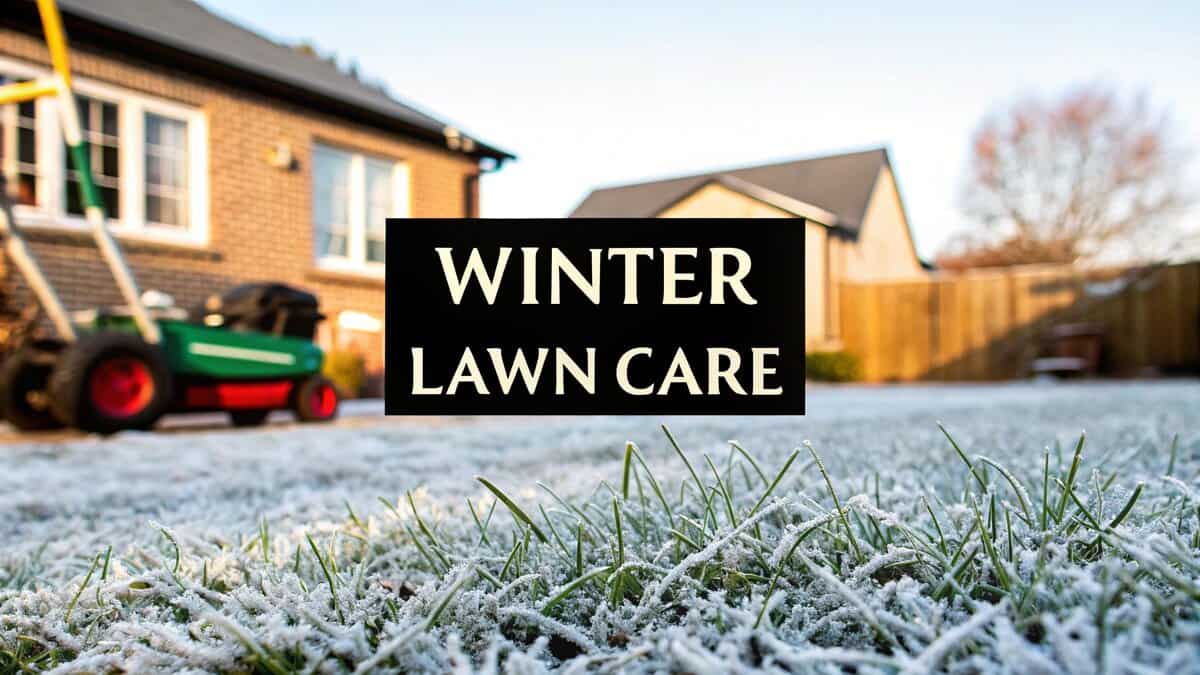
on-Trent, your garden enters a crucial rest period. This dormant phase, however, doesn’t mean your lawn care should hibernate. In fact, the actions you take now are vital for its survival. Subsequently, proper preparation prevents winter damage from frost, damp, and disease. This directly sets the stage for a lush, green carpet next year.
Ignoring your lawn during the colder months can lead to costly repairs. This guide provides actionable winter lawn care tips for our local Staffordshire climate. We will cover everything from the final mow to protecting your grass.
By following these essential steps, you can protect your garden investment. Furthermore, for tasks that seem daunting, Stoke Gardening Services is here to help. We provide professional care throughout Stoke-on-Trent, ensuring your lawn weathers the winter beautifully. This list gives you the knowledge to confidently prepare your lawn.
For quotes and bookings, call or email us here.
1. Reduce Foot Traffic on Dormant Grass
During winter, your lawn is dormant, not dead. This resting phase makes the grass extremely fragile. One of the most effective winter lawn care tips is to minimise walking on it. When you walk on frosty grass, the brittle blades can easily break. More importantly, the pressure compacts the soil and damages the grass’s crown. This damage is often invisible until spring, when you see bare patches.

Professional sports grounds in Stoke-on-Trent protect their turf in the off-season. They often rope off sensitive areas or use temporary walkways. You can apply the same principle at home to keep your lawn healthy. Protecting the grass crown now ensures a lush, green lawn later.
How to Protect Your Dormant Lawn
Implementing this tip is straightforward. First, identify common routes people take across your lawn. Then, create clear, alternative paths to prevent accidental damage.
Here are a few practical ways to reduce foot traffic:
- Create Temporary Paths: Lay down stepping stones, planks, or a temporary path. This directs footsteps away from the delicate grass.
- Use Visual Cues: Simple rope barriers can guide family and visitors away from the lawn.
- Designate Pet Areas: Train pets to use a specific part of the garden or a paved area. This prevents concentrated damage from repeated activity.
- Avoid Frosty Grass: Stay off the lawn when it’s covered in frost. The frozen grass blades are brittle and will shatter underfoot. If you must cross, wait until the frost has melted.
2. Essential Winter Lawn Care Tips: Raking Debris
While mowing is off the to-do list, raking remains a regular chore. A common mistake is assuming yard work is done once leaves fall. However, this is one of the most critical winter lawn care tips for preventing damage. When wet leaves and twigs sit on your lawn, they create a dense mat. This layer blocks sunlight and air, creating damp conditions perfect for fungal diseases.

Public parks in Stoke-on-Trent are maintained year-round to look their best. They know that keeping turf clear of debris is key to its health. Applying this same principle protects your grass from decay. Consequently, it ensures the best possible start when the growing season returns. A clean lawn breathes better and is less likely to harbour problems.
How to Keep Your Lawn Debris-Free
Staying on top of debris removal is a simple yet effective task. Instead of one massive cleanup, aim for several smaller sessions. This approach makes the job more manageable and keeps your lawn healthy.
Here are a few practical ways to manage debris during winter:
- Be Proactive: Rake leaves immediately after major leaf drops. This prevents them from becoming a wet, compacted mess.
- Use the Right Tools: A leaf blower can clear larger lawns more efficiently than a rake. For smaller spaces, a sturdy rake is fine.
- Compost the Waste: Turn collected leaves and twigs into valuable garden compost. This recycles organic matter for the next season.
- Perform Post-Storm Checks: After winter storms, walk your property to clear away fallen branches. This will stop debris from smothering the grass below.
- Target Problem Areas: Pay special attention to corners where leaves and debris accumulate.
3. Adjust Mowing Practices for Final Cuts
Your last mow of the season is a crucial step. One of the most important winter lawn care tips is setting your mower to the correct height. If the grass is too long, it can become matted under snow. This creates a breeding ground for fungal diseases like snow mould. Conversely, cutting it too short exposes the grass’s crown to harsh frosts.

Groundskeepers at Stoke-on-Trent sports venues manage turf height meticulously. They know the correct length provides the perfect balance. By adopting this professional approach, you give your lawn the best chance. It will survive winter unscathed and green up quickly when temperatures rise.
How to Get the Final Mow Right
Timing and height are everything for this task. You should aim for the final mow once grass growth slows. This should be done before the first hard frost sets in. For most cool-season grasses in our area, the ideal height is between 2 and 3 inches.
Here are a few practical ways to perfect your final mowing:
- Set the Right Height: Adjust mower blades to leave the grass around 2-3 inches tall. This is the sweet spot for protection and health.
- Sharpen Your Blades: Ensure your mower blades are sharp. A clean cut helps grass heal quickly and reduces disease risk.
- Time It Correctly: Plan your last cut for late autumn. This is usually 2-3 weeks before the ground is expected to freeze.
- Clear the Clippings: Collect clippings after the final mow. This prevents them from matting down and smothering the grass.
4. An Effective Winter Fertilisation Strategy
Applying fertiliser in winter might seem odd. However, a late autumn application is one of the most proactive winter lawn care tips. This feed is not typical. Instead, a “winterizer” fertiliser is low in nitrogen and high in potassium. This formula shifts energy from blade growth to strengthening roots. It also improves tolerance to the cold Stoke-on-Trent winter.

Think of it as giving your lawn a final, nutrient-dense meal. Just as professional groundskeepers prepare turf for the off-season, this provides key nutrients. It helps the lawn survive freezing temperatures and bounce back vigorously. This one step can dramatically reduce spring recovery time.
How to Apply Winterizer Fertiliser
Timing and technique are critical for an effective strategy. The goal is to feed the roots, not encourage weak top growth. Consequently, getting this right sets your lawn up for success.
Here are a few practical ways to implement this strategy:
- Time It Right: Apply winterizer fertiliser about 6 to 8 weeks before the first hard ground freeze. In Stoke-on-Trent, this is usually late October or November. Learn about the best times to fertilize your lawn for a detailed guide.
- Choose the Correct Formula: Look for a slow-release fertiliser with high potassium (K). An N-P-K ratio like 3-1-2 is ideal.
- Apply to Dry Grass: Apply fertiliser when grass blades are dry. Afterwards, water it in lightly if no rain is forecast. This helps granules reach the soil.
- Avoid Frozen Ground: Never apply fertiliser to frozen ground. The nutrients cannot penetrate the soil and will likely wash away.
5. Proper Snow Management Techniques
When snow blankets your Stoke-on-Trent garden, how you manage it is crucial. This is a vital part of your winter lawn care tips arsenal. Improper snow removal can cause damage from compaction to chemical burns. Strategic management protects your grass by preventing these issues. It’s not just about clearing a path; it’s about safeguarding the turf.
Local authorities manage large-scale snow removal by designating storage areas. Similarly, applying a thoughtful plan at home helps preserve your lawn’s health. By treating snow piles as a potential threat, you can prevent problems. This avoids suffocated turf and salt damage that appears after the thaw.
How to Implement Smart Snow Management
The best time to think about snow management is before the first snowfall. Planning where the snow will go makes a huge difference. These proactive steps are key to effective winter lawn care.
Here are a few practical ways to manage snow properly:
- Designate a Piling Zone: Never pile snow on your lawn. The weight compacts the soil. Instead, choose a spot on your driveway or patio.
- Use Lawn-Safe Deicers: Many rock salts are toxic to grass. Look for deicing products labelled as “pet-safe” or “plant-safe.” These are gentler on your turf.
- Mark Your Lawn Edges: Before snow, place markers along lawn edges. This provides a clear guide for anyone with a shovel. It prevents them from accidentally gouging the turf.
- Avoid Driving on the Lawn: Heavy equipment should never be driven over a frozen lawn. This causes severe soil compaction and can break grass crowns.
6. Strategic Fall Aeration and Overseeding
Preparing your lawn for winter starts in the autumn. One of the most impactful winter lawn care tips is to aerate and overseed. Aeration involves creating small holes in the soil to alleviate compaction. This allows air, water, and nutrients to reach the roots. Consequently, overseeding right after gives new seed the perfect environment to germinate. This ensures your lawn emerges denser in the spring.
The pristine turf at Stoke-on-Trent sports grounds relies on this technique. It helps them maintain a robust appearance year-round. This method creates stronger turf that withstands winter stress. By adopting this strategy, you set your lawn up for success. It prevents thin patches and promotes a lush carpet.
How to Aerate and Overseed for Winter Success
Timing is crucial for this process. Aim to complete aeration at least six to eight weeks before the first hard frost. This window in Stoke-on-Trent gives new seedlings enough time to mature. This helps them develop the cold tolerance needed for winter.
Here’s a practical guide for this vital lawn care step:
- Aerate at the Right Time: Perform core aeration when the soil is moist. The tines will penetrate the ground more easily.
- Overseed Immediately: Spread a high-quality grass seed blend after aerating. The seeds fall into the holes, ensuring good seed-to-soil contact.
- Choose the Right Seed: Select a grass variety known for its resilience. A durable fescue or ryegrass blend is a great choice.
- Water Consistently: Keep newly seeded areas moist until the grass is established. This involves light watering daily for the first couple of weeks. You can learn about how to prepare soil for planting in our guide.
7. Winter Watering and Moisture Management
While lawnmowers are stored, managing moisture levels is a nuanced tip. Winter in Stoke-on-Trent often brings sufficient rain. However, dry spells can dehydrate your lawn’s roots. This condition, known as winter desiccation, can cause significant damage. Therefore, proper moisture management is about striking a balance. Provide just enough water to survive without creating saturated conditions.
Think of it like caring for a hibernating animal. It still needs occasional hydration to survive. Your lawn is no different. The goal isn’t to encourage growth but to protect the root system. This ensures the grass has strength for a quick green-up.
How to Manage Winter Moisture
The key to winter watering is timing and moderation. First, turn off and drain automatic sprinkler systems. This prevents pipes from freezing. Manual watering should only be considered during specific conditions. Furthermore, if your garden struggles with waterlogging, learn more about how to improve clay soil drainage.
Here’s when and how to water your lawn in winter:
- Water Only When Necessary: Only water if there has been no rain for three to four weeks.
- Check the Temperature: Apply water when the air temperature is above 5°C. The ground should not be frozen. Watering on a warmer day allows moisture to soak in.
- Apply Lightly: A dormant lawn needs very little water. A light watering is more than sufficient.
- Target Vulnerable Spots: Pay attention to areas exposed to wind or sun. These spots dry out much faster.
8. Pre-Winter Equipment Maintenance and Storage
An often-overlooked aspect of lawn care is equipment maintenance. Proper maintenance before winter storage is a crucial step. This ensures your tools are ready for action in spring. This proactive approach prevents damage from cold and moisture. It also extends the life of expensive machinery. Neglecting this task leads to frustrating repairs later.
Professional landscaping services in Stoke-on-Trent follow strict protocols. They do this to protect their investments. By adopting a similar mindset, you safeguard your tools. This ensures a seamless start to the spring season. This is one of the most practical winter lawn care tips because it saves you time and money.
How to Prepare Your Equipment for Winter
Putting tools away properly involves more than finding space. A thorough end-of-season service is key to preventing problems. Consequently, following a simple checklist can make all the difference.
Here are the essential steps for equipment winterisation:
- Clean Thoroughly: Remove all grass clippings and mud from your tools. Caked-on organic matter traps moisture, which leads to rust.
- Manage the Fuel: For petrol engines, either drain the fuel tank or add a fuel stabiliser. The stabiliser prevents fuel from degrading over winter.
- Service the Engine: Change the oil in 4-stroke engines. Also, clean or replace the air filter and spark plug.
- Sharpen and Protect Blades: Remove mower blades to be sharpened. Afterwards, apply a light coat of oil to prevent rust.
- Store Properly: Keep equipment in a dry, protected location. For battery-powered tools, remove and store batteries indoors.
Winter Lawn Care Tips Comparison Guide
| Item | Implementation Complexity 🔄 | Resource Requirements ⚡ | Expected Outcomes 📊 | Ideal Use Cases 💡 | Key Advantages ⭐ |
|---|---|---|---|---|---|
| Reduce Foot Traffic on Dormant Grass | Cost-effective prevention improves spring recovery | Low – materials for pathways/barriers | Protects grass crowns, reduces soil compaction | Winter lawn protection where foot traffic is high | Medium – requires repeated manual labour |
| Continue Raking and Removing Debris | Low-mower adjustment and blade sharpening | Medium – tools like rakes, blowers, vacuums | Prevents suffocation & disease, reduces pests | Properties with heavy leaf fall or debris buildup | Reduces disease risk, lowers spring cleanup effort |
| Adjust Mowing Practices for Final Cuts | Medium – requires timing and equipment | Low – mower adjustment and blade sharpening | All lawns before the dormancy period | Winter Fertilisation Strategy | Promotes winter insulation, reduces fungal risk |
| Medium – specialised fertiliser products | Medium – timing & formulation sensitive | Cool-season grasses need winter hardiness | Enhances cold tolerance, strengthens root systems | High – requires specialised equipment | Improves survival and spring green-up |
| Proper Snow Management Techniques | Medium – requires planning and coordination | Low-medium – snow storage areas, safe products | Prevents chemical damage and compaction | Regions with heavy snowfall | Maintains lawn health and accessibility |
| Strategic Fall Aeration and Overseeding | Low-water source, moisture tools | High – aerator, seeders, watering systems | Relieves compaction, improves seed establishment | Lawns needing winter overseeding and compaction relief | Promotes healthy root growth and turf density |
| Winter Watering and Moisture Management | Low-medium – requires monitoring and timing | Low – water source, moisture tools | Prevents desiccation, supports root health | Dry winter periods or evergreen grass types | Maintains moisture balance, aids spring recovery |
| Pre-Winter Equipment Maintenance | Medium – requires detailed procedures | Medium – cleaning supplies, lubricants | Extends equipment life, ensures reliable startup | All lawn equipment owners | Prevents costly repairs, maintains warranty |
Ensure Your Lawn Thrives with Expert Local Care
Winter in Stoke-on-Trent doesn’t have to spell doom for your lawn. In fact, you can set the stage for a vibrant, green garden. The journey to a resilient lawn begins now. Following these expert winter lawn care tips transforms a dormant period into an advantage.
This guide has provided a comprehensive roadmap. We’ve covered everything from reducing foot traffic to late-season fertilisation. Each step is a building block for a healthier lawn. Ultimately, a little effort now prevents major headaches later.
Your Winter Lawn Care Checklist Recap
To ensure success, let’s revisit the most critical takeaways from our guide:
- Protect the Crown: Your lawn’s crown is its life force. Therefore, minimising foot traffic is essential to prevent damage.
- Keep it Clean: Continue to rake leaves and remove debris. This simple task prevents rot and discourages pests.
- The Final Cut Matters: Adjusting your mower for the last cut helps prevent snow mould. It also leaves enough length for protection.
- Feed for the Future: Applying a winter fertiliser provides nutrients for strong root development. It ensures your grass bounces back in spring.
Mastering these winter lawn care tips is about investing in your property. A well-cared-for lawn enhances your home’s curb appeal. It also provides a lush space for your family. Consistent winter care builds a strong foundation for your lawn.
However, we understand that life gets busy. The cold Stoke-on-Trent weather can be uninviting. If you feel overwhelmed, you don’t have to do it alone. By partnering with a local expert, you can relax this winter. This allows you to reclaim your time while ensuring your garden is primed to flourish.
Ready to give your lawn the professional care it deserves this winter? Contact Kathryn and the team at Stoke Gardening Services today for a personalised consultation. We provide expert, localised solutions based on years of global experience to ensure your Stoke-on-Trent garden thrives all year round.
For quotes and bookings, call or email us here.
Responses
[…] For a deeper dive into prepping your lawn for the cold, take a look at our guide on winter lawn care tips. […]
[…] you’re dealing with lawn-specific issues, especially with the seasons turning, our guide on winter lawn care tips has some targeted advice. By following these simple tips, you and your gardener in Stoke on Trent […]
[…] This isn’t about a proper cut; it’s just a quick tidy-up. Remember, never mow a wet or frozen lawn. During our professional winter checks in Stoke-on-Trent, this is when we look for potential problems. For a deeper dive, take a look at our complete guide on essential winter lawn care tips. […]
[…] a deeper dive, our complete guide on essential winter lawn care tips has all the details you’ll […]
[…] and shrubs, it’s the perfect time to give your grass some love too. You might find our guide on winter lawn care tips […]
[…] a healthy, green lawn come spring. For a deeper dive, we’ve put together a full guide with more winter lawn care tips. Of course, if you’d rather leave it to the pros, we at Stoke Gardening Services offer full […]
[…] Reduce foot traffic on dormant grass to prevent damage. […]